Showing posts with label write what you know. Show all posts

Wednesday, February 09, 2022

A New Humor Piece Published Today: And A Case Study In How Experience Works In Writing

By Monica Sedra on Unsplash
Frazzled, a very good humor site that focuses on parenting on the Medium platform, published my most recent humor piece, Your Child Has Been Exposed To COVID...Again. The pandemic is a never ending source of fun.

Your Child Has Been Exposed To COVID is an example of using life experience in writing. 

My History In Using Life Experience

I hate to use the phrase "write what you know," because, while it is well-known, a lot of people don't know what it means. It's often interpreted as confining writers to writing only about what's happened to them or what they have done. In reality, it's much more about taking a dip into the life pool for details for characters, settings, plots, and every aspect of story telling. It gives writing depth, richness, and authority. Oh, and relatability.  Additionally, it's a whole lot easier than having to come up with details from scratch.

A lot of my children's books drew very much upon my life as a mother and on my children's lives. 


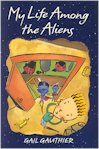
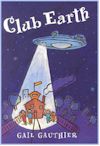
My Life Among the Aliens and Club Earth were collections of short stories that came out of what was going on when I was raising two preschool and early grade school boys. Yes! I was that mother who baked with bran! 


A Year With Butch and Spike followed some sixth-graders through a school year. By that point in my kids' lives, I was somewhat jaded about the school experience. Their school experience, which, by extension, was my experience as a parent of school-age children.


Then we got to middle school, where, it turns out, not every student is a Happy Kid! Neither are their moms.
Saving the Planet & Stuff was written for one of my sons when he was in the early high school years. He liked reading humor, but found that a lot of YA humor at that time involved girls. He was fine with reading it, but, you know, where were the guys? This booked combined him with what I thought I was going to be during my college years. Two generations were dealing with identity from different sides of the subject--Who am I going to be? Who have I been? 


One of my sons once asked me of my writing, "Do you ever have an original thought?" My response was, "I don't have to, so long as I have you."

Which Brings Us To Your Child Has Been Exposed To COVID...Again 


My interest here was treating the confusion I felt about what I should be doing about COVID, when "what I should be doing" seemed to always be changing. I'm not that quick on my feet. I came up with the preschool situation because we've had that come up a few times with the preschoolers in our family--once just before Christmas, which included me because I spent a couple of hours with the child involved the day his parents found out about the exposure. 

I finished a draft and, I kid you not, that day we hear that the number of days people need to quarantine after exposure has changed. By that point, I was so confused that I couldn't work out what was going on, let alone be funny about it.

Several weeks later, Son Number 2 tells me about something very interesting related to a COVID exposure at his son's preschool. "I can use that!" I told him. Soon afterwards, Son Number 1 texts us with some news about his daughter's preschool and COVID exposure. I can use that, too! I thought.

And that's why I was able to finish this humor piece.

Well, it was then that I came up with the UPDATE and strikeout repetitions. My children didn't write the entire thing.

But their experience, and my experience of hearing about their experience, kick started the completion of this piece.

I can't say enough about writing from experience.


Tuesday, October 22, 2019

Time Management Tuesday: Write What You Know And Ultralearning

Okay, I am jumping off on a totally new exploration of something I just heard about a few minutes ago. But I think it could pertain very specifically to writers and time and this being a Tuesday I'm going to pour it into a Time Management Tuesday post. I'm going to dip into ultra-learning.

Writers' Need To Know What They're Writing About


I'm a big believer in write what you know, though you will find writers who aren't. Knowing what you're writing about helps you to generate material and material that will make more sense to readers. I've read children's books involving older characters living in some kind of elder facility and been left wondering, What is this place supposed to be? Is it assisted living? Is it a nursing home? Is it something the author just totally made up? I read a children's book this past year that involved sewing that made me wonder if the author had ever sewed anything or known anyone who had.

Not knowing what they're writing about means writers can't create a realistic, clearly defined world. It means logical gaps in plots. It means weak, unrealistic characters.

No, writing what you know does not mean you are limited to writing only what you presently know about. You can, indeed, research subjects. Which then, surprise, means you know about them.

  • I researched the Puritan-era for The Hero of Ticonderoga. Also the humanist philosophers.
  • I researched solar homes and environmental lifestyles for Saving the Planet & Stuff.
  • I researched early twentieth century mill and labor history for an unpublished book.
  • I researched Egyptian history and late nineteenth and early twentieth century Egyptologists for another unpublished book.
  • Right now I am researching what I might call historical process--how historians work--for a new project.

These are all works of fiction.

The research is time consuming and I don't always do it in a very organized way.

How Might Ultralearning Help?


Ultralearning appears to be a term coined by Scott Young who defines it as "a strategy for aggressive, self-directed learning." In an interview in the Harvard Business Review, Young says, "People who have the least time, the people who have the most time constraints, those are the ones that really have to be efficient with figuring out what is the most effective way to learn this skill." (By which he means, in the context of the interview, "new skills," not an "ultralearning skill.")

Can you see why that looks attractive to someone who is always having to learn about new subjects to support new stories and can never find large chunks of free time in which to do it?

I have questions. How is ultralearning different from traditional research? Will it require enormous amounts of time to learn about? Can it help me be more organized? (I lost a book I used for research on submission and Christian women, as well as any notes I may have taken on the subject, so you can see why that's an issue for me.)

So I'm going to be dabbling with learning about ultralearning over the next few months, and trying to apply it to this history thing I'm doing. Which are both additions to what I thought I'd be doing at this point in the year.

But, you know, that's another issue.