Showing posts with label Dan Harris. Show all posts

Tuesday, December 06, 2022

Time Management Tuesday: Time Management For Writers With No Time--Meditators Don't Have Time, Either

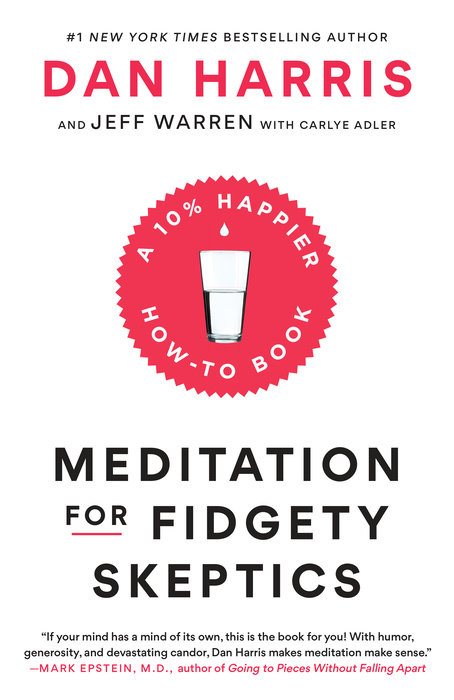
The third in an arc inspired by Meditation for Fidgety Skeptics by Dan Harris and Jeff Warren with Carlyle Adler. 

Meditation for Fidgety Skeptics includes a chapter called I Don't Have Time For This. That's what we're all about here! Harris mentions some things related to time that can apply to writers, too.

What Is The Benefit Of Writing?

Meditators are often looking for particular benefits, which motivate them to meditate. Improved
concentration, for instance, or help dealing with anxiety. What benefits can writers use to motivate them?

  • Publication, of course, but that comes way down the line and often very rarely. It's not that terrific an immediate benefit.
  • Income. Same as above. Income as a serious benefit, the kind that really is life supporting money, doesn't come for a lot of writers. If it does, it probably isn't going to come for a long time.
  • Identity/Lifestyle. This is the benefit that can come early on once you're writing regularly. Writing can establish who you are and how you feel about yourself. Yes, this is kind of woo-woo. Maybe very woo-woo.

You Don't Need A Lot Of Time To Do This


Harris talks about starting with very short meditations. We've been talking here for ten years about using short units of time, also known as segmented time, for writing. 

A completed piece of writing will almost certainly take a great deal of time. But it can be time that's accumulated over days, weeks, months, years. The fact that we don't have the overall time necessary to complete something all at once, doesn't have to stop us from getting started, because little units of time get the job done.

Think In Terms Of Daily-ish


Harris writes about how people new to meditation can feel that they've failed if they can't keep up a daily practice.  We've talked here many times about how exclusionary and judgmental the write every day instruction is. Harris suggests shooting for a daily-ish meditation practice.

Writers can also work daily-ish without writing daily-ish. There's a multitude of things writers need to do, and doing them helps maintain that woo-woo writing identity I mentioned earlier--in addition to the value completing those tasks provides, of course.  


Tuesday, November 29, 2022

Time Management Tuesday: Time Management For Writers With No Time--You Don't Have To Do What Someone Else Is Doing

The second in an arc inspired by Meditation for Fidgety Skeptics by Dan Harris and Jeff Warren with Carlyle Adler.

Meditation for Fidgety Skeptics includes a chapter called I Can't Do This that deals to a great extent with what author Dan Harris and his colleagues say is the misunderstanding that meditation requires clearing the mind instead of beginning again. "You really can't hear this enough: Meditation does not require you to stop thinking," they say.

Many writers think they can't write because they can't do certain things, also. Specifically,

Write every day and butt-in-chair are writing cliches that have generated masses of text. They appear in articles, blog posts, books, and workshops. There may be TED Talks about them. In spite of that, I'm not sure what butt-in-chair means. Is it a "just do it" time management technique? Do people who feel they are butt-in-chair writers use some kind of time management techniques to make it possible for them to keep their butts in their chairs or do they have some kind of inner fortitude the rest of us don't that enables them to do what others can't? I'm mystified.

What I do feel write every day and butt-in-chair are, though, is exclusionary. Do this, not that. This is what you have to be able to do in order to do what I do.

You really can't hear this enough: Writing does not require you to do what other writers are doing.


Tuesday, November 15, 2022

Time Management Tuesday: Time Management For Writers With No Time--Begin Again

 For someone who meditates as little as I do, and then primarily with guided meditations so someone is holding my hand and walking me through it, I do enjoy reading about the practice. A meditation book I recently read and liked a great deal is Meditation for Fidgety Skeptics by Dan Harris and Jeff Warren with Carlyle Adler. How much did I like it? I read an e-book from my library system and then ordered a hard copy so I could skim it again, mark it up, and label it. Which is something Dan Harris says he does with his meditation books, too.

As I was reading this particular meditation book, I kept thinking that a lot of what Harris and his co-writers were saying could apply to writing, and specifically apply to managing writing time. And thus a new reading arc was born for Time Management Tuesday.

Begin Again.  And Keep On Beginning Again. Then Begin Again Some More.

Early in the book the authors describe a basic, three-step mediation. The third step is the most important, they say. When you're distracted, you begin again.

Now other people have written about beginning again in relation to meditation. I've written about it in relation to writing. But what Harris (I'm going to refer to the authors as Harris from now on, because I'm lazy) does is make a really good argument for it over the clear-the-mind idea many of us have about meditation.

We could make a similar argument for beginning again over ideas many of us have about managing time for writing, too.

The Worst Marketing Campaigns Ever

Harris attributes the general public's understanding of meditation as requiring clearing the mind over beginning again to a poor marketing campaign. Meditation has been "marketed" in the past as an activity that brings practitioners to some kind of otherworldly state, which, evidently, you need a clear mind to achieve. As I'm writing this, I'm wondering what a clear mind would even be. It appears I've never experienced one.

With writing we don't think about the practice of beginning again, because we've been sold the idea of writing every day and placing our butts in chairs to do it.  We like nice turns of phrase in our line of work and while "write every day" is a pretty good one, "butt in chair" is fantastic. It even has an abbreviation, "BIC."  Though I, personally, like the sound and embrace the meaning of "begin again," it may be a hard sell for writers, because it isn't writing specific the way "write every day" and "butt in chair" (because most of us sit to write) are.

Make Begin Again Writing Specific


Here's the thing--no matter what the writing how-to articles say about writing every day and placing your butt in chair, there are going to be times when we can't do it. For some of us, there are going to be many times when we can't do it. It doesn't matter what that writing site/journal or workshop leader tells us. We deal with reality here, where there are day jobs and family and illness and houses falling down around us and cars that need to be serviced.

What we can always do, though, is begin writing again. It doesn't matter whether it's been a day, a week, a month, or many weeks and months. Beginning writing again is always possible.   

That's a huge positive for us.