I am trying to maintain some self-discipline, so I'm going to visit some more NESCBWI member blogs instead of exploring the wilds of my laundry room or collapsing somewhere and reading.
Guinea Pig Writers was being maintained last year by some writers who graduated from the Simmons College MFA program offered at the Eric Carle Museum. Great idea, though this year they've done only two posts, and those were back in January. So I don't know that this is still an active blog.
Katherine Quimby Johnson's blog, Words Are My Life, is more active. She does reviews and posts about writing. She also lives in my old university town.
Joyce Shor Johnson recently did an interesting post at her blog, The Write Joyce, that included a lengthy list of bloggers doing giveaways relating to debut books. She writes about her own writing, and she's also involved with the next NESCBWI regional conference.
Lita Judge's blog, Wilder Farm, looks as if it's updated monthly and deals to a great extent with her own work. She's an illustrator, and she posts lots of images.
Okay, enough self-control. Now I will answer the call to adventure in the laundry room.
Sunday, June 10, 2012
Book Spine Poetry and "Happy Kid!"
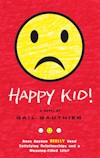
I found out about this through a family member who learned about it through a friend he went to graduate school with. Just saying, it's interesting how it came to me.
Friday, June 08, 2012
48-Hour Book Challenge Starts Today
The 48 Hour Book Challenge starts today. Ah, good times in years past. While I do have a little more time this weekend then I've had the last few years, I'm sad to say that I have to use it for maintenance, since I've been away from the house a lot the last couple of weekends. Seriously, I saw a small creature caught in a cobweb in my bathroom yesterday.
I was sorry to see how few bloggers have signed up for the book challenge this year. If memory serves me, the Challenge used to attract a much larger crowd. Or perhaps the sign-ups didn't begin until today, and we'll see a lot more people listed as they begin their particular 48 hour reading period.
I see a couple of old blogging buddies on the list, and I'll try to check in with them over the weekend to see what they're reading.
I was sorry to see how few bloggers have signed up for the book challenge this year. If memory serves me, the Challenge used to attract a much larger crowd. Or perhaps the sign-ups didn't begin until today, and we'll see a lot more people listed as they begin their particular 48 hour reading period.
I see a couple of old blogging buddies on the list, and I'll try to check in with them over the weekend to see what they're reading.
Thursday, June 07, 2012
Speaking Engagements Gone Bad
A Yoga Journal blog post by Neal Pollack got me recalling my own speaking engagements gone bad. I could write a book on the subject. Not to worry. I will just give you a few highlights.
Let's see, one standout was a one-shot talk during the day for a group of sixth graders. It was arranged by a PTO member, and at the time we were making the arrangements I thought it was unusual that she was talking about having me speak for an hour and ten minutes or so. Most schools have 50- or 60-minute class periods and want speakers to stay within that time frame. But I was distracted by the fact that I don't usually speak to sixth-graders and that I was going to have to prepare some new material, so the time frame went on to a back burner. When the day came and I was giving the talk, the audience wasn't terribly engaged. But I'd planned a brainstorming-type thing for the last fifteen minutes or so. I'd just started with that, a boy had started speaking rather eagerly, it looked as if things were finally going to start working for me, when a teacher stood up and said, "We have to go now." Then everyone stood up and walked out on me.
Oh, the get-up-and-walk-out thing happened at a children's museum once, too. There was a big group there and a few minutes after I started my reading they all got up and left because they needed to catch their buses.
In his Yoga Journal post, Pollack says, "Every time I land a speaking or teaching gig, no matter what the type, I always think: This is the one that’s going to break me into the big time, whatever my current definition of “big time” might be." Experience must make a bigger impression on me than it does on him, because I don't do that anymore. But I've done it in the past! I was speaking for day at a regional teachers' conference in another state, no less. Yes, indeed, I did think that it was going to be the turning point, and I would become a regular speaker at professional conferences. Well, that year, for the first time ever, they had only 40 participants. They had six different venues running all day, two other authors speaking and some other professional things going on. The biggest group I spoke in front of all day included 6 people. The last hour of the day I had 1 woman in the audience. I know she wanted to leave. I said to myself, no...freaking...way. I had planned a special presentation for that conference that I would never be able to use again, and I had slides. I made her sit there and listen to the entire hour presentation.
I arranged to do a reading and talk in a lovely bookstore in my hometown in Vermont to coordinate with a nearby school visit the day before. If my sisters and brother-in-law hadn't driven up from Connecticut for the event, I would have been reading to my aunt and my high school history teacher and his family. Harsh, huh? A turnout like that in your hometown? Could be worse. I met a guy who did a book signing in the town he was living in at the time, and not a soul showed up. And he had just won the Connecticut Book Award.
Like Pollack, I try very hard to avoid becoming attached to results. Attachment to results is a kind of desire, desiring things to be a certain way. And what does desire lead to? Unhappiness! You know what else leads to unhappiness? Fixating on the past and letting all those disastrous speaking engagements fill you with regret and despair. I am so unattached to the results of my speaking engagements and spend so little of my energy regretting those results that I'm actually planning to submit a proposal to teach a workshop at a writers' conference. I'm just not foolish enough to expect it to go well.
Have a really lousy speaking engagement you think others would enjoy hearing about? Share it in the comments.
Let's see, one standout was a one-shot talk during the day for a group of sixth graders. It was arranged by a PTO member, and at the time we were making the arrangements I thought it was unusual that she was talking about having me speak for an hour and ten minutes or so. Most schools have 50- or 60-minute class periods and want speakers to stay within that time frame. But I was distracted by the fact that I don't usually speak to sixth-graders and that I was going to have to prepare some new material, so the time frame went on to a back burner. When the day came and I was giving the talk, the audience wasn't terribly engaged. But I'd planned a brainstorming-type thing for the last fifteen minutes or so. I'd just started with that, a boy had started speaking rather eagerly, it looked as if things were finally going to start working for me, when a teacher stood up and said, "We have to go now." Then everyone stood up and walked out on me.
Oh, the get-up-and-walk-out thing happened at a children's museum once, too. There was a big group there and a few minutes after I started my reading they all got up and left because they needed to catch their buses.
In his Yoga Journal post, Pollack says, "Every time I land a speaking or teaching gig, no matter what the type, I always think: This is the one that’s going to break me into the big time, whatever my current definition of “big time” might be." Experience must make a bigger impression on me than it does on him, because I don't do that anymore. But I've done it in the past! I was speaking for day at a regional teachers' conference in another state, no less. Yes, indeed, I did think that it was going to be the turning point, and I would become a regular speaker at professional conferences. Well, that year, for the first time ever, they had only 40 participants. They had six different venues running all day, two other authors speaking and some other professional things going on. The biggest group I spoke in front of all day included 6 people. The last hour of the day I had 1 woman in the audience. I know she wanted to leave. I said to myself, no...freaking...way. I had planned a special presentation for that conference that I would never be able to use again, and I had slides. I made her sit there and listen to the entire hour presentation.
I arranged to do a reading and talk in a lovely bookstore in my hometown in Vermont to coordinate with a nearby school visit the day before. If my sisters and brother-in-law hadn't driven up from Connecticut for the event, I would have been reading to my aunt and my high school history teacher and his family. Harsh, huh? A turnout like that in your hometown? Could be worse. I met a guy who did a book signing in the town he was living in at the time, and not a soul showed up. And he had just won the Connecticut Book Award.
Like Pollack, I try very hard to avoid becoming attached to results. Attachment to results is a kind of desire, desiring things to be a certain way. And what does desire lead to? Unhappiness! You know what else leads to unhappiness? Fixating on the past and letting all those disastrous speaking engagements fill you with regret and despair. I am so unattached to the results of my speaking engagements and spend so little of my energy regretting those results that I'm actually planning to submit a proposal to teach a workshop at a writers' conference. I'm just not foolish enough to expect it to go well.
Have a really lousy speaking engagement you think others would enjoy hearing about? Share it in the comments.
Wednesday, June 06, 2012
Tuesday, June 05, 2012
Time Management Tuesday: May Days, The Results Show
Wondering how I did with The May Days Project I took part in last month? The one in which I was supposed to write two pages a day, every single day? Well, I made it through, though I had to do some finessing. At least once I had to do 3 pages the day after I did only 1, and the last few days I had to stockpile pages whenever I could to deal with heavy family days. But I did manage 64 pages over 31 days, which means I averaged 2 pages a day with, somehow, 2 pages extra. I worked on 14 different projects. I didn't finish anything, and some of the work is so bad that, as I told my May Day colleagues, I'm worried something will happen to me and my survivors will find this stuff on my hard drive and be horrified.
So what did I gain from all this?
Actual Product:
Scheduling "Set Aside Time" For Special Projects:
Shonna Slayton of Routines for Writers, who was not part of my May Days Project, also did a May project as part of Story a Day, a group of around 500 writers trying to write a story a day in May. Shonna used the month to work on plot outlines for future novels instead of actual stories. That was an excellent idea, I thought, and at the end of her post she suggests other ways to set aside time for that kind of work. (Or use those methods for setting aside time for any kind of writing work.)
What we might be talking about with this kind of set aside scheduling is binge writing, a term I hadn't heard for years until someone on Facebook linked to some interviews on it just last week. Author Sally Bosco interviewed self-described binge writers Emily Asad and Leslie Davis Guccione. Note that both authors are not binge writers in the sense that they are moved by a muse to write like crazy. They prep for their intensive writing periods.
My Plans For Future Set Aside Or Binge Writing Periods:
So what did I gain from all this?
Actual Product:
- I started some projects I've been thinking about for years.
- I began going through journals, pulling out workable project ideas and moving them to my computer journal where I'll be able to find them again. I've never done that before.
- I started an article on craft that I'm going to turn into a workshop proposal and submit to a conference
- I'm going to start thinking in terms of month-long blocks of time and try to give a long-term project priority each month. For example, I'm giving a book-long revision I've been working on for quite a while priority this month.
- Working weekends is too difficult for me. However, I've been thinking about trying to do some professional reading on weekends for a long time now. After the ordeal of trying to write every weekend, doing a bit of reading doesn't seem so bad. I began the reread on Saturday.
Scheduling "Set Aside Time" For Special Projects:
Shonna Slayton of Routines for Writers, who was not part of my May Days Project, also did a May project as part of Story a Day, a group of around 500 writers trying to write a story a day in May. Shonna used the month to work on plot outlines for future novels instead of actual stories. That was an excellent idea, I thought, and at the end of her post she suggests other ways to set aside time for that kind of work. (Or use those methods for setting aside time for any kind of writing work.)
What we might be talking about with this kind of set aside scheduling is binge writing, a term I hadn't heard for years until someone on Facebook linked to some interviews on it just last week. Author Sally Bosco interviewed self-described binge writers Emily Asad and Leslie Davis Guccione. Note that both authors are not binge writers in the sense that they are moved by a muse to write like crazy. They prep for their intensive writing periods.
My Plans For Future Set Aside Or Binge Writing Periods:
- I'm going to try to formally do this again in the fall, though I won't include weekends. In order to preserve as much time during the work week for writing as possible, I load weekends with family and home maintenance tasks. You cannot do two things in the same time period. I can't, anyway. Trying to work weekends, is a set up for failure.
- I'm also hoping to plan the work ahead next time (I found out about May Days on the last day of April), having either a specific project or projects I'm going to focus on.
- Additionally, I may have the freezer stocked up a bit ahead of time, too, so I can try to do less thinking about something life-related. If you want to give more time to work, the time has to come from somewhere.
Monday, June 04, 2012
On Writing What You Know
How wonderful is this? I'll tell you. It is wonderful.
"Every writer is faced with the same question: do you write about what you know or what you don't know? Some of my writing students, particularly my undergraduates, err to one extreme or the other. They write simply what they know, which is a transcript of Friday night's keg party, or simply what they don't know, which is Martians. What they need to do—and here I'm quoting a former writing teacher of mine—is write what they know about what they don't know or what they don't know about what they know. In other words, they want the advantages of both closeness and distance."
From Risk by Joshua Henkin in the new Glimmer Train Bulletin.
Thanks to Jane Friedman for the link.
"Every writer is faced with the same question: do you write about what you know or what you don't know? Some of my writing students, particularly my undergraduates, err to one extreme or the other. They write simply what they know, which is a transcript of Friday night's keg party, or simply what they don't know, which is Martians. What they need to do—and here I'm quoting a former writing teacher of mine—is write what they know about what they don't know or what they don't know about what they know. In other words, they want the advantages of both closeness and distance."
From Risk by Joshua Henkin in the new Glimmer Train Bulletin.
Thanks to Jane Friedman for the link.
So What Did We Think Of The Unconventional Blog Tour?
I just finished reading all the posts included in the Unconventional Blog Tour. You remember the Unconventional Blog Tour. It was the blog tour about blogging. If you are a litblogger or thinking of becoming one or you are an author thinking of contacting blogs to try to arrange for reviews, you should consider at least skimming parts of the tour.
I see a recurring theme in the Unconventional Blog Tour--An attempt to set and maintain professional standards and to maintain independence of the publishing marketing machine. The professional standards issue is understandable. Anyone can put out a shingle and claim to be a blogger and, what's more, claim to be a literary blogger. There isn't any professional certification or licensing. For those of us who appreciate a rogue quality in life, a different voice and attitude, this is a good thing. But it also puts a lot of responsibility on readers to determine which bloggers favor straight opinion and which favor judgement, (see Objectivity and Transparency Online at Sophisticated Dorkiness), and to determine, moreover, how much professionalism we want in our blog reading. Readers really need to beware.
The attempt to maintain independence of the publishing marketing machine is a more interesting situation. It's interesting because back in the day, when lit blogging first started, it wasn't an issue. Blogs were totally independent of publishing. That started to change when the traditional publishing world, authors and publishing companies alike, saw that blogs could pull some of the marketing weight and moved in. Now publishing companies are trying to manage bloggers. No wonder the FTC got involved a few years ago regarding whether or not bloggers are being compensated for reviews when they receive goods, such as books, from publishers (again, see Objectivity and Transparency Online).
Blogging started out as an independent act. Personally, I hope it stays that way.
I see a recurring theme in the Unconventional Blog Tour--An attempt to set and maintain professional standards and to maintain independence of the publishing marketing machine. The professional standards issue is understandable. Anyone can put out a shingle and claim to be a blogger and, what's more, claim to be a literary blogger. There isn't any professional certification or licensing. For those of us who appreciate a rogue quality in life, a different voice and attitude, this is a good thing. But it also puts a lot of responsibility on readers to determine which bloggers favor straight opinion and which favor judgement, (see Objectivity and Transparency Online at Sophisticated Dorkiness), and to determine, moreover, how much professionalism we want in our blog reading. Readers really need to beware.
The attempt to maintain independence of the publishing marketing machine is a more interesting situation. It's interesting because back in the day, when lit blogging first started, it wasn't an issue. Blogs were totally independent of publishing. That started to change when the traditional publishing world, authors and publishing companies alike, saw that blogs could pull some of the marketing weight and moved in. Now publishing companies are trying to manage bloggers. No wonder the FTC got involved a few years ago regarding whether or not bloggers are being compensated for reviews when they receive goods, such as books, from publishers (again, see Objectivity and Transparency Online).
Blogging started out as an independent act. Personally, I hope it stays that way.
Saturday, June 02, 2012
Weekend Blog Travel
I'm finding the NESCBWI blog tour a relaxing thing to do during breaks in hectic weekends. That's what I'm on right now, a break in a hectic weekend.
Sharon Abra Hanen, the blogger who maintains The Well-fed Poet, has published primarily for adults. However, she does do posts on children's literature at her blog.
Kourtney Heintz's Journal is the blog of an aspiring writer. She does book reviews and recently attended--and blogged about--the Mystery Writers' Association Symposium.
Jennifer Marie Hofmann is one of three writers who maintain the blog Damsels in Regress...bringing history back to life. They do author interviews, book reviews, and short essays on historical subjects.
Kathryn Hulick is a freelance writer and editor who maintains the blog Visible Thought.
And we will finish this week's relaxation with Lynda Mullaly Hunt's two blogs. Recently her personal blog has dealt with the launch of her debut book, One for the Murphy's, but she also runs a regular feature, Mentor Mondays. She's also one of the authors involved with EMU's Debuts, a blog maintained by debut authors at the Erin Murphy Literary Agency.
Sharon Abra Hanen, the blogger who maintains The Well-fed Poet, has published primarily for adults. However, she does do posts on children's literature at her blog.
Kourtney Heintz's Journal is the blog of an aspiring writer. She does book reviews and recently attended--and blogged about--the Mystery Writers' Association Symposium.
Jennifer Marie Hofmann is one of three writers who maintain the blog Damsels in Regress...bringing history back to life. They do author interviews, book reviews, and short essays on historical subjects.
Kathryn Hulick is a freelance writer and editor who maintains the blog Visible Thought.
And we will finish this week's relaxation with Lynda Mullaly Hunt's two blogs. Recently her personal blog has dealt with the launch of her debut book, One for the Murphy's, but she also runs a regular feature, Mentor Mondays. She's also one of the authors involved with EMU's Debuts, a blog maintained by debut authors at the Erin Murphy Literary Agency.
Friday, June 01, 2012
Worrying About Creativity
Today I used some of my work time to bake something to bring to a writers' gathering I'm attending tomorrow. As I got started, I wondered if other people would be baking or would they be bringing bakery items and how I should package my stuff so it didn't look as if it came out of a kitchen that a health inspector had never been near. I also spared a few seconds to get all angstie about whether I should be using work time to bake something when there are other options. But, then, I had to consider why I bake.
A family member has a friend who thinks it's really neat that I bake from scratch. That's flattering, though baking ain't brain surgery--and I do the kind of scratch baking that involves combining the basic elements myself, not using mixes. I mention that because a number of years ago a survey is supposed to have been done that indicated a large percentage of those polled would, indeed, bake "from scratch" if they had the ingredients available. Then the surveyors found out that by "ingredients available" a large chunk of their group meant "a prepackaged mix." They didn't know what scratch baking is.
I will spare you the health benefits of scratch baking both because this isn't a cooking blog and there really aren't a lot. I will also admit that there have been times when I've been working with deadlines when I brought Oreos and those creepy grocery store bakery cookies into my house. Otherwise, though, I've been baking weekly for years. Years and Years.
Why? Because baking is a creative act, and I am afraid that if I give up one creative act, I will give up others. How, I wondered when I first started publishing regularly, can a person be creative in only one thing? If you are a creative person, shouldn't it express itself in many things you do, if not all? I was afraid that if I became less creative in one aspect of my life, I would become less creative in others. If I no longer needed to create raspberry bar cookies, I was afraid I would no longer need to write fiction. If I stopped experimenting with using dark chocolate in just about every chocolate baked item I've ever made, I was afraid I'd stop experimenting with using different types of characters and settings in every kind of fiction I'd ever tried writing. I was afraid that if I didn't bake, something bad would happen.
And so I do bake. And bake and bake and bake.
A family member has a friend who thinks it's really neat that I bake from scratch. That's flattering, though baking ain't brain surgery--and I do the kind of scratch baking that involves combining the basic elements myself, not using mixes. I mention that because a number of years ago a survey is supposed to have been done that indicated a large percentage of those polled would, indeed, bake "from scratch" if they had the ingredients available. Then the surveyors found out that by "ingredients available" a large chunk of their group meant "a prepackaged mix." They didn't know what scratch baking is.
I will spare you the health benefits of scratch baking both because this isn't a cooking blog and there really aren't a lot. I will also admit that there have been times when I've been working with deadlines when I brought Oreos and those creepy grocery store bakery cookies into my house. Otherwise, though, I've been baking weekly for years. Years and Years.
Why? Because baking is a creative act, and I am afraid that if I give up one creative act, I will give up others. How, I wondered when I first started publishing regularly, can a person be creative in only one thing? If you are a creative person, shouldn't it express itself in many things you do, if not all? I was afraid that if I became less creative in one aspect of my life, I would become less creative in others. If I no longer needed to create raspberry bar cookies, I was afraid I would no longer need to write fiction. If I stopped experimenting with using dark chocolate in just about every chocolate baked item I've ever made, I was afraid I'd stop experimenting with using different types of characters and settings in every kind of fiction I'd ever tried writing. I was afraid that if I didn't bake, something bad would happen.
And so I do bake. And bake and bake and bake.
Subscribe to:
Posts (Atom)