Showing posts with label plots. Show all posts

Sunday, November 03, 2019

The Weekend Writer: Like One Plot Isn't Difficult Enough

I am often frustrated reading books that include material that I feel doesn't serve the basic storyline. The main character in the mystery Truly Devious, for instance, suffers from anxiety. I never figured out why. Multitudes of children's books include sick siblings, estranged parents, and misunderstandings with friends when the books appear to be about something else entirely, like surviving in a post-apocalyptic world. And then how many adult mysteries have I read that included a romance when the book seems to be about restoring order to the world after a crime has been committed?

An article in the September issue of Writer's Digest by Jane K. Cleland called Subplots Aren't Secondary has led me to think that what I have been reading as random material may really be subplots. What's more, maybe I should be thinking about including some in my writing.

The Function Of Subplots, And They Have One


Subplots, Cleland says, should provide support to the main story by moving the plot along, developing character, controlling pacing, and contributing to the ending. In short, they should be doing a lot.

It sounds as if books should include two subplots:

  • One relating to an interpersonal relationship. Presumably those parental and friend issues I was just mentioning.
  • One relating to a nonfiction element.

Since they are supposed to support the main story, plotting a subplot should help generate material for that basic story and not just produce a lot of filler. They sound as if they could actually be...helpful.

As For Me And My Plots


In a couple of my unsold books I think I've created subplots without being aware that's what I was doing, particularly in terms of nonfiction elements. It's something I'll be paying a lot more attention to in the future.

Good article, if you can find it.


Wednesday, March 28, 2012

Another Plotting Breakthrough?

In the spring and summer, I often replace some of my workout time with yard work. Yard work seems to be very conducive to breakout experiences.

I've been thinking about plotting recently, and yesterday I did a little research on the difference between plot vs. story. Many people use those words almost interchangeably, which I don't think is appropriate at all. Plot is part of story. How can it be defined as being the same thing? Character is part of story. Are we also going to define that interchangeably with story, too?

Here is my story definition (to date): Story is an account or retelling of something that happened told in a way that expresses meaning.

Here is my definition of plot: Plot is the action steps used to tell a story, each step having a causal relationship with the ones before and after it.

So here is the breakout thought I had this morning while cleaning up the periwinkle, totally as a result of my researching yesterday: My initial ideas for stories often come in just a scene or other very small element. My huge problems with plotting may come about because I don't yet have a story. Plot is part of story. It supports the story. The story ought to be there first. How can I create a plot, characters, setting, etc., when all I have for a starting off point is an elderly man suggesting to a young boy that he come to his camp with him and his wife and help him set up his computer? (Saving the Planet & Stuff) Or  a group of kids, one of them an alien, playing on the lawn in the evening and looking up at the sky because they know a war is being fought on another world? (Becoming Greg and Emma, which hasn't yet sold.)

When I'm getting started struggling with a new writing project, I'm not just struggling because I have no plot. I'm struggling because I haven't yet found the story that a scene or question has suggested to me.

Sunday, March 25, 2012

I May Have Experienced A Plotting Breakthrough

A few weeks ago, I read Plot & Structure by James Scott Bell. Because I am Gail, I didn't get with the entire program. But there were any number of bits and pieces that grabbed me.

For instance, Bell talks about plots beginning with a disturbance to the world of the book, or the world of the character, however you want to think of it. There was something about that that I thought sounded far more useful than all this stuff about give your character something to want and then throw stumbling blocks in her way so she has to struggle to get it. For one thing, that seems like a formula to me, not a plot generating method. For another, being an organic writer, as I am, I always wonder, What character? What does she want? What stumbling blocks? Where am I supposed to get all that stuff? None of this material just comes to me. A disturbance to the world of the book, on the other hand, seemed far more useful. It could be a real jumping off point for coming up with a plot, I thought.

I'd been thinking about disturbances off and on ever since I finished Bell's book, particularly how they relate to my books. I'd been thinking that my books have all started with disturbances. The disturbance at the beginning of my very first book, My Life Among the Aliens, is the arrival of aliens. At the beginning of A Year with Butch and Spike it's the main character finding himself sitting between the bad boys of his class on the first day of school. With Club Earth another alien arrives with news. In The Hero of Ticonderoga, the main character is given the Ethan Allen research project. With  Happy Kid! the main character is given a book that influences his life. Even the Hannah and Brandon Stories, which are collections of connected short stories, have a disturbance at the beginning of each book--a neighbor with a dog moves in with the first book and the wild kids next door start moving in on Hannah and Brandon's lives in the second. The two books I've written and haven't sold yet start off with disturbances. I can see it in some of my short stories.

I was aware of all that, but it wasn't until this morning while I was out working in my yard that I realized something. (Breakout experience!) When I was writing all those books, I didn't realize any of this disturbance at the beginning of the book thing. If I had known what I was doing, couldn't that have made my plot creation process dramatically easier? If I had realized that my characters' worlds were experiencing a disturbance, wouldn't that have helped me with plot points because I would have known that I was dealing with the impact of the disturbance, its consequences, how characters respond to it? It would have generated a lot of material for me, and for organic writers, generating material that we can work with is a big part of our work battle.

Over the last couple of years I've been doing what I call the Plot Project here at Original Content: When I do a reader response to something I've read, I speculate about whether the author developed the plot through the give-a-character-something-to-want formula or if it could have come about in some other way. Going forth, the Plot Project is going to be about looking for disturbances.


Saturday, March 24, 2012

Plotting

As luck would have it, I have already stumbled upon The Plot Whisperer, which Jill Corcoran gave a big mention to at her blog recently. I'm slowly making my way through the vlog series. I've only done two, and while I'm not seeing anything revolutionary--yet--the videos are short and on topic and definitely are stimulating my thinking about plotting as a subject, itself.

Wednesday, December 28, 2011

Handler's Premise Gives Direction To His Plot

I only learned last week that Daniel Handler has written a new book. And here's Katrina Hedeen reviewing Why We Broke Up at The Horn Book. (Another little something I found through Facebook.)

Here is my favorite line--well, bit of a line--of the review: "...the distinctive premise that gives direction to but does not limit plot..."

I love that point that premise can impact plot. I have to find a place to go write that down so I don't forget it.

Wednesday, August 17, 2011

Character Certainly Helps With Plot

I don't know if I'd go so far as to say that Character = Plot, but developing character definitely helps a writer to sort of work her way into a plot.

Liz Gallagher at Cynsations.

Friday, August 05, 2011

Plot: In Praise Of Lack Of Same

Every now and then I make an attempt to do what's known in Writer World as researching markets, though it's probably just an excuse to read instead of write. This explains why I just read an essay called Plotting Against Plot at AGNIonline. The author, Vincent Czyz, finds he "gravitate(s) toward work that’s been praised for its strong language and striking imagery while generally being chided for its weak storyline." He believes, though, that editors and agents prefer manuscripts with "sufficient narrative momentum."

Among the books he says have lingered with him, though he thinks they're weak on plot, are Joseph Conrad's Heart of Darkness and Virginia Woolf's To the Lighthouse. Oddly enough, I remember liking Heart of Darkness when I was in college, but only because of the professor's lectures. And I have to say, not much about the book has lingered with me. From things I've picked up here and there over the years, I've gotten the impression that it's not a wildly popular book with readers. And while I thought at the time I was reading To the Lighthouse that I got it, that I felt it was about regret or acceptance, I also thought Woolf's writing style, which went beyond its weak plot, made readers have to work unnecessarily hard. (On a totally unrelated note, I read it at the same time one of my sons had to read it for high school AP English, and I thought it was a terrible choice for that kind of class. It feels very much like a middle aged person's book.)

While I still prefer books maintain a balance among all their elements, with neither plot nor characterization getting an upper hand, I do find the essayist's point to be interesting.

Also, I noticed that he seems to use "plot" and "story" interchangeably. That's something I've thought about a great deal. I don't think I would do that, though I'm not sure exactly I would differentiate the two.

Plot: "The hard part is putting it into practice."

Plot School on the Porch from Jeannine Atkins blog.

I would say, myself, that the hard part is remembering everything I've studied and have been trying to train myself to do so that I can then do it. Oh, my gosh...I shouldn't have used "remembering" and "training" in the same sentence. It reminds me of how badly my martial arts class went Wednesday night, which is kind of related in terms of having to remember things and then apply them...and apply them well, not just approximate correct behavior. There is a writing/martial arts metaphor in there somewhere.

The link came from Becky Levine.

Friday, July 01, 2011

Stealing Scenes

I heard about candy bar scenes sometime last year and used the idea a few times with the present never- ending WIP. Just now, through Cynsations, I found a post on using scenes for plotting.

I'm sure I've read about using index cards for this kind of thing before. However, this time it seems a little more meaningful than it has in the past. What I'm thinking is that with the next project, I'll try formally planning scenes like this as a way of sort of backing into the plot--sort of tricking myself into creating a plot.

I want to get away from the word plot, since it causes me so much angst.

Wednesday, June 15, 2011

Is This Also About Plot? Or Am I Just Obsessed With That Element Of Fiction?

"'The basis of drama is ... is the struggle of the hero towards a specific goal at the end of which he realizes that what kept him from it was, in the lesser drama, civilization and, in the great drama, the discovery of something that he did not set out to discover but which can be seen retrospectively as inevitable.'" David Mamet in Lunch with David Mamet.

Perhaps you've heard that plotting scheme that involves giving a character something to want and then keeping it from her? I've heard it a lot, (and talked about it here frequently, too) and I've decided I don't like it. I don't think it's a method for creating a plot. I think it's more of a formula for a plot. And then there's the question of what character? And what do you give her to want? Where the hell is all that supposed to come from?

I like the idea of characters having goals, because I think it's more dynamic and provides some narrative drive right off the bat. And the quote above from David Mamet struck me, maybe because he used the word "goal." Though I question whether something always has to keep characters from achieving goals. Why can't the move from objective to objective toward the goal be a workable and dramatic plot?

Friday, June 10, 2011

Have I Mentioned That Plotting Is Hard?

I have discovered quite recently that I am an organic writer, meaning that my plots...I don't know...come from some otherworldly place. I'd tell you where plotters' plots come from, but I don't know. I can't even guess.

So imagine the impact of A Dastardly Plot on someone like myself. I may have nightmares.

Thursday, March 11, 2010

So Is Starting School Like Dying?


I'm going to admit that I sometimes have trouble grasping what's really going on in books. Sometimes I think too much while I'm reading. Sometimes I don't think enough.

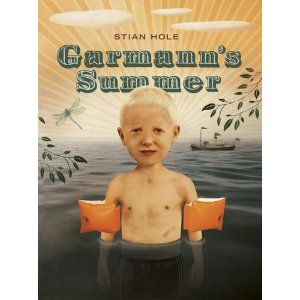
I think I get Garmann's Summer by Stian Hole. I think it's about fear--everybody's scared. I was just left feeling, Well, okay. And?

Garmann is a six-year-old boy who will be starting school soon. The coming event frightens him. Three extremely elderly aunts, who, as illustrated, would probably be his great-great aunts, come to visit. Garmann asks them if they're afraid of anything. He also asks his parents. Each adult is afraid of something. Grown-ups, too, feel fear, and I guess that's supposed to be comforting.

But one of the aunts, it turns out, is afraid of dying, and Mom is afraid Garmann will be hit by a car while crossing the road. And, you know, those fears just aren't on the same level with being afraid of starting school. Okay, maybe I'm not taking Garmann's fears seriously enough. But I think a fear is serious even if it isn't as big a fear as the fear of death. It doesn't have to be on a par with death to be important.

For a much more positive response, check out Fuse #8's review.

I'm guessing the plot for this book began with premise--the idea of a child fearing the unknown of starting school.

More On Evil Plots

I found a transcript of an interview on plot at Oz and Ends. Deborah Lynn Jacobs is the author being interviewed. It's a long transcript, and if you skim, you'll need to do a lot of it. But Jacobs talks about starting her books with a premise and then coming up with a character.

In an earlier post I told about Cynthia Lord's workshop presentation in which she gave a talk on a classic plot structure involving giving a character something he or she wants and then creating obstacles to that character getting it. Jacobs' description of starting with a premise involves the question "What if?". She appears to keep asking it throughout the plotting process. "What if?" is another classic method for creating plots. It's probably closer to what I do.

Earlier this month, I considered doing a self-study program here at O.C. that would involve creating scene cards for books I was reading. Yeah. Like that's going to happen. Plus, it would be giving away too much of other writers' work. But what I may try to do here is determine how the plots of books I'm reading are created--do they have plots that are driven by a character's wants and inability to get them or did they begin with a premise?

So you can look forward to that.

Monday, March 08, 2010

Desire Is The Source Of All Unhappiness And, Possibly, The Source Of All Plots

Cynthia Lord's plot talk on Saturday involved what might be called the classic structure of giving characters something they want and then throwing obstacles in the way of them getting it. The characters overcome the obstacles and, voila, you have a plot and a book. I've heard elementary school teachers talk about a variation of this, advising students to give characters a problem and then give them obstacles to solving the problem.

While I have been trying to generate plot ideas by working out character desires for my recent books, I've always felt uncomfortable with the Wants/Obstacles/Resolution writing plan. I used to think it was formulaic, that you'd end up with one of those inspirational overcoming-adversity things that are all so much alike. But that's not fair because this kind of plot structure would also work for thrillers and mysteries ("I want to find the murderer"), survival stories ("I want to live"), romances ("I want to love somebody"), journey stories ("I want to go home"), and any number of other types of books, depending on the characters' wants. Any plot structure can probably be described as a formula. One person's structure is another person's formula.

A more reasonable reason for being uncomfortable with this plot creating format is the fact that it still doesn't help you come up with the various plot points. What will my character want? What will the obstacles be? Come on. We're still talking about pulling those out of thin air.

On top of that, for some of us a story begins not with a character but with a scene or situation. We may not even know who in that scene is the main character, forget about what he or she may want. I'm into ordinary people finding themselves in extraordinary circumstances. Coming up with a desire for those ordinary people may not be easy because they are in situations they've never been in before. All of a sudden they're supposed to want something?

I am giving this a great deal of thought, and you can be sure I'll be getting back to you on it.

Sunday, March 07, 2010

Retreat News

Yesterday's retreat at Whispering Pines was not as retreaty as the one I do each January. There was no snowshoeing, yoga, or reading in front of a window while night falls over a mountain meadow. But I did get lunch and a thirty-minute walk, so I can't complain.

Cynthia Lord was the author/mentor and the reason I went because she was giving a talk on plotting, which is hell on earth for many writers, myself included. Now, Cynthia Lord has only written three books, and two of them are just coming out this year. Yet she's a very popular speaker at both schools and literary events. Some jaded types might say that happens when your one novel is a Newbery Honor book. I think it's more likely due to the fact that she is a very fine speaker. She was remarkable with both content and presentation. She also made the best use of PowerPoint of anyone I've ever seen. I'm talking both in terms of slides supporting content and ability to use the program.

Now the group critique I took part in during the afternoon was very interesting for a couple of reasons. First, I have to say that the material I heard yesterday was much better than I expected. I was a member of a writers' group for a few years earlier in this decade. That group was made up primarily of unpublished writers, which I suspect was the case yesterday, too. The quality of what I was hearing yesterday was better than what I often heard in my old group. I don't know if this was because there are many more options for beginning writers to learn craft now and I'd see that in any group critique situation or if these were all SCBWI members and, as such, were more likely to avail themselves of such opportunities. Second, these people were also very sophisticated readers and could express themselves confidently. (Probably more so than I did.) I know that at least three of the people there were members of writers' groups and were experienced at giving feedback.

As a result of the discussion of my offering--a few pages from the 365 Story Project--I am going to make some significant changes on Day One, which shouldn't be too difficult to do. I'm also going to change the name from Middle Ridge Road to A Year on Middle Ridge Road. So it was a productive day for me.

Thursday, March 04, 2010

This Speaks To Me

Strong Writers Do This at Writer's First Aid could have had my name on it. In it Kristi Holl talks about self-study programs, an idea she says comes from a book called The Art of War for Writers. I've done self-study programs in the past, and I can totally get behind the idea of writers as warriors.

In the comments to this blog post, someone talks about creating scene cards for novels you're reading, not writing. I've read about that. It's supposed to help writers develop a sense of how plots work. (Hmmm. A little muscle memory for plot, since we were talking about warriors in the last para?) I was going to do it a while back. I was going to use a notebook, had it next to my bed so I could make scene notes while I read. And that's as far as I got with that particular self-study program.

Hmmm. Maybe I'll try doing this particular self-study program here at Original Content. I could try working out the plot points in some books I'm reading, trying to develop some plotting muscle memory.

I found Writer's First Aid by way of Cynsations.

Tuesday, July 14, 2009

Friday, March 13, 2009

Adult Books For YA Readers: Plot And Summing Up

We do love plot. A cliche regarding plot goes that genre fiction is plot driven while so-called literary or mainstream fiction (which some people now contend is a genre, itself) is character driven. In the Gauthier world view, all the traditional elements of fiction (plot, character, point of view, setting, and theme) should be balanced. Integrated even.

Easier said than done, of course. But what isn't?

An important point to remember about plot: There should be a cause and effect relationship between each plot point. A causes B to happen and B causes C, etc. so that once the climactic moment arrives, readers feel that, of course! What else could have happened! If there is no causal relationship between events, you don't have a plot. You have a list of random things happening.

Plot thoughts about this week's study subjects:

Toward the middle of The Dead Father's Club I felt things had slowed down a bit. I'm not talking obvious gaps or leaps in logic. I just felt, Kill him or don't, kid. But by the end of the book, I was sneaking time from work to keep reading.

I think this was a case of the plot, as well as character, supporting one of the book's themes--determining a correct course of action. A character contemplating murder should linger over the decision.

You have to read fifty pages of The Beekeeper's Apprentice before Sherlock Holmes and his young partner, Mary Russell, take on their first case. That seems like a long time for a "plot" to get going in a traditional mystery. And right in the midst of the book's most serious case, the main characters take a detour to Palestine. What? They're going to Palestine now? I thought. Or at all, for that matter, since it seemed totally unrelated to what was going on in that plot.

But The Beekeeper's Apprentice has a great deal to do with character. Those first fifty pages are all about creating Holmes and Russell. As for the trip to Palestine, that's all about defining Russell both as a young Jewish woman and as a woman who is committed to memory. While leaving Jerusalem she recites part of Psalm 137, including the lines, "If I forget you, Jerusalem, may my right hand wither, May my tongue cleave to the roof of my mouth, if I do not remember you." This book is supposed to be an account by an elderly woman who does, indeed, remember not only Jerusalem but the companion/father/partner of her youth.

Some of my commenters have suggested that they associate strong plot with kids' fiction. That could very well be why adult mysteries often serve as gateway books for teenagers moving on to adult books. Plot is important to mystery. Neither The Dead Father's Club nor The Beekeeper's Apprentice are slaves to plot. But plot is woven in with other fictional elements, particularly theme and point of view, which should help young readers dipping their toes into adult works appreciate their balance.

Monday, April 02, 2007

One Of These People Is Having The Best Day Ever

That would be me. I had one of my best work days ever. It began with me reading The Essentials of Plot at Talking Books, editor Cheryl Klein's website. (I found this site because Roger Sutton has spoken of Cheryl a few times.) This write-up of a speech Cheryl gave is fantastic. I've been anxious about the plot for a new project, and reading this speech got my day off to a great start. I finally finished the first chapter, with an ending different and better than I had expected. In fact, I didn't expect that ending until it happened.

I'm hopeful that I can forget about the plot and just work on the story in the future, as Cheryl suggests. I have a great deal of trouble moving ahead in a project until I have a first chapter I'm happy with. It's a foundation thing.