Showing posts with label YA. Show all posts

Thursday, April 03, 2025

We Need Diverse Books Day

We Need Diverse Books began in 2014 as a Twitter hashtag and from there became a nonprofit group. In addition to providing books to schools and libraries, it provides support to and publishes marginalized writers. Today they are celebrating the first We Need Diverse Books Day.

To support their effort, here is a list of books dealing with subjects under the diverse books umbrella that I've enjoyed here at Original Content. 

Picture Books

 A Splash of Red: The Life and Art of Horace Pippin by Jen Bryant and Melissa Sweet


Fancy Party Gowns by Deborah Blumenthal and Laura Freeman

Bad News for Outlaws by Vaunda Micheaux Nelson and R. Gregory Christie 

Company's Coming by Arthur Yorinks and David Small  


Middle Grade

Figure it Out, Henri Weldon by Tanita S. Davis

Don't Hold Me Back by Winfred Rembert

March: Book One by John Lewis, Andrew Ayden, and Nate Powell      

Finding Langston by Lesa Cline-Ransome

One Crazy Summer by Rita Williams-Garcia

Jasmine Toguchi, Mochi Queen by Debbi Michiko-Florence and Elizabet Vukovic

Strange Fruit by Gary Golio and Charlotte Riley-Webb


YA

Home Field Advantage by Dahlia Adler

Mare's War by Tanita S. Davis

Dread Nation by Justina Ireland

Deathless Divide by Justina Ireland

The Field Guide to the North American Teenager by Ben Philippe

Dear Haiti, Love Alaine by Maika Moulite and Maritza Moulite

The Hired Girl by Laura Amy Schlitz

Open Mic: Riffs on Life Between Cultures in Ten Voices, Mitali Perkins, editor

A Sitting at St. James by Rita Williams-Garcia

Adult Books

Winter's Orbit by Everina Maxwell                                              

The Underground Railroad by Colson Whitehead

The Cooking Gene by Michael W. Twitty

Friday, July 28, 2023

A YA Roundup Page

The Hub, a Young Adult Library Services Blog, has a list of nominees for best books for young adults. What is striking here is that they include a description of each book, making this a very functional list. It says it is a summer edition, so presumably there are or will be other lists.

Included on the list is This is Not a Personal Statement by Tracy Badua, which I read last winter. 


Thursday, January 05, 2023

What Is Going To Become Of This Girl?

Copy provided by Netgalley

Publication Date: January 17, 2023

This Is Not A Personal Statement by Tracy Badua wasn't quite what I expected, which is not a complaint. After being rejected by her top choice college (and all her choices) the main character, Perla, comes up with a plot to go, anyway. I thought she was going to somehow actually attend a full schedule of classes, enjoying freshman life, just not be on the books.

Granted, that would have been quite far-fetched.

Instead, Perla is living a disturbing, secret life, and attending only one class, if I recall correctly. Her plan is to find out what she did wrong with her application and apply again for spring semester.

She doesn't learn much about what she wanted to know, though she does spend a great deal of time thinking about her relationship with her parents who have no idea what she's doing.

I found Perla a little talky as far as her family expectations are concerned. But this is an intriguing set-up for a story and toward the end there is some tension over what's going to become of her. This reader was even left with some tension over what will become of her in the future.

Last fall I read of a man pretending to be a student managing to live on the Stanford campus for ten months. So the living on campus part can happen.

Wednesday, December 14, 2022

This Is What They Mean When They Say "Thought Provoking"

 I attended Facebook friend Sarah Darer Littman's book launch for Some Kind of Hate, published last month. I attended by Zoom, and I meant to catch a picture, but I was distracted because I was late joining. Why? Well, I kind of forgot about it until the last minute.

I mention this, because it illustrates the beauty of Zoom. I sure wouldn't have been driving to that bookstore a minute or so after the event was scheduled to start. I also mention it, because the interview with Sarah at her book launch relating to how she came to write Some Kind of Hate and the background information she's accumulated was fascinating. She has materials at her website on the book.

Some Kind of Hate is written from two points of view, as many YA books are. One is Declan's, a young person who becomes involved with a white nationalist group, and the other is Jake's, Declan's Jewish friend, whose local community becomes a target for Declan's new friends. The points of view almost become separate stories. A book totally from Declan's point of view might have been a hard sell. He's risky, because he's not likable. He's definitely a realistic character: not very strong-willed even before a life-changing accident he brought on himself, and from what I've read, he's the perfect mark for a hate group. But he also is unwilling to accept responsibility for the boatload of grief he brought down on himself and his family. He projects responsibility for his circumstances onto others instead of shouldering it himself, which would then make it possible for him to take some kind of positive action about his life. He also illustrates very well why it is so difficult to reach someone like him. His hate group buddies support his misery and give him beliefs to make him feel better. It is difficult for his family and friends to use logic, fact, or family history to convince him to change, because he believes and belief doesn't require logic, fact, or any kind of knowledge. How deep a hole is he going to dig for himself becomes the narrative drive for Some Kind of Hate.   

I kept talking about this book as I read it, and I think the reason I found it so thought provoking is that I come out of a world similar to Declan's, though much more rural. So I kept thinking, why didn't I or anyone I know go Declan's way? There are a couple of answers: 1. It was a different time, hate groups weren't as prevalent, probably because there weren't as many opportunities for haters to find one another, because the Internet hadn't been invented. I worked for the one Jewish storeowner in our area, so I was aware of verbal unpleasantness directed toward him. But if I hadn't had a connection, I might not have known these things happened in my day and age, there was that little communication in the world. 2. For all I know, people I knew growing up are now members of some of these groups or at least sympathizers. I don't belong to the kind of on-line groups where I would run into them. 

After my sons left home for college, I would hear on the news about some good-awful thing a young man had done, and I'd wonder, Did I remember to tell my kids not to do that? One time I actually asked my younger son about one of these things I'd read about and asked him if I'd ever told him not to do it. He looked at me and said, "You shouldn't have had to."

As I was reading Some Kind of Hate, I wondered if I had forgotten to tell my sons not to be antisemites or racists, the way Declan's parents forgot to tell him. While it appears I didn't have to with my own children, it looks as if kids like Declan have to be told point blank.


Wednesday, October 12, 2022

The Prequel Is As Good As The Original. Maybe Better.

How much did I like We Were Liars by E. Lockhart when I read it back in 2019, five years after it was published? I liked it so much that when I read that a prequel, Family of Liars, came out earlier this year, I
sought it out. 

These are books that it is difficult to talk about, because what is not known about them is what makes them so pleasurable to read. I tried to find a review of the most recent book, but I think the two I looked at gave away more than I want to. I can say that both books maintain the same atmosphere, and given that they were published, if not written, eight years apart that's no small task for the author to have accomplished. I will say that you should read the original book first and the prequel second. It's a prequel. Come on.

I can also safely say that I loved the family matriarch, Tipper Taft Sinclair. I suspect I wasn't supposed to. I don't think it says something disturbing about me that I like her but is an expression of how I function in our family. Tipper ran an annual lemon hunt in Family of Liars. I thought that was a fantastic idea, so when we were having a three-generation birthday lunch on my deck a few weeks ago, I ran an apple hunt, which is like a lemon hunt, but different. It wasn't as elaborate as Tipper's lemon hunt, but I didn't think to do it until the week before. 

Next year my apple hunt will be more Tipper-like.

How much did I like Family of Liars? I own a copy of We Were Liars and reread it, something I very, very rarely do. I mean rarely. The book was still intense and atmospheric with great narrative drive. But this time through I felt a bit about it the way I feel about Romeo and Juliet now that I'm an adult. Are these kids not all that bright?

But you have to read the book twice before you feel that way. The first time through, I didn't notice that. Give these books a read.


Thursday, October 06, 2022

Environmental Book Club

What I usually see in middle grade environmental books are stories about kids fighting a big bad company that's doing nasty environmental things to endanger something like an animal or a wetland. Very formulaic and predictable. With The First Rule of Climate Club by Carrie Firestone we're talking more of an us-against-the-world thing. Some may find it a bit pedantic, but it's far more sophisticated than other books of this type that I've read.

First off, I feel I should point out that while the book's publisher is marketing it as middle grade, the library I borrowed it from classified it as "Teen." The kids are 8th graders and have access to more social media than I would expect from true middle graders and more freedom to get around. None of this means middle grade students shouldn't read it or like it, just that the more mature characters help explain their access to more mature situations. By mature I don't mean engaging in sex, but understanding racism and that they have the ability to become involved with environmentalism in realistic ways.

Mary Kate is a student in a pilot science class involving climate science in a town near Hartford, Connecticut. She has students from Hartford attending school with her. Living in this area, I can tell you that this is realistic. The kids seem gung-ho for environmentalism, but this makes sense, because they had to apply to attend the class. Only kids who can prove they have an interest and reason to be there are there. 

The kids have various interests, meaning environmentalism is covered in a more whole life type of way then in the "let's save the little wild rodent from the big bad oil company" kind of books. Food waste, composting, fast fashion, electric vehicles are among the topics pulled into the story. One of the things I particularly like about this book is that many of the things covered, such as composting and fast fashion, middle grade and above students could make part of their lives now.

Another topic Firestone covers--the connection between climate/environmentalism and race. Embarrassed to say that I was not aware of that. And my trash was going to the Hartford incinerator she writes about. (Interesting sidenote--before the incinerator came to Hartford, there was an enormous landfill there, known as Mt. Trashmore. It was right along a major highway north of the city. Landfills are not supposed to smell, but this one most definitely did.)

Another important aspect Firestone touches on--the potential for knowledge of climate change to cause anxiety in children. This isn't a book that just takes the attitude that children can and will fix everything for us.

The chapters in this story are very short and often in different formats--sometimes a traditional narrative, sometimes a podcast, sometimes a letter. I do like to move along when I'm reading.

This really is a book that should be valuable for a number of reasons. I hope it makes the short-list for the Connecticut Book Award next year, being both by a Connecticut author and set in Connecticut.


Friday, September 09, 2022

A Nineteenth Century Couples Mystery For YA

 I often have a reason for picking up the books I do, one that goes beyond, "Gee, that looks good." I chose Anatomy: A Love Story by Dana Schwartz, because it sounds similar to the various adult mystery series I've read that are set in the nineteenth century with a male and female lead who meet somehow, get involved with solving a mystery, one thing leads to another, and romance ensues. Also, not to leave anything to the imagination here, sex.

That pretty much is what happens with Anatomy, which involves an aristocratic young woman who wants to break out of her planned life and become a surgeon. In that era, the study of anatomy was becoming significant in the training of doctors. Bodies to study were few and far between, and the medical community supported grave robbers, known as resurrectionists. Sure enough, our heroine gets tangled up with one who provides her subjects for study.

This was a good book, very readable. I'm not a fan of the direction it took at the end, but that definitely is a just-me thing. Additionally, for those of us accustomed to reading these kinds of stories for the adult market, the romance/sex is very tame. To the point that I was left wondering what happened and just what kind of relationship did these two now have. I hope that this doesn't mean that I need no-doubt-about-it sex scenes. It may be more that I struggle to read between the lines.

Whenever I've read of resurrectionists, the stories have been set in Great Britain. Anatomy takes place in Scotland and inspired me to check out if something similar went on in the United States. Oh, my goodness. Did it ever.

Yeah, the nineteenth century American medical community didn't suffer from an abundance of ethics, at least as we would recognize it today. 

And racist? Oh, yes. Though I suppose doctors back then could have argued that they only seemed like racists, because, hey, these are the bodies we could get.

I am so turned off to medicine right now.    

Sunday, August 28, 2022

Beginning To See Pandemic Books

 I stumbled upon Hello (From Here) by Chandler Baker and Wesley King at a library. As my legion of followers know, a romance has to have something going on besides the romance if I'm going to read it. This one does, because it's set during the early months of our pandemic. While I've read, and written, pandemic humor, I haven't read any other kind of fiction that deals with it. 

I have to say, I found a lot of Hello (From Here) stereotypical YA. You've got your dead parent and your absent parent and your financially strapped parent and your illnesses (though they were interesting ones) and your magical old person and your dog. However, the pandemic setting made everything, if not actually new again, at least more interesting. 

Now that dealing with the pandemic (and I am one of those who still deals with it) has become somewhat boring and less restricting, it's already easy to forget the stress and fear of the early days. We're talking about something that happened only two and a half years ago and is still going on to some degree. And, yet,  Baker and King's book almost seems like a historical novel. That's not a complaint. Their book, I think, reflects the incredible speed of what has been happening. 

This is a case of a unique setting and two lead characters who are realistic and intelligent about what's going on around them giving new life to an old situation.


Thursday, August 18, 2022

Ironhead: When You'd Rather Go To War Than Stay In This Marriage One More Minute

I can recall reading novels, probably historical romances, about the Napoleonic Wars when I was a teenager. So you can see why I was attracted to a review of Ironhead: Or Once a Young Lady by Belgian writer Jean-Claude van Rijckeghem, with translation by Kristen Gehrman, which might be described as a historical anti-romance.

Eighteen-year-old Constance is a young woman who doesn't know her place in early nineteenth-century Belgian society, probably because there isn't one for her, since she has minimal interest in doing laundry and bearing children. Her father insists she marry a much older man who will then become his business partner and pay off his debts. Constance sticks out the marriage for four months. Then, recalling having run into what was clearly a lesbian couple in which one member was dressed as a man, she comes up with a plan to take the place of a local acquaintance who has been drafted into Napoleon's army. Living as a man among soldiers--that is most definitely Stance's place.

Constance's fourteen-year-old brother, Pier, does know his place in their society. He's a student in a boarding school, which will open possibilities for him. But his father can no longer pay his school fees. Money from Constance's husband was supposed to take care of that. So when Constance disappears, he takes off with a supposedly trustworthy guide to find her and bring her back.

The two siblings appear as point-of-view characters in different parts of the book. We're not talking alternating chapters here, but close to it. Because Pier is a more conventional character, his story thread isn't as interesting in the early part of the book, though he improves markedly. They both have journey/adventure story lines.

I think this is a unique book in today's American YA scene, where you find a lot of fantasy and contemporary romance with some contemporary mystery and thrillers thrown in. Historical fiction tends to be of a more accessible time, say late nineteenth, early twentieth century. Ironhead is a good book that requires a little of the reader to start, with a big payoff later, something I can't recall seeing much of in YA. 

Thursday, July 28, 2022

A Marvelous YA Mystery

I found Cold by Mariko Tamaki through a review in The Horn Book. I was a few issues behind, so I was able to find this book at a nearby library. I'm interested in YA mysteries and thrillers right now, so there was my attraction.

It's a terrific book about a dead teenage boy and a live teenage girl. And that's as far as I'm going with the plot description. Oh, except Tamaki does something terrific with the mean girl clique cliche. I am not a fan of alternating points of view, but this worked great. The female lead is my favorite Georgia since Georgia Nicholson. It's not that outrageous a comparison because these two Georgias have voice.

This could be described as a queer mystery. What is particularly interesting is that it is slowly revealed just how much that thread has to do with what is happening. 

Mariko Tamaki is the author of the graphic novel Emiko Superstar  (art by Steve Rolston), which won a Cybil in 2009. 

Thursday, June 09, 2022

Goal-Driven Characters Are Very Readable

Copy provided by NetGalley

Publication date: June 7. 2022

I am embarrassed to say that June being Pride Month really hasn't been on my radar the way, say, Black History Month and Women's History Month are. I have been noticing references to it the last week or so, though, and as random luck would have it, I just finished reading a book that marks the occasion

I wasn't attracted to Home Field Advantage by Dahlia Adler by the romance. I don't care for romance by itself. Person meets person stories end with our leads getting together, so I feel I know the ending before I even begin. I need a surrounding story for my romance reading. And I wasn't attracted by the football, because I am only a sports fan during the Olympics, and pretty picky even then. What did lead me to ask for the galley was the knowledge that both the cheerleader in Home Field Advantage and the quarterback are girls. I haven't read a lot of those. To date.

Amber McCloud is a popular cheer leader who is shooting for cheer captain, because it will help her chances for college. Jack Walsh is a gifted football player who has been brought in to replace Amber's high school's late lamented QB who was nowhere near as good as Jack is. In fact, the whole team is not on Jack's level. But they are grieving their dead teammate who died unexpectedly, and Jack, being Jacklyn, becomes a target for both misogyny and homophobia.

Goals, Goals, Goals

Amber is a somewhat closeted lesbian--what happens at cheer camp stays at cheer camp--dating a somewhat closeted gay football player, Miguel. One of the particularly interesting aspects of this book, I thought, was that neither Amber nor Miguel have any problems with their sexuality. Nor is family acceptance a major issue for them. They are not out, because coming out will hinder them reaching goals. Amber sees making cheer captain as a stepping stone to college and getting out of town and she doesn't see the cheer team embracing a lesbian no matter how good she is. Miguel wants to play football. His one experience with another player knowing his reality did not go well for him.

Jack, too, is very goal-oriented. A high-achieving female football player has few options. Playing with this loser team may be the only opportunity she will ever have to play football. It may be a stepping stone to some kind of sports-related career.

What these characters want to achieve makes their behavior make sense. Giving characters something to want is cliched writer advice. Give them a goal! 

Oh. Wait. Football has goals, doesn't it?

I am not fond of alternating points of view, and sometimes I felt Amber and Jack got too introspective for my taste. But this was a narrative with drive and some unique characters for this reader. I was even up for a football scene. I've only been vaguely aware that LGBTQ books are a thing in YA. Home Field Advantage definitely encourages me to read more.


Monday, March 14, 2022

An Incredible YA Historical Novel

I finished reading A Sitting in St. James by Rita Williams-Garcia a week or two ago. Williams-Garcia is the author of a number of books for young people, but the one I'm familiar with is One Crazy Summer, which I described as "fantastic." A Sitting in St. James and One Crazy Summer are very different, though. One Crazy Summer is middle grade historical fiction set in California in 1968. A Sitting in St. James is YA historical fiction set in the antebellum south with mature content and a sophisticated writing style that never lets the reader go. One Crazy Summer I recall including humor. A Sitting in St. James has some dry humor but at a couple of points while reading it early on I remember thinking, This is a horror story. Though it's the kind of horror that's real. 

As I said, A Sitting in St. James is YA, and it does involve three main YA characters, one the son of the owner of a down-at-the-heels plantation, one his enslaved, and acknowledged, half sister, and one the slave who serves the plantation's elderly matriarch. How they will live their lives, either within the family/plantation or by separating from it, is a classic YA situation. 

However, there are two adult characters in this book who have an impact on all around them, and they are hugely important. Sylvie, the elderly wife of the original plantation owner, is obsessed with her past in France, when she knew the royal family. Her son, Lucien, is pretty much a monster. And, yet, what an amazing character. A monsterish character, but...wow.

Some interesting points:

  • No one is happy here, slave owner or slave. You'd think that the horrible things Sylvie and Lucien do would support lives that give them satisfaction, because, otherwise, why do them? But, no, they are both miserable. Which, perhaps, may be the point. They're miserable and spread the misery.
  • The attitude of the white characters toward the black goes beyond thought or logic. It just is. A gay character, whose life would be ruined if he's found out, might be expected to feel some compassion for others who live under repression. Nope. Doesn't have a clue. The lovely young  woman who is just a beacon of goodness knows how to put a black woman in her place and does so.
  • White children grow up with their fathers' black children. They're aware they are half-siblings and grow up as half-siblings. They think nothing of the fact that their half-siblings are slaves and they're not. Or that their fathers cheated on their mothers. Or that their fathers, in all likelihood, raped their half-siblings' mothers. 
  • Williams-Garcia shifts point of view in this book, without the cliched YA device of making different chapters from different points of view with the POV character's name on the first page to make sure everyone understands what's happening. This is something that I haven't seen a lot of in the last few decades, and I thought it was even discouraged in the publishing world. It works very well here. (Everina Maxwell does it in Winter's Orbit, too. Striking to have seen it twice recently in such different books.)
Williams-Garcia has created an incredible, justifiably disturbing world in which she tells a mesmerizing story about a plantation family's downfall and its impact on the next generation. The Guilbert family crashes not because of the Civil War foreshadowed in A Sitting in St. James, but because of who they are.

This should be a terrific crossover book for adult readers.

Sunday, December 19, 2021

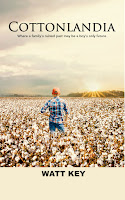
Cottonlandia: Southern Lit For YA?

Copy provided by NetGalley

Publication Date: January 11, 2022

A New York City rich kid ends up penniless on a cotton farm in Mississippi. That description at NetGalley, combined with the cover illustration, attracted me to Cottonlandia by Watt Key. It's a city mouse/country mouse, fish-out-of-water story, but one that's not played for laughs in the Green Acres mold. Also, there's no dealing with a traditional high school situation and friends here. No bullies, no teacher problems, no sports, no sibling rivalries. Not your same old, same old YA.

Fifteen-year-old Win Canterbury is not your same old, same old YA male, either. He is self-centered, self-involved, selfish, entitled, and immature and demanding. He most definitely is not the likable character required for readers to identify with. I loved him. He might not be someone I'd like to know personally, but I loved him in this book, because he was different. His unpleasantness, however, doesn't alter the fact that he has also been abandoned, though not your traditional abandonment on the side of the street. The reason for the abandonment is unique as well.

Just before Christmas sometime in the 1990s, Win's wealthy father informs him that he's sending him down to visit his sickly grandmother in Mississippi for a few days. Win doesn't know the woman. He's only been to Mississippi once. His father is insistent. So Win is handed off to a flight attendant in New York, takes three planes to get to his destination, where he is met at the airport by John Case, the farmer who has been renting the Canterbury family's property, Cottonlandia, for decades. The farm is a going concern as a cotton plantation/farm, but the family house is sort of rotting around its owner, who is sort of rotting away herself. Not exactly a southern mansion, though it and the grandmother have clearly seen better days. Win is dropped into this world where he can't even get food he's used to, and after a few days he learns that he has to stay there. He has nowhere else to go.

The 1990s setting makes Cottonlandia believable. The Internet was not then what it is now and teenagers were not connected with phones and social media, so Win's isolation  makes sense. An old lady with no TV and only one phone she doesn't want to use would be eccentric at that time but still possible.

In a more formulaic YA book, Win and his creepy grandmother would develop a deep, meaningful relationship. Not here, thank goodness. Or living at Cottonlandia would awaken some kind of instinctual love for the family property. Again, no. Instead, Win's boredom and dependence on John Case, as his contact with his old world, eventually leads to his involvement with the people he now finds himself stuck with. He eventually rejects those who should have cared for him and didn't and embraces those who provided him with care when he needed it. 

If I knew more about southern regional writing, I might suggest that Cottonlandia is southern lit for YA. Place and world view are hugely important in the story, and the place is in the south. There's a lot of description, which is something I usually skim. I didn't here. Seriously, I actually read about cotton farming and blowing up beaver dams. (Aside: I am not fond of beavers.) I felt I was being exposed to something new for me, read everything, and looked forward to getting back to the book between reading sessions. Some people might argue that the climax of the story wasn't climactic enough, but there's a reality to that. Plus, if you had any involvement with construction at the end of the last century, the issue Win uses to get what he wants is entirely believable. It used to be a very big deal and may still be, though maybe not so much here in New England.

The author, who has published successfully with traditional publishers, says in a note that he published Cottonlandia himself. It can be hard for self-published books to attract attention. I hope that this one gets some.

Saturday, December 11, 2021

That Was Grim. Good, But Grim.

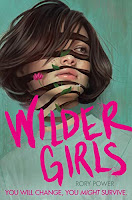
Wilder Girls by Rory Power is not your stereotypical girls boarding school story with cliques and mean  girls and young love and someone dying. Though there is some young love. And a lot of people dying.

Raxter School for Girls, where our story is set, is on an island off the coast of Maine, and it’s alone there. So when the girls, their teachers, and all the animals on the island become ill with an unknown and quite horrendous illness that leaves them maimed and never actually goes away, but recurs, unless it kills them, they are quarantined by the government. The book is well written and atmospheric and violent, with some surprises. I've seen it compared to Lord of the Flies. It's not a perfectly apt comparison, but if you have to compare it to something, that's not bad. 

How disturbing is this book? I was reading it this fall when I became sick for four days with a nonCovid illness that we didn't know wasn't Covid for a few days because we were having trouble finding home Covid tests or scheduling one. So I was quarantining in a bedroom with my iPad and food being brought to my door by a masked man. I decided that Wilder Girls wasn't something I should be reading right then and put it aside. No, I don't remember what I replaced it with.

An excellent book but maybe not for the faint of heart.

Sunday, October 31, 2021

A Good Mean Girl Book

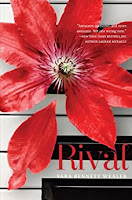
First I would like to share how I happened upon Rival (now available in a very affordable e-book) by Sara Bennett Wealer, because it's another example of social media at work. And working.

This fall, I became involved in a fascinating discussion on Facebook about a  literary fight that was getting a lot of press at the time. Sadly, I love that kind of stuff. None of the people involved in the discussion were people I actually knew because I, like many writers, am Facebook friends with many authors I don't actually know. We're all networking. After engaging with them for a while, I thought, Who are these people? I looked up a few and tried to find their books in the e-book library system I use. Sara Bennett Wealer's Rival was there, and I ended up with a very good read. 

Two Great Things About Rival

  1. The two rivals are not rivals for high school status but for top honors in a major, high quality singing competition. These young women are highly talented and trained singers. They have something very interesting going on in their lives beyond who-gets-to-sit-at-which table in the cafeteria. They have a passion and an interest beyond the next dance. The character who we would probably consider the bully in this story doesn't even care that much, or maybe even at all, about the high school social world she dominates. She wants to win the singing competition and impress her father. Because if there is one thing we've learned from the second season of Ted Lasso it's that everyone has daddy issues. The character we would consider the victim needs the competition scholarship money. She does not keep her eye on the real price as much as she should
  2. It's hard to tell who the real bad guy is here. As I said, Queen B, the pseudo-bully, really doesn't care about things like the important dance after the football game. She cares about singing. Whereas the victim, who needs to win the competition for college money, bends over backwards to get in good with the clique around the bully. In fact, she does one thing I think most people would consider criminal and for a very shallow reason. Then there's a third character, a member of what we'd usually consider the mean girl clique, who is highly active behind the scenes. She might have a little sociopath thing going on. I now want to read more books about characters in her position. What the heck kind of life are they living and making for themselves? 

The Music Is A Great Asset

I am not a fan of teen friend angst stories, especially when related to cliques, mainly because if you've read one book about that, you've pretty much read them all. However, adding a talent to work with for the two main characters makes them so much more interesting. And I don't even know anything about singing. Wealer does. According to her website, she sang in choirs as a teenager and majored, at least for a while, in voice performance in college.

She makes great use of her knowledge in Rival and does some interesting things with what could have been very cliched characters.

Monday, October 04, 2021

A Book That Tears Up Some YA Cliches

Last Friday, October 1, I began a new writing group program with a Facebook group I've belonged to for a couple of years. We create a couple of temporal landmarks a year by setting aside a month for a specific writing project.  This month I'll be working on that mysterious YA mystery I keep talking about here. And today I'm posting about a mysterious YA book I recently read.

A number of books have covered people unaware of the world they're living in or unaware that they are being used for the entertainment of others  (notice how I'm not telling you much here?), but This is Not the Jess Show by Anna Carey does it particularly well. Even if you end up hearing some of what this book is about before reading it (it has been out since February), there's a genre-bending twist, and a bit of a surprise in the ending. 

A real ending, people. As I was getting closer and closer to the end of the book, my anxiety level was going up and up, because I was so sure this was going to be the first in a serial. What a delight to get to that last screen (I read an e-book) and get a satisfying resolution. I think there may be an opening for a sequel, but not in a serial, you've-got-to-read-another book sort of way. 

This Is Not The Jess Show starts out with a very traditional teen girl craving romance. She is a traditional teen girl with two best friends. She has a traditional family tragedy looming over her. I will be honest and say those are not my favorite things to read about. But then author Carey blows all of those out of the water. A really impressive job.

There's also some well done, subtle, commentary relating to technology and society going on here, a la Black Mirror. In fact, I believe there are some scenes similar to a Black Mirror episode. Which is not a complaint. Just saying, if you like Black Mirror, consider reading This Is Not The Jess Show. And if you like This Is Not The Jess Show, consider catching some episodes of Black Mirror.

I would also like to say that I think Carey makes the situation in her book believable with that genre twist I mentioned above. Well done. 

Here's a question you might be left with after reading this book: Why does our culture find death and grieving entertaining?

Wednesday, June 16, 2021

Gail's Sense Of Snow

I grew up in central Vermont, as my loyal readers probably know. I headed a little further north in the state for college. I've lived all my adult life in central Connecticut, which is southern New England, which often is no stranger to rough winter weather. That backstory explains, I hope, why I have a love/hate relationship with snow. I love snow if I can be inside watching it or outside frolicking in it for a bit. I hate it if I have to travel through it, either as a driver or a passenger. I hate it if any family members are out driving in it.

By which I mean driving through a snowstorm.

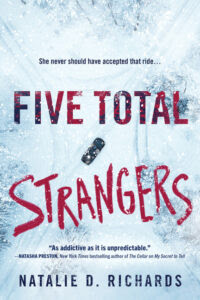
I found  Five Total Strangers by Natalie D. Richards intense and disturbing, which is what any writer wants from a reader, totally because it involved five people driving through a snowstorm. The main character is a teenage girl on her way home for Christmas who accepts a ride from a slightly older young woman she'd met on a plane that had just landed. Their airport is now shutting down because of an expected snowstorm, and older woman has rented a car and offered rides to four people, including our narrator. None of them know one another.

I stayed up too late reading it one night. All because of the snow.

There is a secondary story line related to a stalker. I don't think that was necessary. This could have totally worked as a snowpocalypse survival story.

Oh, on top of the snow issue, these strangers were driving through Pennsylvania. I've driven in Pennsylvania in the fall, not the winter. I don't know if I have been on one of the highways named in the book, but I find whatever Pennsylvania route we always end up taking when we're going to the Midwest an ordeal, because the exits are few and far, far between. All I can think of when I'm on that highway is how long it would take emergency vehicles to arrive in any kind of weather--on a beautiful summer day--because it's been so long since we passed the last on-ramp and there's no sign of another one.


I'm getting stressed just writing this. I believe anyone who's lived in a northern state would. I don't know of anyone old enough to have a driver's license who doesn't start hunting for help from a higher driving power when a snowstorm is predicted.

Well, except for my late Uncle Gerry who worked for a public works department. I once heard him refer to snow as white oil, because of all the over time he collected--driving a snowplow.


Monday, May 17, 2021

The Young Readers Edition Of A "Scary but True Story of the Poison that Made People Glow in the Dark"

Years ago, The Horn Book did a special issue on history books for children, describing how in days of old, such books were often children's versions of adult books while these days original historical
research and writing is being done for the children's audience. I can find neither my blog post on the subject nor links to The Horn Book articles I recall. Hey, but it happened.

My recollection of that Horn Book material lead me to pick up The Radium Girls: Young Readers' Edition, The Scary But True Story of the Poison that Made People Glow in the Dark by Kate Moore. It's the 'young readers' edition of her book, The Radium Girls: The Dark Story of America's Shining Women. Both books might be described as horror history about the horrendous illnesses and early deaths among women painting clock faces with radium so their numbers would glow in the dark. They died or lived, some of them, seriously compromised lives so people could read a clock without turning on a light.


This is an important story not just because of the misery endured, but because of the impact these women's experience had on labor law. And because many of these women were, indeed, adolescent girls when they began working in the factory that's practices killed them, you can definitely see why this story would be of interest to younger readers.

I read the YA version and skimmed sections of the adult version, trying to determine how the two books are different. 

  • I had trouble keeping the different women covered in this work apart. The things that happened to them were terrible, but they tended to be a blur of terribleness for this reader. In skimming the adult version, I think there was more detail, something that would have helped with my reading problem.
  • Some of these women had children over the course of the period covered. A couple of times I did briefly wonder when that happened or how, given their illnesses. While skimming the adult version I came upon a woman suffering severe gynecological problems. It came up in another area, as well. I don't believe any of that made it into the young readers' version. So could we say sex was cut for the young?
  • In the adult version, a major player's wake and funeral are covered quite extensively, including a painful scene involving her young children. That doesn't appear in the young readers' version. Death certainly isn't left out of this book, as one woman after another dies. But what might be described as the survivors' experience of death was.
  • The young readers' version had photographs. I didn't see any in the adult version. 
  • The title change is interesting. The adult book is called  The Radium Girls: The Dark Story of America's Shining Women, suggesting the women involved will be the focus of the story. The young readers' version is called The Radium Girls: Young Readers' Edition, The Scary But True Story of the Poison that Made People Glow in the Dark, suggesting the radium will be the focus of the story. I didn't notice the subtitle until after I read the book. I definitely didn't feel it had been about radium, and my skimming of the adult book suggests that the major difference between the two is material that was dropped, not a shift in subject matter. What was the purpose of the title switch? To try to make the book less threatening by trying to put the burden of the story on the radium rather than the women whose lives it destroyed?

The writing style isn't difficult, so if I were a teacher, I'd recommend teenagers just go ahead and read the adult book. I don't know at what point even younger readers start reading material like this, though I saw a couple of reviews at Amazon that said children as young as 8 and 9 have read the young readers' version.

While reading The Radium Girls, I began to wonder if it was history or a journalistic treatment of an event that occurred in the past. Sadly, I am not knowledgeable enough to answer the question.

Thursday, April 29, 2021

Environmental Book Club

I recently read Boys, Bears, and a Serious Pair of Hiking Boots by Abby McDonald. While I was a lot more interested in the serious pair of hiking boots than I was in the boys, it is an example of the kind of environmental book I'm interested in finding in YA and childlit. 

American Green Teen Jenna heads off to Canada for the summer. This is a classic story start, one in which there is a disturbance to the main character's world. Why, I've used it myself. More than once. While off to our neighbor in the north, Jenna finds herself dealing with a lot of very traditional YA issues: summer boyfriends, growing away from a long-term friend, dealing with unpleasant people, mom and dad in meltdown. Arguably there is enough here for a couple of books.

But then there is her environmentalism.

An Environmental Theme

I have trouble finding environmental themes in books. What many consider themes, I consider subjects. Environmentalism is a subject, not a theme, for instance. Single words usually are just subjects, in my opinion. So 'environmentalism is necessary' is closer to a theme, though as far as writing is concerned, it doesn't have a lot of built-in narrative drive.

Last month I attended a writing workshop in which we were told to ask ourselves "what is the central dramatic question of your story?' And that, friends, gets a lot closer to theme, as far as I'm concerned. What dramatic or life question is your story trying to answer?

In Boys, Bears, and a Serious Pair of Hiking Boots, I think the theme/question McDonald is trying to answer is "how do we live an environmentally responsible life?"

How DO We Live An Environmentally Responsible Life?

Jenna is very hot for environmentalism when her story starts. But everything in life has consequences of one sort or another and just as not living environmentally has consequences, so does living environmentally. Those consequences are not all clean air and water. There are sometimes impacts on people's livelihoods, and Jenna has to confront them here. 

The book also includes a character who evolves into a cliched, strident environmentalist, probably meant as a cautionary tale. But her path is another possibility to consider when toying with how to live a life that is as environmentally sound as possible.

I can't say that all the elements of this book come together smoothly here. Loading Jenna up with so many YA issues distracts from her coming to terms with what kind of person/environmentalist she's going to try to be. But I very much appreciate that she's coming to terms with that at all.

Friday, March 05, 2021

Replica--You Choose The Book's Structure

Replica by Lauren Oliver is one of those books I found on my Kindle--I bought it on sale, didn't read it right away, and didn't recall much about it when I finally began it. And I didn't understand the novelty of its structure. At the end of each chapter, I found instructions to follow a link to get to a chapter about another character. But only if I wanted to. I could choose to keep reading about the main character I started with, and then, presumably, read about the other character all at once. 

To more clearly explain this, here's the description from Oliver's website: "Replica is a “flip book” that contains two narratives in one. Turn the book one way and read Lyra’s story; turn the book over and upside down and read Gemma’s story. The stories can be read separately, one after the other, or in alternating chapters."

Point-of-View Switches

Though I'm always complaining about books with point-of-view switches, I chose to keep going back and forth between Lyra and Gemma's stories. Oddly enough, I thought that worked very well, especially when you consider that after reading a chapter from one character's point-of-view, I'd often read another chapter covering the same material, but from the other character's point-of-view. My complaint about point-of-view switches is that I feel they slow narrative drive. I didn't feel that was the case here, even though you'd think that covering the same material twice would do just that.

That Teen Girl-Boy Thing

 
Both Lyra and Gemma have romantic involvements. In fact, for one of them there is the possibility of a torn-between-two-lovers situation. Romance, romance everywhere is something, like point-of-view switches, that usually annoys me no end. Romance in books that are not actually romances usually strikes me as a gimmick, an awkward add-on, a distraction. Especially in thrillers or adventures where characters are in danger, the logic of dropping everything for a love scene is just lost on me.
 
In the case of Replica, though, the romance is less like romance and more like an attraction, a drive that the characters have no control over. That was particularly so in Lyra's case. A stage-of-life attraction to the opposite sex may be what's happening during adolescence. It makes more sense to me than sixteen-year-old romances.
 

 Are We Talking A Serial?


Replica leaves readers with the impression that there is more to come. And there is what's called a "companion novel," Ringer, that appears to involve the same characters after the events in Replica. But Replica has a satisfying ending. One phase of the story, at least, is ending. There isn't the feeling that this is a serial, that readers are left dangling and will have to buy another book to feel any kind of satisfaction.
 
I hate when that happens.
 
So Replica is both a good read and an interesting example of how a number of writing issues that I really dislike can be made to work.