Showing posts with label 2021. Show all posts

Sunday, August 28, 2022

Beginning To See Pandemic Books

 I stumbled upon Hello (From Here) by Chandler Baker and Wesley King at a library. As my legion of followers know, a romance has to have something going on besides the romance if I'm going to read it. This one does, because it's set during the early months of our pandemic. While I've read, and written, pandemic humor, I haven't read any other kind of fiction that deals with it. 

I have to say, I found a lot of Hello (From Here) stereotypical YA. You've got your dead parent and your absent parent and your financially strapped parent and your illnesses (though they were interesting ones) and your magical old person and your dog. However, the pandemic setting made everything, if not actually new again, at least more interesting. 

Now that dealing with the pandemic (and I am one of those who still deals with it) has become somewhat boring and less restricting, it's already easy to forget the stress and fear of the early days. We're talking about something that happened only two and a half years ago and is still going on to some degree. And, yet,  Baker and King's book almost seems like a historical novel. That's not a complaint. Their book, I think, reflects the incredible speed of what has been happening. 

This is a case of a unique setting and two lead characters who are realistic and intelligent about what's going on around them giving new life to an old situation.


Monday, March 14, 2022

An Incredible YA Historical Novel

I finished reading A Sitting in St. James by Rita Williams-Garcia a week or two ago. Williams-Garcia is the author of a number of books for young people, but the one I'm familiar with is One Crazy Summer, which I described as "fantastic." A Sitting in St. James and One Crazy Summer are very different, though. One Crazy Summer is middle grade historical fiction set in California in 1968. A Sitting in St. James is YA historical fiction set in the antebellum south with mature content and a sophisticated writing style that never lets the reader go. One Crazy Summer I recall including humor. A Sitting in St. James has some dry humor but at a couple of points while reading it early on I remember thinking, This is a horror story. Though it's the kind of horror that's real. 

As I said, A Sitting in St. James is YA, and it does involve three main YA characters, one the son of the owner of a down-at-the-heels plantation, one his enslaved, and acknowledged, half sister, and one the slave who serves the plantation's elderly matriarch. How they will live their lives, either within the family/plantation or by separating from it, is a classic YA situation. 

However, there are two adult characters in this book who have an impact on all around them, and they are hugely important. Sylvie, the elderly wife of the original plantation owner, is obsessed with her past in France, when she knew the royal family. Her son, Lucien, is pretty much a monster. And, yet, what an amazing character. A monsterish character, but...wow.

Some interesting points:

  • No one is happy here, slave owner or slave. You'd think that the horrible things Sylvie and Lucien do would support lives that give them satisfaction, because, otherwise, why do them? But, no, they are both miserable. Which, perhaps, may be the point. They're miserable and spread the misery.
  • The attitude of the white characters toward the black goes beyond thought or logic. It just is. A gay character, whose life would be ruined if he's found out, might be expected to feel some compassion for others who live under repression. Nope. Doesn't have a clue. The lovely young  woman who is just a beacon of goodness knows how to put a black woman in her place and does so.
  • White children grow up with their fathers' black children. They're aware they are half-siblings and grow up as half-siblings. They think nothing of the fact that their half-siblings are slaves and they're not. Or that their fathers cheated on their mothers. Or that their fathers, in all likelihood, raped their half-siblings' mothers. 
  • Williams-Garcia shifts point of view in this book, without the cliched YA device of making different chapters from different points of view with the POV character's name on the first page to make sure everyone understands what's happening. This is something that I haven't seen a lot of in the last few decades, and I thought it was even discouraged in the publishing world. It works very well here. (Everina Maxwell does it in Winter's Orbit, too. Striking to have seen it twice recently in such different books.)
Williams-Garcia has created an incredible, justifiably disturbing world in which she tells a mesmerizing story about a plantation family's downfall and its impact on the next generation. The Guilbert family crashes not because of the Civil War foreshadowed in A Sitting in St. James, but because of who they are.

This should be a terrific crossover book for adult readers.

Friday, February 25, 2022

Can't These Two Nice Guys Find Happiness?

I usually find the Michael L. Printz and Alex Awards the most interesting of the annual ALA book awards. The Printz deals specifically with YA and  the Alex is a list of ten adult books with special interest for YA readers. It's not that I'm a fan of YA over books for younger readers. But I've found these older reader awards to be less predictable than those for the younger kids. The books selected are usually less instructive. There's a lot less of the small town children-mature-before-their time thing going on. 

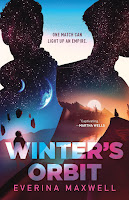
This year I went looking for an Alex book to read, for one reason and another. I will admit,  Winter's Orbit by Everina Maxwell was the only one of this year's winners I could find in my library's e-book service. I had to put a hold on it, and by the time it arrived, I couldn't remember what it was about. The whole made-up-empires-on-made-up-planets-thing I noticed at this point didn't fill me with enthusiasm.

However, I most definitely understand how this book made a list of adult books with interest for YA readers, because YA Gail would have loved this thing. Adult Gail enjoyed it, too.  

Like A Historical Romance In Space

As a teenager, I was a big fan of historical romance. I continued reading it through college, primarily during exam weeks. Clearly some kind of relaxation/calming strategy. Winter's Orbit follows a classic historical romance pattern. A couple, often of unequal status, end up married, but because of a series of misunderstandings they don't understand they love each other/are meant to be together/are only moments from happiness.

This is not the Pride and Prejudice model of hate-at-first-sight and come-around-to-love-later seen in a great many contemporary romantic comedies. The situation I'm talking about involves characters who usually don't bear each other any ill will and have good intentions, but misunderstandings keep them apart emotionally.

At her website author Maxwell says that as a teenager she read science fiction and fantasy, "with her family’s Georgette Heyer collection always a reliable friend when the library books ran out." Heyer's historical romances were the reliable friend for many teenagers, and her influence is sprinkled all over Maxwell's novel.

In the world of Winter's Orbit, Prince Kiem and Count Jainan enter an arranged marriage to seal an agreement between their planets. Prince Kiem is a reformed playboy (a variation on the reformed reprobate often seen in romances), who now has a pseudo career as a Prince Harry-type, making appearances as a patron to various organizations. A charming guy, but not, at first glance, an intellectual heavyweight. Count Jainan is a very recent widower, a diplomat who had been half of another arranged marriage in support of his home world. A very serious guy who is carrying around a whole lot of  anxiety.

While dealing  with all the confusion regarding their mutual attraction, they end up up-to-their necks in a political mystery.

World Building Around Gender

Science fiction, like historical fiction, has a great deal to do with world building, and Winter's Orbit's is extremely interesting in relation to gender. There's not much in the way of gender issues in this empire. Evidently males and females may dress so similarly that they express their gender, should they want to, by wearing certain types of jewelry. Whether male, female, or nonbinary, the royal at the top of the heap is referred to as "emperor." There are no princesses, everyone carrying that status is a prince. There are no gay marriages or lesbian marriages or heterosexual marriages. No modifiers, only marriages. Spouses usually refer to themselves as "partners" rather than "husbands" or "wives," which gives the couples a definite level of equality. A male character is referred to as beautiful, without that word having the feminine connotations many readers would expect. Anyone could be beautiful here.There are no references to a female military person or academic having had to fight her way up because of sexism. Presumably no one in the Winter's Orbit world would know what that is. 

A Blast From The Past


I think a big part of the reason I enjoyed this book so much is that it took me back to a time when I read things similar to this regularly, a time when I just read to read, could stay up late doing it, and didn't have responsibilities beyond final exams. Compared to what came later in life, final exams were nothing at all. 

Time to return Winter's Orbit. There are three people waiting for it. I'm not at all surprised. 

Friday, February 04, 2022

A Contemporary Mystery Fantasy Combo

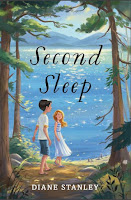
I sought out Second Sleep by Diane Stanley, because I had actually heard of "second sleep."  It's a real thing that I first read about a couple of years ago. Second Sleep doesn't have a lot to say about the historical aspect of second sleep/two sleeps, but it uses the idea for a quite well done fantasy/mystery.

Main character Max's mother disappears, leaving him, his father, and younger sister under a lot of stress. His mother's own mother, feeling some strain over her missing daughter, herself, gets the children out of the house and away from the crisis there by taking them to a cabin she owns where missing mom had spent part of her summers when she was a child. The cabin is in an area that had once been a vacation spot for families, built up around a lake. But Grandma's cabin is the only one occupied now, because a developer has purchased all the others in order to develop a more upscale vacation mecca. In fact, Grandma has sold, too, and she and her missing daughter had planned a trip to the cabin to pack it up and move things out. Now she's there with the grandkids, doing the job by herself, because, remember, her daughter, Max's mom is missing.

The cabin doesn't have electricity, so there's no TV and no kind of service for devices. (They do have a power source for a refrigerator, running water, and some sort of phone, because let's be realistic and safe, okay?) But the point is, without electric lights, TV, iPads, etc., what  does the family do when it gets dark? They go to bed, as people did centuries ago when it got dark and they didn't have light to do things.

Going to sleep early leads Max to wake up in the middle of the night. When he goes back to bed for his "second sleep," he dreams about the lake near the cabin where there is an assortment of other children who are also staying in cabins near the lake. Except there are no children in the area, because all the other cabins near the lake are empty, having been sold to that developer who is getting to tear them down. 

At least, there are no children anywhere nearby now.

I am not a fan of dream stories, but this was good. I'm finicky about fantasy, too, but this was a contemporary fantasy with no dragons or fairies, which I find much more palatable. Mystery is more to my liking and that is here, though, arguably, it may be a weaker element of the book. 

On top of everything else, Second Sleep is elegantly written. I'd give you a little example, but there was a waiting list with the ebook service I use, and I had to return it before I could write this post. It's a new book published just three months ago, and it's good, so it's understandable that it should have found readers. 

Another thought:This could be a neat vacation book, too.

It turns out I've read one of Stanley's earlier novels, Bella at Midnight, which looks as if it may have been a Cybils title one of the years when I was a judge.


Wednesday, November 10, 2021

The Bad Mood

Copy provided by NetGalley

Publication November 16, 2021

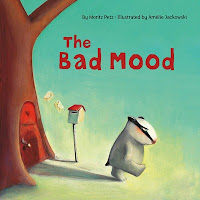
The Bad Mood by Moritz Petz with illustrations by Amelie Jackowski looks as if it was originally published in 2004 in Switzerland. In fact, the end paper says it's a "beloved classic."  It's a beautiful book about a badger who wakes up in a bad mood and thoughtlessly spreads it to everyone he meets. He then has to fix things.

What I particularly like about this book is that Badger's mood lifts, not because someone points out the error of his ways, but because the mood "slipped right off him" while he's working outside. There's no lecture here about the value of physical activity on the mind, but we do see something positive happening.

Nor is there a lecture on making things right with those you've wronged. Again, we just see it happening.

Show, through story and image, don't tell. A lovely book.

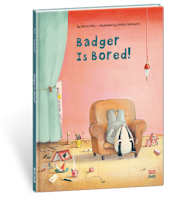
Another Badger book is coming next April.


Monday, October 04, 2021

A Book That Tears Up Some YA Cliches

Last Friday, October 1, I began a new writing group program with a Facebook group I've belonged to for a couple of years. We create a couple of temporal landmarks a year by setting aside a month for a specific writing project.  This month I'll be working on that mysterious YA mystery I keep talking about here. And today I'm posting about a mysterious YA book I recently read.

A number of books have covered people unaware of the world they're living in or unaware that they are being used for the entertainment of others  (notice how I'm not telling you much here?), but This is Not the Jess Show by Anna Carey does it particularly well. Even if you end up hearing some of what this book is about before reading it (it has been out since February), there's a genre-bending twist, and a bit of a surprise in the ending. 

A real ending, people. As I was getting closer and closer to the end of the book, my anxiety level was going up and up, because I was so sure this was going to be the first in a serial. What a delight to get to that last screen (I read an e-book) and get a satisfying resolution. I think there may be an opening for a sequel, but not in a serial, you've-got-to-read-another book sort of way. 

This Is Not The Jess Show starts out with a very traditional teen girl craving romance. She is a traditional teen girl with two best friends. She has a traditional family tragedy looming over her. I will be honest and say those are not my favorite things to read about. But then author Carey blows all of those out of the water. A really impressive job.

There's also some well done, subtle, commentary relating to technology and society going on here, a la Black Mirror. In fact, I believe there are some scenes similar to a Black Mirror episode. Which is not a complaint. Just saying, if you like Black Mirror, consider reading This Is Not The Jess Show. And if you like This Is Not The Jess Show, consider catching some episodes of Black Mirror.

I would also like to say that I think Carey makes the situation in her book believable with that genre twist I mentioned above. Well done. 

Here's a question you might be left with after reading this book: Why does our culture find death and grieving entertaining?

Thursday, September 30, 2021

Environmental Book Club

Copy provided by NetGalley

Publication Oct. 12, 2021?

According to NetGalley, Busy Spring, Nature Wakes Up by Sean Taylor and Alex Morss with illustrations by Cinyee Chiu publishes the week after next. However, looking around on-line, including at the publisher's website, it appears to have come out this past March. That makes a great deal more sense, a spring book publishing in the spring, not in the fall.

Whenever it became available, Busy Spring is an excellent selection for our Environmental Book Club. It's a beautifully illustrated story about a boy and girl who go out to work in the garden with their father, just because it is spring. They ramble about, doing a number of things in the yard, while Dad explains various things in a nonscientific way. "The spring sunlight is nature's alarm clock. Life's waking up. Plants are racing to get more light." A better than adequate explanation for young readers of what's happening in springtime.

The illustrations and layout of this book reminded me of The Ox-cart Man by Donald Hall with Caldecott Medal winning illustrations by Barbara Cooney.  Both books also deal with nature, by way of the changing seasons. Ox-cart Man is about what the ox-cart man does over the course of the year, while Busy Spring is about what a family does in spring time.

Busy Spring has several pages of back matter, including a lengthier poetic explanation of spring and then a section on what is going on with plants and animals at that time. But, really, the main text about the family working together is enough. 

Taylor, Morss, and Chiu have an earlier book, Winter Sleep, A Hibernation Story.

Thursday, August 19, 2021

I Read It For The Bread

You know those books about women going to Europe on their own and having some kind of meaningful life improvement thing happen there? Yeah, I haven't read any of those, but I imagine All You Knead Is Love by Tanya Guerrero may be a middle grade version of those. 

Twelve-year-old Alba is sent off to Barcelona from New York to live with her Spanish grandmother who she doesn't know well, because her well-to-do father in America is physically abusive. The abuse primarily involves her mother, and mom gets Alba out of this mess by sending her off to her own mother. Alba isn't crazy about this plan, and she's angry with both her parents--her father for being what he is and her mother for putting up with it. But Alba is won over by life in Barcelona, because her grandmother is a lovely woman, there's a male mild romantic interest, a girl best friend, and an old friend of Mom's who runs a bakery specializing in bread.

Some Basics About The Book

I don't think I've read many middle grade books that begin with an escape from abuse or that include mom being on the receiving end to this extent. I found that interesting. I would have liked more of that. I wanted to see evil Dad, see mom standing up to him, and see Alba respond to that situation. There was also an issue with Alba's appearance--she likes to wear her hair very short and wear boyish clothes. This ticks Dad off. I thought we were going to see some kind of gender situation here, but it never came to that.

Some Favorite Parts

I have never been that interested in Spain, but Guerrero makes Barcelona sound fantastic. The book isn't enough to get me onto a plane, but I certainly would watch a  movie or TV series set in Barcelona, or even Spain, after reading it. 

And then there is the bread. I sought out this book because  the the word "knead" is in the title and there are loaves of bread on the cover.

I Was The Bread Person


I have been baking bread, and bread-like things, since I was a teenager. All this stuff about yeast shortages during the pandemic, because people who had never baked bread were taking it up while they were stuck at home? That set me off. Those Johnny-come-latelies were taking my yeast. And I'm somebody who buys it by the bottle and usually am one bottle ahead.
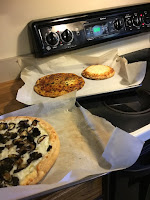
Back in the day, I made bread in the shape of Christmas trees, braids with white, whole wheat, and something else strands, braids stuffed with pastes made of walnuts or almonds, Easter braids with colored eggs. Sadly, I do not have pictorial evidence of any of that. You'll have to take my word for it. I cut back on the fancy stuff, because I'm surrounded by Philistines who prefer brown-and-serve rolls, which I will not have in my house. I'm not even sure what they are.

A friend up the street once said, "Whenever it rains, I know that Joan is making cookies, and Gail is making bread." I was famous for bread, people. Famous, I tell you.

So you can see why I had to read All You Knead Is Love

Sadly, the bread making in All You Knead Is Love is way, way beyond my clearance level. However, I loved that the bakery in the book expanded to making gluten-free breads, since I'm doing that, too, now. After several years, I'm just tinkering with a recipe I really like. I have no pictures of that, either.

All You Knead Is Love is more than a travel and food book, but it should be a nice introduction to those types of reads. 


Thursday, July 22, 2021

The Alaska Connection Makes All The Difference

The pre-teen girl who is an outsider in her new school is a staple in contemporary children's literature, as is the child who suddenly finds herself with divorced parents. Eleven-year-old Rigel Harman in 365 Days to Alaska by Cathy Carr is both those things. The irresponsible husband/father is a character who shows up all over childlit, too. (As well as all over adult lit, movies, and TV shows.) He's in 365 Days to Alaska, also, as the stimulus for the divorce that leads Rigel, her two sisters, and their mother to move in with Rigel's grandmother. 

That sounds like a lot of the same old thing, but what 365 Days to Alaska has going for it is Alaska. 

The Harman children have lived all their lives in Alaska, and not city Alaska, whatever that may be, but out in the bush. And the grandmother they move in with is in suburban Connecticut. I do not mean a cliched Gilmore Girls rich Connecticut grandmother. (No, I am not a Gilmore fan.) But for Rigel and her sisters, moving into a house with more than one bathroom, a dishwasher, and a TV makes their mother's mother a sort of rich Connecticut grandmother. 

For Rigel, who loved Alaska and thinks she's going back in 365 days to live with that irresponsible father (adult readers can predict how that's going to end), the transition to Connecticut is realistically difficult. We're not just talking I miss my friends, I need to make new friends. We're talking a true cultural change that Rigel, unlike her sisters, is not motivated to make.

Carr trusts the importance of the basic situation/struggle she's created for Rigel, and she doesn't load  her and this book up with one distracting problem after another, as we often see in children's books. Rigel's older sister isn't a monster teenager. Grandma isn't rigid and conforming or suffering from dementia. Mom has her own realistic but bearable problem transitioning back into the work world, and it doesn't overwhelm her to the point that she can't support Rigel when she needs it. The mean popular kids are realistically mean, and the outsider unpopular kids may not be all that unpopular since they have their own network of friends.

365 Days to Alaska is a very well done, readable book and proves that you can take cliched or classic situations (however you want to view them) and make them fresh by adding a new element and some good writing.

Wednesday, April 28, 2021

A History Of Horse And Human

Last night I attended a virtual launch for the middle grade book Horse Power: How Horses Changed the World by Jennifer Thermes, which was sponsored by R.J. Julia Booksellers in Madison, Connecticut. This was very much a history talk, perhaps the first author presentation I've attended, virtual or in person, that dealt with that subject. I loved it. The engineer playing a game on a computer next to the one I was watching Jennifer on liked what he heard. I must find more of these types of author talks to attend.

Jennifer Thermes is an illustrator as well as a writer, and she has a very unique style that might be described as both retro and contemporary. (That's my artistically ignorant opinion.) She is a map illustrator who works maps into some of her historical work, which is visually riveting. You may have heard of her earlier book Manhattan: Mapping the Story of an Island.

Jennifer didn't do a reading last night. Instead, she went through Horse Power and gave a quick rundown on the  history she covers in it. Early on she said  the book was about human history as well as horse history, because horses became that much a part of human life. 

At her website, Jennifer says that she is "fascinated by the big picture of history and how it connects to our lives today." The past's impact on the present is a big factor in my own interest in history. Everything has a past that somehow made it possible for humans to get where we are today. Horse Power describes a case in point.