bookshelves of doom has...shall we say, an analysis?...up of The Bungalow Mystery: Nancy Drew Mystery Stories, #3 by Carolyn Keene.
I will admit to loving Nancy Drew when I was a kid. By the time I was in college, though,I was referring to her as Nancy Drew, Defective. Now my seven-year-old niece is reading Nancy Drew for kiddies.
I think that's the circle of life or something.
Anyway, now my interest in Nancy Drew relates to her being created by a writing syndicate, much the way The A-List, The Clique, and The Gossip Girl series were all created by Alloy Entertainment. In fact, The Gossip Girl is now even being written the way the Nancy Drew books were--Cecily von Ziegesar is supervising the writing of future books instead of writing them herself.
I think someone should do some kind of scholarly comparision of the Nancy Drew series and the wealthy-girl-gone-bad book: How do they represent their eras? What do they say about the cultures that produced them? All that kind of stuff.
I also think that someone should not be me.
In the meantime, we have bookshelves of doom.
Tuesday, June 06, 2006
Getting Into The Moment

I am not a fan of stories about eccentric southern families. In the great northwoods that I hail from, familial eccentricity usually involves serious personal debt, vulgarity, willingness--no, desire--to voice ignorant opinions, and a little substance abuse of one sort or another. Twee tales of flighty aunts and cornpone, but wise, elders really grate on me.
But The Vacation by Polly Horvath is a southern eccentric story I was able to tolerate very well.
A lot of southern eccentric kids' books are sort of loosie goosie about the time setting. It's as if the authors, themselves, can't believe this kind of stuff can be going on in the here-and-now, so they try to create a Never-Never Land somewhere between the late forties and 1968. Horvath, however, plants her story squarely in today. Her characters use cell phones and computers, and the aunts are businesswomen.
The aunts also have little in the way of wisdom to impart to their nephew, Henry, The Vacation's narrator. They keep him alive and fed and, for the most part, sheltered, but that's about it. There's not a whole lot of love lost between the maiden aunts and their sister's child.
How refreshing.
And then there is Henry, himself, who is very much like a twelve-year-old Garrison Keillor. Not everyone likes Garrison Keillor. I, however, do.
The Vacation is a very enjoyable read, at least for an adult. But I think that, like Criss Cross, in order to really enjoy The Vacation, you have to come on a little Zenny. You have to just enjoy what you're reading as you're reading it and forget about what it has to do with a storyline. You have to get into the moment. In fact, Horvath almost tells us as much in her last couple of pages.
Some of Henry's vacation adventures with his aunts don't seem to have the substance Horvath seems to think they do. The section on visiting the family who all retire to their separate rooms and don't interact with one another wasn't all that shocking or unusual. Look around. People are doing that all the time now. On the other hand, the section where they run over the cat and eat dinner with its owners who then tell them a story about how their horse was murdered...well, that alone was almost worth reading the entire book.
Monday, June 05, 2006
Moving On
Today I e-mailed my editor the changes we discussed for my next book. She says it's almost ready to send to copyediting. I can't believe I'm this far along with a new book so soon after the publication of the last one.
This book has an illustrator, Joe Cepeda, who sounds far more accomplished than I am. Among other things--many other things--he illustrated Nappy Hair, which some of you may remember. I am feeling somewhat intimidated.
I just looked up Santiago Cohen, who did the illustrations for my first and third books. He has a beautiful website that I don't recall from back in the day. And look! He remembers me! Bless his heart.
This book has an illustrator, Joe Cepeda, who sounds far more accomplished than I am. Among other things--many other things--he illustrated Nappy Hair, which some of you may remember. I am feeling somewhat intimidated.
I just looked up Santiago Cohen, who did the illustrations for my first and third books. He has a beautiful website that I don't recall from back in the day. And look! He remembers me! Bless his heart.
Sunday, June 04, 2006
See? I Can Still Write A Short Post.
The Society of Children's Book Writers and Illustrators sponsors something called the Golden Kite Award that I have only been vaguely aware of. An article in its most recent bulletin says that starting this year, in addition to providing a cash award and trip to the national conference, SCBWI will be making a DVD about the four winners, including interviews. The plan is to send copies to booksellers and reviewers across the country to publicize the winning authors.
I thought this sounded marvelous. But, then, I started wondering if free DVDs will become junk mail for a lot of people, and they won't look at them any more than they look at post cards or any other kind of marketing material.
No, I'm just being negative.
I thought this sounded marvelous. But, then, I started wondering if free DVDs will become junk mail for a lot of people, and they won't look at them any more than they look at post cards or any other kind of marketing material.
No, I'm just being negative.
I Give Up

I have been broken.
Last summer I began reading How to Read a Book, The Classic Guide to Intelligent Reading by Mortimer J. Adler and Charles Van Doren. I've read 238 of its 346 pages (not counting the reading list and exercises and tests at the end). I've decided to throw in the towel because life is just too short.
Clearly, intelligent reading is beyond me.
One of the things the authors suggest readers do is write in their books. I'm totally with them there. In the front of my copy of How to Read a Book I wrote out the fifteen (that's 15) steps to reading a book. In addition, I wrote out the four questions to ask about a book, the four ways to look at words, and the four ways to look at facts. (My notes also say these are also the four aspects of encyclopdias.) The last 100 pages must have had more lists, but since I can't remember the ones I wrote down it seems unlikely that I would have gained anything from reading and writing down the rest of them.
I found How to Read a Book repetitive. It also used long analogies that increased the verbiage.
Quite honestly, I only remember those points because I wrote them down along with all my lists.
How to Read a Book was originally written in 1940 and the last copyright date is 1972. It's very dated, and not just because the authors keep referring to readers as "men."
My own faithful readers (the ones who are still with me since yesterday) will recall that I just wrote about the large number of books being published today. Far, far, more books are being published now then when How to Read a Book was being written or even when it was being revised. While many of the individual steps Adler and Van Doren suggest are worthwhile, it just isn't practical for readers to keep a couple of dozen tasks in mind while trying to keep up with today's load of reading.
At one point, Adler and Van Doren suggest which steps to keep in mind while reading a book for the first time. Other steps are saved for subsequent readings.
Subsequent readings????
Okay, sure, researchers planning to write a scholarly work better read their texts more than once. But the rest of us? Let's face facts. It's just not going to happen.
It's very possible that I could use some advice on how to read a book. I couldn't get through this one, after all. But I need that advice to be readable and practical and relevant to the situation I find myself in--"so many books and so little time." That appears to be a much different situation from the one that existed when Adler and Van Doren were writing their book.
Saturday, June 03, 2006
Live And Learn
Buzz, Balls, and Hype recently carried a post entitled Authorgeddon in which M.J.Rose defined "authorgeddon" as the "...hypothetical date when the number of books published in a given year will exceed the number of people who have read a book that same year." Poets & Writers recently ran an article called The Law of Diminishing Readership that discussed the same subject. We have large numbers of people who want to write and publish, who actually do write and publish.
I can remember a time when the number of books being published annually was usually considered to be around 40,000. For the last few years I've been hearing estimates of anywhere from 140,000 to 175,000.
That's a lot of authors who have attained the success of becoming published. That's a lot of authors with books to sell. A lot of authors trying to get press for their books.
Last month I had a new book come out, and for the first time I became seriously involved in trying to promote it. It was a frustrating and not terribly productive experience, not because my book is bad (can't be that) and not because the world is full of awful people who don't recognize a good book when they see one. No, it was a frustrating and not terribly productive experience because there are just too many of us out there scrambling for the same limited amount of press.
My publisher takes care of marketing to a great extent. I was merely working on local media. I sent out press packages with arcs to seven newspapers in two states, and three magazines. I also contacted two radio stations. I contacted seven bookstores in two states. (That's not a lot, I know. I wasn't exactly killing myself over that one.)
I received coverage in one very local newspaper. Really. It only goes to households in two towns, one of them mine. The most obscure magazine of the three reviewed Happy Kid! favorably. I did one bookstore appearance and have one to go.
I didn't even contact the local paper that did an article on me. I contacted another paper in its chain, a paper that goes out to many more towns. Its publisher bumped me down to the local publication because, I was told, the publisher said that if he printed something on every writer who contacts him, he'd be publishing a book review.
One of the reasons I got so involved with promoting this book is that I thought I had a hook. Happy Kid! includes a martial arts story line and I'm a martial arts student...of a certain age, let's say. Hey, as God is my witness, I thought that was human interest. I knew the next book--and I am on to the next book--doesn't have a hook, at least not one that I can think of, so I thought I should shoot the works on this one.
I had some very good things happen relating to the promotion for Happy Kid!. They were just things that weren't part of the marketing plan I created a couple of years ago, and, to some extent, didn't have a lot to do with me.
For instance, Barnes & Noble placed a decent pre-publication order because its people liked the cover. I didn't have anything to do with the cover. I happened to have an essay published in VerbSap, which also then published an interview with me. Edge of the Forest also interviewed me. Both Book Moot and Big A little a did reviews.
Almost all my best promotion came over the Internet. That's where I'm focusing in the future. Instead of spending time writing press releases that have to be tweaked for various hardcopy media, I'm spending my time writing and submitting to journals. Any arcs I receive from my publisher will be distributed to interested litbloggers.
Think about it--for the most part I was focusing on media in my state. Even if I'd had a good result, I'd only have reached people in my geographic area. But litblogs are read by people all across the country. And while the space for book reviews in traditional media is supposed to be decreasing, new litblogs are springing up all the time.
So, that's how book promotion for Happy Kid! went. I certainly haven't abandoned the book, but it's time to be writing, not marketing.
You can all breath a sigh of relief. I'm through whining!
I can remember a time when the number of books being published annually was usually considered to be around 40,000. For the last few years I've been hearing estimates of anywhere from 140,000 to 175,000.
That's a lot of authors who have attained the success of becoming published. That's a lot of authors with books to sell. A lot of authors trying to get press for their books.
Last month I had a new book come out, and for the first time I became seriously involved in trying to promote it. It was a frustrating and not terribly productive experience, not because my book is bad (can't be that) and not because the world is full of awful people who don't recognize a good book when they see one. No, it was a frustrating and not terribly productive experience because there are just too many of us out there scrambling for the same limited amount of press.
My publisher takes care of marketing to a great extent. I was merely working on local media. I sent out press packages with arcs to seven newspapers in two states, and three magazines. I also contacted two radio stations. I contacted seven bookstores in two states. (That's not a lot, I know. I wasn't exactly killing myself over that one.)
I received coverage in one very local newspaper. Really. It only goes to households in two towns, one of them mine. The most obscure magazine of the three reviewed Happy Kid! favorably. I did one bookstore appearance and have one to go.
I didn't even contact the local paper that did an article on me. I contacted another paper in its chain, a paper that goes out to many more towns. Its publisher bumped me down to the local publication because, I was told, the publisher said that if he printed something on every writer who contacts him, he'd be publishing a book review.
One of the reasons I got so involved with promoting this book is that I thought I had a hook. Happy Kid! includes a martial arts story line and I'm a martial arts student...of a certain age, let's say. Hey, as God is my witness, I thought that was human interest. I knew the next book--and I am on to the next book--doesn't have a hook, at least not one that I can think of, so I thought I should shoot the works on this one.
I had some very good things happen relating to the promotion for Happy Kid!. They were just things that weren't part of the marketing plan I created a couple of years ago, and, to some extent, didn't have a lot to do with me.
For instance, Barnes & Noble placed a decent pre-publication order because its people liked the cover. I didn't have anything to do with the cover. I happened to have an essay published in VerbSap, which also then published an interview with me. Edge of the Forest also interviewed me. Both Book Moot and Big A little a did reviews.
Almost all my best promotion came over the Internet. That's where I'm focusing in the future. Instead of spending time writing press releases that have to be tweaked for various hardcopy media, I'm spending my time writing and submitting to journals. Any arcs I receive from my publisher will be distributed to interested litbloggers.
Think about it--for the most part I was focusing on media in my state. Even if I'd had a good result, I'd only have reached people in my geographic area. But litblogs are read by people all across the country. And while the space for book reviews in traditional media is supposed to be decreasing, new litblogs are springing up all the time.
So, that's how book promotion for Happy Kid! went. I certainly haven't abandoned the book, but it's time to be writing, not marketing.
You can all breath a sigh of relief. I'm through whining!
Friday, June 02, 2006
Oops! You Mean There's More Than One Southern Woman Writer?
Last month I did a post in which I misquoted a New Yorker article entitled Big Bird by Thomas Mallon. The article was a review of Charles J. Shields' Mockingbird, A Portrait of Harper Lee.
My post was about classifying books--should particular titles be classified as adult or YA and who gets to decide? I quoted Harper Lee, herself, as saying of her book, To Kill A Mockingbird, "It’s interesting that all the folks that are buying it don’t know they’re reading a child’s book."
Well, Harper Lee never said that. Flannery O'Connor did. Mallon attributed the quote correctly in his article. I just totally blew it.
I've always been afraid to write historical nonfiction because I've always been sure I would make exactly this kind of error. Wait. No. I was worried about not attributing other researchers' material correctly. Which is then usually referred to as plagiarism. So now I have an entirely different kind of mistake to worry about.
Many thanks to Charles J. Shields for bringing the misquote to my attention in a very gracious e-mail.
I'll be making a note in the original post pointing out the error.
My post was about classifying books--should particular titles be classified as adult or YA and who gets to decide? I quoted Harper Lee, herself, as saying of her book, To Kill A Mockingbird, "It’s interesting that all the folks that are buying it don’t know they’re reading a child’s book."
Well, Harper Lee never said that. Flannery O'Connor did. Mallon attributed the quote correctly in his article. I just totally blew it.
I've always been afraid to write historical nonfiction because I've always been sure I would make exactly this kind of error. Wait. No. I was worried about not attributing other researchers' material correctly. Which is then usually referred to as plagiarism. So now I have an entirely different kind of mistake to worry about.
Many thanks to Charles J. Shields for bringing the misquote to my attention in a very gracious e-mail.
I'll be making a note in the original post pointing out the error.
Can You Market To Grandma And Junior, Too?
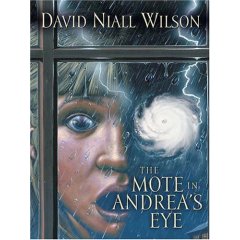
I became interested in The Mote in Andrea's Eye for two reasons. One, it was begun as part of a National Novel Writing Month project, raising the possibility that I should try writing a book again this November. Two, the book's publisher (Gale/Five Star) chose it for its Clean Reads program, raising the possibility that it is appropriate for all ages.
In recent years a number of books have been cross-over hits between age groups, and the Young Adult Library Services Association names 10 such books each year to its Alex Awards list. The youth market for adult books has become large enough that publishers of adult books are intentionally seeking youth sales.
In a cbc.com article entitled Sharing the Love: How publishers are rebranding adult fiction for young readers Andre Mayer says:
"The fact that teenagers are picking up ostensibly grown-up fiction is hardly novel. I remember spending recesses in Grade 7 thumbing through Sidney Sheldon’s salacious trash with other curious 12-year-olds. And lest I forget my high-school English reading list, which included gems like The Apprenticeship of Duddy Kravitz, as well as a whole lot of tedious, self-consciously portentous fiction. The difference nowadays is that publishers and vendors are becoming more proactive with young bookworms." (Italics are mine.)
Mayer goes on to say, "There’s no fail-safe formula for winning over teens, but The Curious Incident, Life of Pi and, to a certain extent, The Girls provide hints as to what it is in adult fiction that engages young readers. All three narratives feature youthful protagonists, are told in the first person and exhibit a healthy scepticism about grown-up behaviour."
Gale/Thorndike's description of its "Clean Reads," on the other hand, goes like this: "A mix of appealing, wholesome general fiction, mystery and romance titles. These are stories without graphic violence, explicit sexuality or strong profanity. These are entertaining stories, full of encouragement, warmth and humor that you’d be comfortable giving to your grandmother!"
I'm not seeing much overlap between those last two paragraphs. Yet the cover the publisher slapped on Andrea's Eye definitely looks as if it's going for a younger crowd.
The Mote in Andrea's Eye is short on youthful protagonists--the child in the first portion of the book grows up rather rapidly and does, indeed, end up old enough to be someone's grandmother. It's also long on technical detail. I don't think that necessarily kills it as a book for younger people. Andrea's Eye is a thriller about trying to control hurricanes. I can remember teenagers and even grade school kids reading Michael Crichton's thrillers, which can be a little on the techie side, too. Nor is Crichton noted for his first-person, young-adult narrators.
So, as Mayer said, "There’s no fail-safe formula for winning over teens..." I do think, though, that publishers that really want to do it, should do some research. A clean book you'd feel comfortable giving to your grandmother is not necessarily a book a teenager is going to want to read.
This particular clean book went over well with my computer guy, though. He liked the monster hurricane, character lost in time, and guys huddled around monitors.
Thursday, June 01, 2006
I Need An Alter Ego
I noticed a couple of days ago that Chicken Spaghetti had a guest columnist. I thought that it must be very gratifying to have a blog that someone actually wanted to be a guest in.
Then I thought, I, too, could have a guest columnist. I could just make one up. That way, the guest columnist would only say things I wanted her to say. (It must be very annoying when they don't.)
I haven't given this a great deal of thought, but what little thinking I have done about it involves creating a really distinctive character. Though, of course, I do not know distinctive how. I am leaning toward a male character. Or perhaps a French woman. Someone who has some favorite kind of book. Or maybe someone who hates a particular kind of book.
The possibilities are limitless.
I am mentioning all this so that if I do do it, no one can accuse me of crimes of a James Frey nature because I've told you I'm going to do it.
Well, I might do it.
Then I thought, I, too, could have a guest columnist. I could just make one up. That way, the guest columnist would only say things I wanted her to say. (It must be very annoying when they don't.)
I haven't given this a great deal of thought, but what little thinking I have done about it involves creating a really distinctive character. Though, of course, I do not know distinctive how. I am leaning toward a male character. Or perhaps a French woman. Someone who has some favorite kind of book. Or maybe someone who hates a particular kind of book.
The possibilities are limitless.
I am mentioning all this so that if I do do it, no one can accuse me of crimes of a James Frey nature because I've told you I'm going to do it.
Well, I might do it.
Something New, Something Old
Many bloggers today are welcoming The PlanetEsme Book-A-Day Plan to the kidlitblog community. I was getting kind of testy over the whole PlanetEsme title because it sounded familiar to me. Was someone trying to commit a crime of an Opal Mehta nature?
Then I realized that Esme Raji Codell has other sites, Planet Esme and The PlanetEsme Reading Room. And that's why her PlanetEsme name sounded familiar to me.
This woman is ambitious.
The whole welcoming thing reminded me that I've been meaning to mention a blog that isn't new. Somehow I stumbled upon Propernoun.net, the book journal of a young librarian who does a lot of YA reading. She's also been around for three years. She's old compared to the many kidlitblogs that were born this past year.
Then I realized that Esme Raji Codell has other sites, Planet Esme and The PlanetEsme Reading Room. And that's why her PlanetEsme name sounded familiar to me.
This woman is ambitious.
The whole welcoming thing reminded me that I've been meaning to mention a blog that isn't new. Somehow I stumbled upon Propernoun.net, the book journal of a young librarian who does a lot of YA reading. She's also been around for three years. She's old compared to the many kidlitblogs that were born this past year.
Subscribe to:
Posts (Atom)