Showing posts with label to-do lists. Show all posts

Thursday, May 11, 2023

You Won't Believe What I've Been Doing

Elisa Ventur @ Unsplash
I kid you not, I am still going through to-do e-mails. 

I have managed eight blog posts since I started working on the to-dos, and I wrote a Time Management Tuesday piece for this week. But I forgot to post it until after I'd turned off my computer Tuesday night, maybe because of those e-mails I was slogging through, and Tuesday is over now. I also have a number of book posts I could be working on except there are still to-do e-mails to deal with.

I did have one humor piece published this past month, and I have another one that's supposed to be coming out next week.

But the to-do items in my email in-baskets go on and on.

Yes, yes, I have learned my lesson.

Tuesday, April 25, 2023

Time Management Tuesday: Maybe Using Your E-Mail Inbox As A To-Do List Isn't A Great Idea

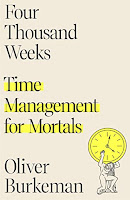
A few years ago, I read about people using their e-mail inboxes as to-do lists. (Note that the inspiration for that 2019 post came from an article by Oliver Burkeman, whose book, Four Thousand Weeks, I would read in 2021.) I liked the idea of using my inbox as a to-do list, though that may not be what I was supposed to take from Burkeman's article. I've been using my inbox--and I have two of them, one personal, one professional--as a to-do list ever since. Oh, wait. And a third one I use for my iPhone and iPad.

What Is On My Inbox To-do Lists

I used my inbox as a to-do list/memory catch-all for anything I wanted to attend to sometime in the future. So I was always e-mailing myself notes and links from my iPhone and iPad. Recently my personal mailbox had mail from my phone or iPad to my laptop on such things as:

  • Notes or links about items I want to buy for myself or anyone in the family.
  • Links to articles and books I want to read that don't necessarily relate to work.
  • Links to sewing instructions that I have actually used and don't want to lose, because I know I'll want them again.
  • Links to recipes I want to try.

Also:

  • E-mails from every place I've ordered from, planning to delete them after the order arrived.  
  • Marketing e-mails from every bookstore I ordered from during the pandemic. (I did unsubscribe from other places.)
  • E-mails from family and friends that I want to remember to respond to.
  • E-mails from medical groups asking me to rate my experience with them.
  • E-mails from my political representatives on many levels.

In my work inbox you might find e-mails mostly from me about:

  • Ideas for my writers' journal.
  • Changes I want to make on whatever I'm working on at the time.
  • Books I want to look for.
  • Articles I want to read.
  • Authors whose work I want to look for.
  • Agents I want to look for information on.
  • Publications I want to research as possible markets for my work.

When Do You Deal With These To-Do Items, Gail?


Well, ah, hard to say. These last four years, in particular, I've been packing those inboxes with to-dos while I struggled to get through the first draft of a book I've mentioned here before. Cleaning the inboxes was the plan for the first week post-draft.

I've been doing just that--for three weeks. And I'm not done.

It just goes on and on. And I'm continuing to mail myself to-dos.

One benefit of having a few years of to-do items in the inbox is that I can't remember why I put some of them there. So those can be deleted. Some of them are outdated or I'm no longer interested. So those are deleted, too. You could say, arguably, that I saved myself time by not addressing them early when I could remember what I wanted to do with them and was still interested. 

Still, this is a lot of stuff. I am sort of enjoying going through and addressing some of these things, at least. And I have no idea how to handle email to-dos differently. Maybe this is the way to go...get to them when you can and at that point toss what no longer works for you.

That sounds like a time management technique, doesn't it?

Tuesday, November 30, 2021

Time Management Tuesday: The "Four Thousand Weeks" Read Part 6

At one point in Four Thousand Weeks, Oliver Burkeman discusses rushing, speed, and impatience. A major point in his book is that constantly structuring time for something that’s going to happen/be completed in the future has a negative impact on our present. He’s very much about quality of life..

Here at Original Content, I've been interested in whether or not slowing down might actually make it possible for us to do more writing in our present. I want to do more with less effort and angst.

Some Speed Issues Unique To Writing

Writing isn't the day job for many writers. We're working writing around a regular income-producing job or family care or both. The desire to rush and get more done in whatever writing time we have is less about impatience and more about necessity.

In addition, two other situations encourage speed for writers.

Traditional Writers. Somewhere around the turn of the century, series became very popular in traditional writing, particularly in fantasy. I can't speak so much to adult series, but for children's and YA, many of these series were actually serials, meaning Book A didn't have an ending, readers had to wait until Book B. Book B might not have an ending, either, you had to go on to Book C.

To keep readers, writers and publishers had to crank out the next book as quickly as possible. Everyone had to work fast. A book a year or even every year and a half or two years is pressure in the traditional publishing world. 

Additionally, even a buzz-worthy book may not generate a lot of buyers, whether it's part of a serial or a stand-alone. In children's publishing, it's not unusual for books not to make back their advances. So writers hoping to make a living or even just create and maintain some kind of career feel a need to rush the next project along.

Self-Published Writers. In the past, at least, self-published writers often didn't get large numbers of readers per book, since distribution was such a problem for them. To make up for that, they had to produce a larger number of books. Smallish number of readers per book + more books = more income. For them we might be talking a book every couple of months or less.

In the early days, self-published writers could produce books that fast, because they didn't have to deal with editors and layout and design people. More recently, the more successful self-published writers are hiring editors and design people to better compete with traditional professionally published books. But, keep in mind, publishing companies provide all those services. Self-published writers have to seek all that out and pay for it, themselves, which means more work, which means more rush.
 
Income generating self-publishing exists now for short-form work, too. Sites like Medium are self-publishing platforms. People who are able to generate income on Medium generate it by the reader, and it's a very small sum. The way for writers to try to produce more income there is to produce more writing. They do that by writing a lot, which means speed.

Methods For Slowing Down 


Burkeman suggests accepting that a project is going to take the amount of time it's going to take as a method for slowing down. While that sounds promising, it won't be very helpful for writers who have contractual deadlines or need to generate income sooner rather than later. 

Some other options:
  • Create writing goals and objectives for a specific period of time, be it a year, a quarter, a month, or whatever you want. Goals are what you plan to do, objectives are the steps you are going to take to meet the goals. Try to stick to these goals and objectives. If something new comes up that can be an objective for one of your goals, go ahead and do it. If not,  try to set it aside for another planning period.
  • Take your to-do list seriously. It should be focused on your goals and objectives.
  • Work with multipliers, one task that addresses multiple goals, instead of multi-tasking, which can't be done, anyway. This blog post is an example of a multiplier, since I will publish a version of it it at Medium. It meets both my community building/branding goal and my short-form writing goal.
  • Create concentrated blocks of time during which you work on one project. This could be a weekend, a week, a month, a retreat or anything you want. For instance, National Novel Writing Month is an example of a concentrated block of time. School breaks for teaching writers could be examples of concentrated blocks of time. Days children are at school could be examples of concentrated blocks of time for parent writers. 

The idea is to try to slow down without cutting output. That could improve the quality of life Burkeman is interested in in Four Thousand Weeks.


Tuesday, July 28, 2020

Time Management Tuesday: Using To-Do Lists To Slow Down


Last week I introduced the idea of trying to eliminate multi-tasking as a way to slow down our work and actually become more productive. Anne Marie O'Connor's article, Why You Should Be Single-Tasking, Not Multitasking & How To Make The Switch provides four suggestions on how to do that. I'm going to combine three of them that I think can be helpful for writers into two blog posts. Today, people, we will cover to-do lists and prioritizing.

To-Do Lists


I am a big fan of to-do lists. Big fan. In fact, when  I'm done here, I have to work on
My modified bullet journal/to-do list
my to-do list for this week, my preferred unit of time for planning.

Writers have more control over our to-do lists than people who work in traditional situations do. We may be bound by priorities (see below) and we may have day jobs that we have to factor in. But, otherwise, for our work we have more control than people who have daily supervisors or hourly appointments to maintain.

In terms of slowing down: If something unplanned comes up, particularly something from someone else, and you can avoid doing it, avoid it. Stick to the to-do list. Many time management people will tell you to delegate whatever you can. For many writers that just isn't an option. We don't have anyone to delegate pop-up tasks to.

So avoid what you can by planning to do it another time. Put the new thing on tomorrow's to-do list or next week's or however you organize your to-dos. Particularly if you're trying to work on a long-term project, you don't want to keep going off-task to fight every short-term fire that can be taken care of another time. 

Going off task because of new tasks, increases the workload, and contributes to a feeling of being rushed and overwhelmed. None of which is going to have a good impact on productivity. So if you can slow down by putting something on another to-do list, do it.

How Do Writers Prioritize?


You're going to want to prioritize your to-do list, if only in terms of what you put on it. Be specific with your priorities, so that you know exactly what you plan to do. "Write" is more of a subject than a prioritized item on a to-do list.

To-do list priorities to consider:
  • Your goals and objectives. You will recall, I'm sure, that in addition to being a fan of to-do lists, I am a fan of goals and objectives. A big fan. You've created them, because they are things you plan/need to do. You should always be checking to make sure that objectives toward your goals are part of your to-do list.
  • Deadlines. Deadlines from editors or agents, if you have someone waiting for work. Those will be a top priority.
  • Submission dates. Some agents and publications will open for submissions for a specific period of time. If you have someone/something like that you're interested in submitting to, keep track of the dates and whether you need to be doing anymore work on your manuscript in order to submit.
  • Objective deadlines for major projects/goals. Got a big writing project you're doing on spec with no agent or editor involvement? You can create your own deadlines for it by breaking it down into the objectives you need to do in order to meet the goal of getting the project written. Those objectives can then become items on your to-do list. I'm talking things like research and even breaking that down still further into different types of research. Character development. Outlining, if you do that. Planning scenes, something I'm getting into. Then after you have an outline or scene list, items on the outline or individual scenes can become priorities that you place on your to-do list.
Presumably everything on your to-do list is some kind of priority. If you stick to working on those items, and only those items, you have a chance of keeping yourself from becoming overwhelmed and having to hurry because yourself trying to do things that just aren't necessary right now. This could be a big step toward slowing down.

Tuesday, March 10, 2020

Time Management Tuesday: Those Sad To-Do Lists

Recently I read...ah...skimmed...an article on the misery of reaching the end of the day and realizing you've done little on your to-do list. The article didn't have a lot of new assistance to offer, so I didn't keep the link. But I've been thinking about it a lot the last couple of days, after having a lot of family things going on last week and then spending most of this morning shopping on-line for a 93-year-old relative.

A to-do list should be a tool that helps, it shouldn't set us up to be discouraged and unhappy. Feeling bad about ourselves is when we're most likely to experience failures of impulse control and willpower. A bad to-do list is almost guaranteed to lead to that kind of failure.

Steps To Making A Useful To-Do List, One That Isn't Bad


1. Shorten the daily to-do list. A lot of time management folks agree that a daily to-do list shouldn't be lengthy. You have to be realistic about what you can accomplish. If you've had some bad experiences with not finishing a long daily to-do list, try to recall how many things you did manage to get done those days. Make your next to-do list only that long. Or be realistic about the types of things on your to-do list. If you have a big project on your list for tomorrow, try not to put many other things on it. If tomorrow looks like a day when you're only doing short, easy tasks, you can beef it up a bit.

If you make a short to-do list and finish everything on it early, you can always start another task. There are no laws governing these things. Writers, at least, don't have anyone monitoring what we do.

2. Make the to-do list for a week, not a day. If you've worked on a task from your weekly to-do list but haven't finished it, make a hash mark next to it. Visually, you can see that you've done something toward that task, even if you haven't been able to cross it out. This avoids the daily crash and burn scenario, because you feel you haven't done enough. And you're almost certain to make some kind of progress and finish a few things over the week.

3. Build your to-do list around goals. If you have created goals with objectives for a particular period--the year, the summer, Lent, the month--you have things to work toward that are particularly important to you. Make your to-do lists around some of those. Even if you do only a few things from your to-do list, they are important things. An example: Besides this blog post, I've done only one work-related task today. It was a submission that I started working on yesterday, and submitting is a goal for me this year. I'm not suffering too much about how this day went.

Check out more thoughts on to-do lists here at Original Content.


Tuesday, October 16, 2018

Time Management Tuesday: I Break Down And Try A Bullet Journal

I finally tried a bullet journal more than a year ago, but I've never had time to write up how things went with it.

That's not true. Of course, I had time. I chose to use my Time Management Tuesday writing time writing about other things. A family member asked about bullet journals a couple of weeks ago, which motivated me to use some time to write about the bullet journal experience now.

The first thing you have to understand about bullet journals is that they are to-do lists kept in a formal journal with items preceded by coded symbols like bullets. Thus the name. (I wanted to get that out of the way.) The to-do lists are pretty elaborate, so much so that some people supposedly keep keys of their coding system. But they're to-do lists, nonetheless. That is not to denigrate them. I am a big fan of to-do lists. But when I first heard about bullet journals, I got the impression they were some kind of magical cure-all. I found them more hard work than magical. (Remember that key for the code.) Some of the work I found hard I never did. (The table of contents and the codes, to name two.) Others I've continued to use after the trial ended.

How Bullet Journals Work


It seems to me that the most basic thing about bullet journals is that they allow you to break down your time so you can identify what you have to do and when you can find time to do it.
The Year--I still do this.

The Year. You'll start by breaking down the year. You divide a few pages in to 12 blocks, one for each month. Ten you enter what you have to do each month. You'll be updating this as time passes. I do, anyway. I don't know everything that's going to happen in September and October a the beginning of the year.

This aspect of bullet journals seems like a good idea. If you have a day job and/or family responsibilities that are going to be heavier some months than others, it's helpful to know that ahead of time. This will give you an idea of when during the year you've got your best shot at writing time. If you're a full-time writer and do things like teach at certain points of the year, you want to know that's coming up. You can block out time for revision, for working with an editor on books that are coming out, on marketing. You can commit time to new projects. You want to do NaNoWriMo? Put it in the bullet journal, and keep in mind that you'd better not plan for a lot of other things in November.

I've continued to do this kind of year-ahead planning.

The Month--I don't do this.
The Month. The next division of time is one month. You'll write out a number for each day of the upcoming month and then briefly note what you expect to be going on in your life that day.

This aspect of bullet journals also seems like a good idea, especially for part-time writers who have to contend with other kinds of work. You'll see when you have free days or at least free-ish days to work.  However, I found it to be a lot of work and gave it up after a couple of months.

Other Things You Can Do. According to this BuzzFeed article on bullet journals (language warning, in case you care about that), you can dedicate pages to things you want to keep track of. In which case, you probably would want that table of contents that I didn't bother with. I often keep track of when I exercise or how long, for instance, and I could have made a couple of pages for that. I didn't because that would be making things more complicated, and I am a simple sort.

The Day--Meh.
The Day. My understanding is that the next unit of time you'll work with in bullet journals is the day. If you're into coding, this would be a time to use that. There are codes you can use to indicate you've finished something or want to shift it to another day.

I wasn't crazy about this breakdown. The coding for one thing. All I need to know is that I have something to do, not whether the thing I have to do is an "event" or is some kind of "note" or is "scheduled." If it's on my list, I expect to have to do it, whatever it is. And once I do it, I'd rather just cross it out than have a code for "completed."

More importantly, though, I was used to breaking my day down still more. I separate my professional work that I do in forty-five minute segments, from home/life maintenance work that I try to knock off in the fifteen minute breaks between those forty-five minute segments. (You know...the unit system.)  And I don't like to pin myself down to doing a lot of things on a specific day, because if I don't get to many of them, well, how much does that stink? I think in terms of a week. Then if I don't get Monday's work done until Wednesday or Thursday, I'm still good.

I have found sites on-line that offer weekly plans for bullet journals. But they still seem to deal with a week of days.

My Weekly Yellow Pad System
The Week. I've been working with a week for years, as you can see to your right. All on one page. My work life. My personal life. Yoga. Walking and biking. After two months of trying a formal bullet journal with a monthly list and day notes, I went back to my weekly planning, but just put it in that nice black book I'd bought instead of using yellow legal pads. That's mainly because I'm cheap and had paid for thing and was out of legal pads.

So Am I Keeping A Bullet Journal Now?  


My first thought is no, I'm not. I can't bring myself to stick to the bullet journal format, so I'm not keeping a bullet journal.

However, in snooping around the Internet, I found some interesting sites relating to bullet journals.

My point is, there are people out there messing with the bullet journal system, making it work for them. Maybe this thing has escaped out into the wild and is mutating, mutating in any number of ways to meet any number of needs.

So maybe I am keeping a bullet journal. And maybe if you try one, you'll end up keeping one, too.

Tuesday, January 23, 2018

Time Management Tuesday: When To-Do Lists Go Bad


I'm a big fan of to-do lists. I've been keeping a serious weekly to-do list for years, and I occasionally supplement it with other lists. I tend to feel that if I want to be sure to get something done, I should put it on a list.

But just writing things down on a piece of paper, one item after another instead of in a paragraph, won't necessarily provide you with a to-do list that will get you anywhere. Melissa Thompson explains why in 2018 Is Your Year For Avoiding These 6 To-Do List Mistakes.

How Writers Can Make Mistakes With To-Do Lists


  1. You Put Too Many Things On The List. Overwhelm. Few people deal well with that. And, remember, we're most likely to experience failures of willpower when we feel bad about ourselves, for things like not getting everything done on our to-do lists. Less. My word for the year is less.
  2.  You Don't Plan For Interruptions. For instance, your editor gets back to you with content editing and that is the end of the new work you were getting started on. Or you suddenly hear of an opportunity to submit work, but the submission, itself, requires some unexpected work when your to-do list says you're supposed to be doing marketing. Or you're suddenly dealing with a problem with the pharmacy or a medical bill you think you already paid or a family who is sick. I don't see how you can plan for these things. Unless you go back to Item 1 and don't have your to-do list jammed packed in the first place.
  3.  You Don't Prioritize. Writers have an array of tasks these days. Which one is the most important? That's easy, right. Writing, of course. Not always. It's all situational, lads and lasses. Research may be a priority one day. Marketing another. Editing. Teaching. Appearances. You have to constantly be changing your priorities. Sad to say, you can't pick one and create a long-term habit.
  4. You Don't Set Deadlines Or Estimate Time. The unit system can help with this. Whatever time segment you choose to use becomes an immediate deadline. You can assign yourself a number of units for a particular task, and there you have an estimate of time.
  5.  You Aren't Specific. This is where having objectives for your goals comes in handy. For instance, a goal of "Generate New Work" isn't very specific. The objectives for the goals are. 1. "Finish a draft of Good Women." 2. "Write food essays." 3. "Write essays using outlines created for workshop submissions." And you can get even more specific. 1. "Write food essays--draft an essay about baking pans." (Seriously. I want to do that.) 2. "Write essays using outlines created for workshop submissions--draft an essay from the procrastination submission."
Clearly, there are ways to get more bang for your buck with to-do lists.

Tuesday, October 17, 2017

Time Management Tuesday: Focus Training

Okay, I'm concentrating. Right now. Right this minute.

Back in July, I promised I would spend some time focusing on focusing. I'm interested in developing such powerful self-discipline that (still concentrating) I can work no matter what my surroundings.

Well, I'm not a fool. I know it's not likely that that's going to happen in my lifetime. Maybe in my next one, if I keep plugging away at this. Fortunately, I've found some focus training methods that might prep me for that future time.

Train Your Brain for Monk-like Focus at lifehacker has a lot of fascinating material. Being easily distracted, for instance, was a good thing in days of old, really old. People who could be distracted by threats such as wild animals or marauders from another village got their genes into the gene pool, while those with the self-control to concentrate on their cave paintings did not. But I, myself, am still concentrating, so I'm going to focus on three training suggestions described
in the article.

Amp Up Your To-do List


Pick the most important item on your to-do list (because you have one, and it's an external support for your willpower) and give it a deadline. This might seem obvious for writers, who are always working with deadlines, right? Not necessarily. Many of us spend a lot of time working "on spec." We're writing things we hope to find a publisher for. In which case, we'll need to create deadlines for ourselves. A rough draft may need to be finished before something coming up for the family or before vacation is over or vacation starts. But a deadline/due-date of any kind increases the importance of the work we're doing, improving our need to stay on task.

And when we meet our deadlines, we can give ourselves a reward.

Use Entertainment as a Training Program


Focusing on something productive triggers the same parts of the brain as focusing on entertainment. According to Susan K. Perry (who wrote Writing in Flow, by the way), there isn't any objective difference between one kind of absorption and another. So, theoretically, you "can be reading actively, watching a movie actively, or creating something or working toward a work goal actively" and it should help improve your focus. It needs to be challenging, though. And you need to do it actively. Which means TV won't work for me because I blog, read, and sew while I'm watching it. As it turns out, advertisements during TV programs break focus, anyway. You'd have to stick to watching programming that's streamed or collected on DVDs without commercials.

I can think of lots of ways to tinker with this idea.

The Ever Popular Meditation


I've already written on this subject a number of times, so let's just refresh our minds with Gail has learned about meditation.

Adventures In Meditating

Finding Time For Meditation

"Killing The Buddha" Or Protecting Method And Process

Developing Some Discipline

Week Two Of Developing Discipline With Meditation

Week Three Of Developing Discipline With Meditation

The Fourth And Final Week Of Developing Discipline With Meditation

Wow. Look at all the writing I've done on meditation. I should really be a whole lot better at it than I am.

Does Learning To Focus Mean You Can Give Up Getting Your House In Order?


Not an orderly environment.
No, I am not giving up on creating an orderly environment. But experience has taught me I'm not great at maintaining one. And when maintenance is down, it would be nice if I had some really powerful focus, or any focus at all, to carry me over.


Tuesday, January 31, 2017

Time Management Tuesday: E-Mail Box As To-Do List

Last month The Guardian ran an article called Why Time Management Is Ruining Our Lives by Oliver Burkeman. It's part of something called The Long Read, and, indeed, it is. Burkeman has a lot of fascinating things to say. (I mentioned this was a long read, right?) There's some stuff on the history of time management, for instance. Some material at the end that I'll ruminate upon another time.

What got my attention first came early on. Burkeman describes an e-mail managing system called Inbox Zero that he says became popular about ten years ago. For the most part, it sounds like standard advice commonly discussed now--deleting e-mails, unsubscribing from mailing lists, etc. Oddly enough, it aroused some hostility, because...ah...I don't know. Because all in-boxes have to be the same? Something like that? Burkeman says the "fervour" over Inbox Zero "seems extreme" because  "email had become far more than a technical problem. It functioned as a kind of infinite to-do list, to which anyone on the planet could add anything at will"

A To-do List? That Anyone Can Add To?


Well, that's a totally different way of thinking about e-mail, isn't it?

  • A To-do List: Anyone else leave e-mail in their in-box to help remind them to do something? The e-mails re. a monthly calendar you maintain, for instance? Comments from an editor that you haven't acted upon yet? Requests for book donations you haven't gotten around to dealing with? If you do, your e-mail is, indeed, a to-do list.
  • That Anyone Can Add To?: Yeah, those to-do list items I described above came from someone else. Sometimes these things can come unexpectedly, too. Say, inquiries about school appearances, for instance.

A To-do List That Anyone Can Add To...How Depressing Is That?


Well, actually, being the Pollyanish person that I am, I read "It functioned as a kind of infinite to-do list, to which anyone on the planet could add anything at will" and thought, Hot damn. What can I do about that?

My thought is that I can:

  • Try Treating My In-Baskets Like To-do Lists: What do you do with to-do lists? You delete things from them.  Being careful to delete e-mails I've dealt with, finally, is obvious, but some items on to-do lists become unnecessary before they're completed. For one reason or another, they no longer need to be done. Being careful  to get rid of those e-mails will help, too. A lot.
  • Protect My In-Baskets From Anyone On The Planet Adding Anything At Will To Them:  All those terrific things I signed up to receive...booklists...writing process materials...and never have time to look at? Unsubscribe. I should be realistic and not subscribe to things in the first place, too. This is like precycling, when you don't buy something so you don't have to recycle it later. And I should also be vigilant about companies routinely sending me their marketing. As much as I dislike these people forcing themselves into my life, I've become so accustomed to seeing their #!%% in my in-boxes that I just delete it without thinking. I'm making a bigger effort to unsubscribe now that I'm thinking in terms of these people adding reading to my to-do list, or, if I can't unsubscribe for some reason, mark this unwanted material as junk so it's at least routed away from my main in-baskets. 
Note that I wrote "my in-baskets" above. I have two, one for my personal e-mail address and one for my professional one. That's actually helpful when thinking of in-baskets as to-do lists, because it keeps the e-mails on my family to-do list separate from the e-mails on my professional to-do list.
These are all things I should have been doing, anyway, and was doing, anyway. Sometimes. In a not very consistent way. But thinking about my in-boxes as to-do lists is making me feel a lot more enthusiastic about taking care of these tasks now.