Showing posts with label Multicultural Children's Book Day. Show all posts

Friday, January 28, 2022

Today Is Multicultural Children's Book Day

The last Friday in January is Multicultural Children's Book Day. Yes, that's today. 

In  2020 I did an actual post on what I thought of as a multicultural book for Multicultural Children's Book Day, and last year I did diversity reading throughout January. I am way off my game this year. We did have three people in the extended family have brushes with Covid through Christmas and into mid-January, which was distracting, though all turned out well. And if I had done better planning in December for this month--or any planning at all-- instead of doing what I did do (there's still a blog post coming on that) I would have managed a better multi-cultural observance with no problem. I just made a note in the December, 2022 section of my bullet journal to plan for January, 2023.

In the meantime, however, I do have a link to 8 New Children's Books That Celebrate Food Diversity by Justine Lee at Food 52. This is one of those things that I stumbled upon. Children's books and eating--I was meant to find this.

I'm going to dip into the archive now and republish a post from 2018 on Multicultural Children's Book Day that includes links to posts on a number of multicultural children's books. 

One of them is by Andrea Wang, who also has a book listed in 8 New Children's Books That Celebrate Food Diversity. And, you know, her book Watercress was just
named a Newbery honor book and won the Caldecott Medal for Jason Chin's illustrations. 

And, finally, today you can follow Multicultural Children's Book Day on Twitter with the hashtag #ReadYourWorld. They'll be having a Twitter party tonight from 9 to 10 PM ET.


January 27, 2018 Multicultural Children's Book Day

Today is/was Multicultural Children's Book Day, which totally escaped me until yesterday. It didn't escape Mia Wenjen (Pragmatic Mom blog), who is one of the co-founders of the event. You can see and hear her talk about Multicultural Children's Book Day on the Miss Panda Chinese YouTube Channel.

While I don't have anything new relating to multicultural children's books, I can refer you to some I've enjoyed in the past.

Golden Domes and Silver Lanterns by Hena Kahn with illustrations by Mehrdokht Amini.

The Nian Monster by Andrea Wang with illustrations by Alina Chau.

Listen Slowly by Thanhha Lai

The Hired Girl by Laura Amy Schlitz

American Born Chinese by Gene Luen Yang

Boxers and Saints by Gene Luen Yang

Mare's War by Tanita Davis

Persepolis by Marjane Satrapi

Life is Fine by Allison Whittenberg

Josephine by Patricia Hruby Powell with illustrations by Christian Robinson

Hereville: How Mirka Got Her Sword Back by Barry Deutsch


Friday, January 29, 2021

January Diversity Reading: Open Mic

I'm posting about my last January diversity read, Open Mic: Riffs on Life Between Cultures in Ten Voices edited by Mitali Perkins, just in time for Multicultural Children's Book Day, which is today. You can follow it on Twitter with the hashtag #ReadYourWorld.

Many years ago, soon after I published my first book--or maybe my second, the publishing world thought I was funny. And maybe even a little desirable. As a result, I was invited to submit a funny short story to an editor who was putting together an anthology of middle grade humor. For the life of me, I cannot recall what I submitted, though I assume if I hunted through the office I could find it. Why can't I recall what I submitted? Because it wasn't accepted. I remember the rejection letter including something about how important the book was to the editor. I read the book after it came out. Not funny. Not well written. Not well received. Disappeared rapidly. Maybe my story sucked really big time if it couldn't make that line-up. Or maybe I dodged a bullet. That experience may have gone either way. 

Open Mic is something similar. It's a humor anthology, but on the theme of growing up between cultures. (I don't remember if the book I submitted to had a theme.) I can't say I found the book particularly funny, though I am known to have a dark, twisted sense of humor, and these people may have been too nice for me. I can say, though, that every story or memoir was well done. The book is a good read and a good way to be introduced to authors you may not be familiar with. I'd like to read some more of David Yoo's work, for instance. And maybe Debbie Rigaud, because I'm getting into the Haitian American thing.

All About Gail

In considering my January diversity posts, I realized that, though I said in my first post that with books that can be described as "diverse" I look for a situation that is new to me, I am also attracted to books that have some connection to me. Really to me, personally.  I read Jasmine Toguchi because I'm Facebook friends with the author, Debbi Michiko Florence, and she appears to be an absolutely lovely person. With One Crazy Summer I got very tied in to wanting to be a mother to Delphine and her sisters, because momming is something I know. I read Finding Langston because I read Langston Hughes back in the day. Open Mic I read because it was similar to a book I was almost involved with and I know the editor, Mitali Perkins, through blogging. (Another very nice person, btw.) In Debbie Rigaud's story for that book she begins "When I was little, my great-aunt Ma Tante..." Well, I had a great aunt who my father's cousin always referred to as Ma Tante Yvonne. In fact, Micheline refers to the late lamented Uncle Napoleon as Mon Oncle Napoleon. (And his wife as Ma Tante Josephine--I kid you not.) My grandfather was Mon Oncle Elie. We were down in New England and didn't do that with the French family, but I still get it. 

It occurred to me that maybe I'm a little (or a lot) shallow, only reading books about cultures different from my own, if I can connect with them in some way. I'm hoping that that's not the case. I'm hoping that finding connections between ourselves and people who come from backgrounds different from ours is a way of enjoying and becoming comfortable with new stories from other cultures.


Wednesday, January 27, 2021

January Diversity Reading: Finding Langston

I was attracted to Finding Langston by Lesa Cline-Ransome, because I read Langston Hughes when I was in high school. We didn't study him, anymore than we studied Shirley Jackson or the authors of the Algonquin Roundtable. I don't know how I stumbled upon all those writers, unless it had something to do with me being a library aid at my high school for three or four years. I can't say I read a lot of Langston Hughes, but I recall liking him, unlike the Roundtable authors, whom I found disappointing. And, of course, everyone knows I have an obsession with Shirley Jackson

Finding Langston is a quite impressive book that can be enjoyed from three different angles. Are you interested in reading about the Great Migration, the movement of southern African-Americans to the north in the first half of the 20th Century? Finding Langston is about that. Are you interested in reading about bullying? Finding Langston is about that. Are you interested in reading about poetry? Finding Langston is about that, big time.

Poetry has always been something I respected, but rarely appreciated/understood. Finding Langston may change that for me. In addition to enjoying the Hughes poetry that appears in the book, I was struck by one character's summing up of poetry. "So the poetry you read is a way of putting all the things you feel inside on the outside." That led me to wonder, in an adult way, if poetry for readers is a way of expressing their feelings. You hunt for poets who can do that for you.

Regarding the Great Migration--I am certain I never studied that in either high school or college, where I was a history minor. At the high school level, survey courses back then often didn't get well into the twentieth century and often focused on economics and war. On the college level, I may just not have happened to take an American history course that covered much of the twentieth century. Another possibility? The Great Migration may not have been recognized as a historical event until very recently.

Finding Langston was a Coretta Scott King Honor Book and won the Scott O'Dell Award for historical fiction. Another award winning book worthy of the attention. Also, another book I read this month because Multicultural Children's Book Day is right around the corner.


Monday, January 25, 2021

January Diversity Reading: One Crazy Summer

One Crazy Summer by Rita Williams-Garcia was a National Book Award Finalist, a Newbery Honor Book, and won the Scott O'Dell Award for Historical Fiction as well as the Coretta Scott King Award. Lots of times I read award winning books and think, Why? Not with this one. One Crazy Summer is fantastic.

Three sisters, the oldest being only eleven-years-old, head out from the east coast to California in 1968 to spend some time with the arty mother they've never known. These very traditional young girls expect to see the ocean and go to Disneyland. Imagine their surprise when they discover that mom, who doesn't seem to want to have much to do with them, is involved with the Black Panthers! 

What a terrific premise. How did I miss this book all these years?

Narrator Delphine has heard of the Panthers and turns a somewhat jaundiced eye on some of their more benign community work. She has been well brought up by her father and grandmother and tries to keep those younger sisters, upon whom she also often turns a jaundiced eye, in line while they are eating breakfast each morning at a children's day camp the Panthers run in their neighborhood. The book is fascinating and funny.

And there are two more books about Delphine and her sisters.

As an adult and a mom, I felt the kind of anxiety reading this book that I often feel when I'm reading books for children. The father and grandmother seemed way too conscientious and attentive to send the girls into a situation they knew so little about. No, no! They wouldn't have done that! Also, I wanted to snatch Delphine and the sisters away and take care of them. Realistically, three kids is one more than I know how to manage. But I would have fed them! Their mom wouldn't even feed them! She kept sending them out for takeout or to eat with the Black Panthers. Who did a good job with providing breakfast, by the way.

This is one of the books I read this month, because Multicultural Children's Book Day is coming up later this week. An excellent read.


Wednesday, January 20, 2021

Upping My Diversity Reads This Month With Jasmine Toguchi

Multicultural Children's Book Day is January 29th. This event motivated me to seek out some diverse reading instead of just randomly reading whatever drops into my lap.

I began with Jasmine Toguchi, Mochi Queen by Debbi Michiko Florence with illustrations by Elizabet Vukovic.  This is the first in a chapter book series about a Japanese-American girl. The family is getting ready to celebrate Japanese New Year, which involves getting together to make mochi, a type of rice cake. It seems to take a great deal of effort.

As a nondiverse reader, what I look for in a diverse book is a situation that is new to me with a story line or character that is somehow universal. Jasmine Toguchi Mochi Queen has both those things. I knew nothing about Japanese New Year or mochi before I read this book. At the same time, Jasmine's issues with her place within her family transcend culture.

This is a girl chapter book series, something that I think has kind of been a thing over the years. I was reminded of Junie B. Jones by Barbara Park. When I read one of the Junie books back in 2005, I found Junie a little too wise. "Though she is definitely funny, the humor to me seems adult. I don't think she talks like a true funny first grader, she talks like an adult's idea of a funny first grader. She's a little over the top."  When I tried one of the Celementine books by Sara Pennypacker in 2007, I thought it seemed a lot like Junie B. Jones, but with better grammar. I found both girls "cute the way adults like kids to be cute. They're cute like the youngest kid in a sitcom family--not the older wiseass kid, but the one who says oddly adorable things that have some kind of significance."

That's not the case with this first JasmineToguchi book. Jasmine seems very much like a real girl responding to a real situation in a realistic way and sounding like a real girl. For that reason, this book seems more child-oriented than other girl chapter books I've read.

I'm planning on recommending this book to an eight-year-old family member, or maybe even getting it for him for Easter. I'll be interested to see what a boy thinks of Jasmine.


Friday, January 31, 2020

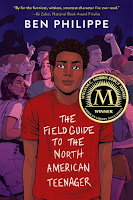
The Field Guide To The North American Teenager, A Multicultural Children's Book Day Read

Today is Multicultural Children's Book Day, and to support the program I'm writing about The Field Guide to the North American Teenager by Ben Philippe. On Monday, Field Guide won the ALA's William C. Morris Award for best debut book. It is very rare for me to be right on top of events like this. I am feeling good.

I haven't read any of Field Guide's competition for the award, but it certainly seems like worthy winner. It does two things really well:

  1. It takes a traditional teen story and tweaks it on many levels.
  2. It is truly funny. 


Teen Story


The Field Guide to the North American Teenager is about Norris Kaplan, a Haitian Canadian teenager, who moves from Montreal, Quebec to Austin, Texas. It is a new kid story. It is a fish out-of-water story, or, in this case, out of snow. Will he make a life for himself there? Or will he head back north, as his mother promises he can  if he makes a sincere effort in the Lone Star State and just can't make a go of it?

Philippe's handling of traditional/cliched YA elements:

  • The blonde cheerleader is not stupid. Or a mean girl.
  • The arty girl, who is usually portrayed in these books as the outsider who is the emotional savior for the main character, is kind of a bitch. In my humble opinion.
  • The cheerleader who is kind of a mean girl is redeemed by her support for a friend. (Except for stealing her boyfriend. But other than that.)
  • There is your torn-between-two-lovers scenario that you often find in teen books, but here a boy is torn between two girls instead of the other way around.
  • Just what is a jock? Is it only the people who are on the football team? Or...you might be a jock if you play ice hockey and ski?
  • Norris gets along with his mother!
  • Norris is at least a decent student, if not even better!
  • Norris is singled out for being Canadian more often than he is for being Black.
  • There is the teen journal we see so often in YA books, but it isn't quoted much. Norris uses it, instead, to make comments about the people around him. Most of it we don't see. But when we do...
  • Norris is a child of divorce. Dad's not that attentive, distracted, as he is, by a second family. But Norris's main problem in life is that he has a mouth on him and a cynical eye. And that is, indeed, a problem. As author Ben Philippe says of his creation in a CBC article, "Norris says and does whatever he thinks."
  • Oh, and this book is written in the third person. The first-person narrator has a stranglehold on YA and even middle grade books. Kudos just for getting away from that.


Humor


The Field Guide to the North American Teenagers is a truly funny book. This is notable because many books (TV shows, movies, everything) are described as funny but just aren't. Timing is off or the humor is not organic to the situation or somehow we get the impression that this is supposed to be a joke but it's just not working. Perhaps humor writers need a way to try out material the way stand-up comics can try out material at small clubs where they can bomb in comfort and figure out what works and what doesn't.

Maybe Philippe does that with some of his other writing. Especially the stuff described as humor.

Not Heavy On Race


As I said above, in Field Guide Norris is identified more for being Canadian than he is for being Black. His original big, big issue with Austin is the heat. (This book killed what little desire I had to go there.)  According to Philippe, that was intentional. In Why Ben Philippe Wrote a YA Novel About Being a Black French Canadian Kid in Texas at CBC Book he says he believes there is an expectation, "especially in the American narrative," that YA books about Black characters will be about race. He wanted to write about a teenager "more concerned with being a hormonal kid than necessarily the sociopolitical ramifications of being black."

I'd also like to note that the book is called The Field Guide to the North American Teenager and not the "American teenager," suggesting it's pulling together Canada and the U.S. Which sort of makes #ReadYourWorld more world-like.


An Ethnic Quibble


This is a terrific book. But a question did arise for me. Forgive me if I'm being nitpicky.

In marketing and articles about The Field Guide to the North American Teenager, main character Norris is frequently described as a Black French Canadian teenager. That was what attracted me to it when I first heard about it last fall, what with me being Franco American and all. Plus, we have an expectation that French Canadians are White, because they are descended from a relatively small group of French people who settled in Canada in the seventeenth and eighteenth centuries and who were White. Thus the idea of a Black French Canadian creates incongruity, and I am one of those people who finds incongruity funny.

But I was reading the climax of the book, and I suddenly thought, Wait. Is this kid French Canadian? Both his parents are Haitian immigrants to Canada. He was raised in a French Canadian culture, but he has no genetic connection to French Canadians as a group. Wouldn't one of his parents need to be French Canadian in order for him to be considered French Canadian? Isn't he a Haitian Canadian or a bilingual Black Canadian?

Granted, Haitian Canadian and bilingual Black Canadian are nowhere near as incongruous, and thus funny, as Black French Canadian. But the Black French Canadian thing is no longer funny for me, because, as we've discussed here before, I think too much.

Philippe is quoted as describing himself as a Black French Canadian at the Canadian site I quoted above. Clearly those people had no issue with it. And Philippe also has knowledge of his background, while I'm two generations removed from the whole French Canadian thing.

Still, I'm e-mailing my cousin Micheline in Ottawa this weekend to get her take on this. Because, of course, anyone who has a French Canadian cousin has a connection to the source of all French Canadian knowledge. If nothing else, I'll be telling Micheline about a book she might want to read.

Enjoy the book whether Norris is French Canadian or not. And follow Multicultural Children's Book Day on Twitter at #ReadYourWorld


Monday, January 27, 2020

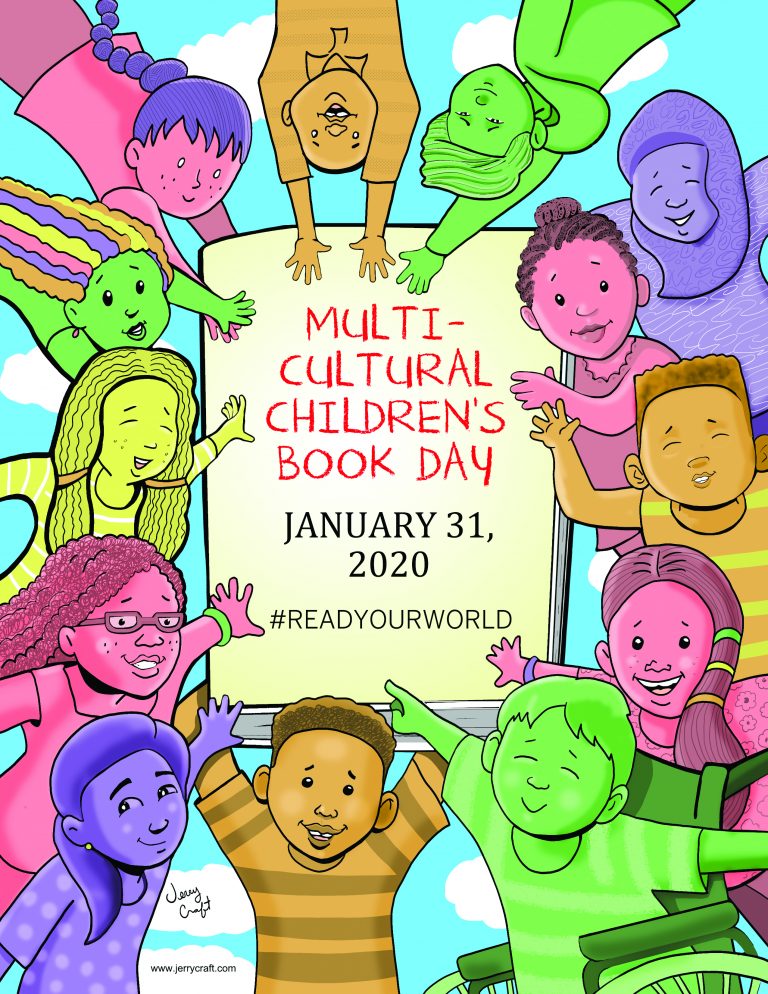
Multi-Cultural Children's Book Day This Friday

Multicultural Children's Book Day is this Friday, January 31. Every year on the last Friday in January children’s reading and play advocates Valarie Budayr from Audrey Press and Mia Wenjen from Pragmatic Mom  team up to present MCBD as a way of celebrating diversity in children’s books. It includes book reviews from bloggers all over the world, giveaways and book-related activities for young readers of all ages.

You can follow the action on Twitter by using #ReadYourWorld. I just set up a Tweetdeck column using that hashtag so I can see what's happening this week.

As  it applies to Multicultural Children's Book Day, multicultural children’s books are defined as:
  • Books that contain characters of color as well as main characters that represent a minority point of view.
  • Books written by an author of diversity or color from their perspective. Search #ownvoices to discover diverse books written by diverse authors.
  • Books that share ideas, stories, and information about cultures, race, religion, language, and traditions. These books can be non-fiction, but still written in a way that kids will find entertaining and informative.
  • Books that embrace special needs or even “hidden disabilities” like ADHD, ADD, and anxiety.
I hope to be posting on Friday about The Field Guide to the North American Teenager by Ben Philippe


Monday, November 04, 2019

Multi-Cultural Children's Book Day 2020

I just learned that Multicultural Children's Book Day is coming up on January 31. I'm hoping that if I do this post about it, I'll remember it's coming before, say, January 30.

If you want to keep up on Multicultural Children's Book Day, you can follow it on Twitter. I do. See how I know the event and date?

Seriously, I love January events. I get very excited for them in December. It's now November, which is almost December, so you can understand why I'm getting a little rush from this.

Thursday, January 24, 2019

Multicultural Children's Book Day Twitter Party

Tomorrow is Multicultural Children's Book Day, co-founded by Valerie Budayr of Jump Into a Book and Mia Wenjen of Pragmatic Mom. The program's mission is "to raise awareness for the kid’s books that celebrate diversity" and "to get more of these of books into classrooms and libraries."

As part of the event there will be a Twitter party tomorrow night from 9 PM to 10 PM EST, which you can follow using the hashtag #ReadYourWorld. You can register to win prizes.

You can also follow Multicultural Children's Book Day all day on Twitter using the hashtag #MCBD2019. For that matter, you can start following it today. There's already some activity.

Hint: If you use Tweetdeck, you can set up columns for hashtags you want to follow just for a day or two, like #ReadYourWorld and #MCBD2019. You can always delete them later. I already have my columns set up for tomorrow.

Saturday, January 27, 2018

Multicultural Children's Book Day

Today is/was Multicultural Children's Book Day, which totally escaped me until yesterday. It didn't escape Mia Wenjen (Pragmatic Mom blog), who is one of the co-founders of the event. You can see and hear her talk about Multicultural Children's Book Day on the Miss Panda Chinese YouTube Channel.

While I don't have anything new relating to multicultural children's books, I can refer you to some I've enjoyed in the past.

Golden Domes and Silver Lanterns by Hena Kahn with illustrations by Mehrdokht Amini.

The Nian Monster by Andrea Wang with illustrations by Alina Chau.

Listen Slowly by Thanhha Lai

The Hired Girl by Laura Amy Schlitz

American Born Chinese by Gene Luen Yang

Boxers and Saints by Gene Luen Yang

Mare's War by Tanita Davis

Persepolis by Marjane Satrapi

Life is Fine by Allison Whittenberg

Josephine by Patricia Hruby Powell with illustrations by Christian Robinson

Hereville: How Mirka Got Her Sword Back by Barry Deutsch

Friday, January 27, 2017

Multicultural Children's Book Day--Today

Today is Multicultural Children's Book Day, which I thought I had mentioned earlier, but, yikes!, it appears I did not. A great many bloggers are taking part in this with reviews of multicultural books. There are also publishers and authors involved.

If  you're late to this party, you can still follow the Multicultural Children's Book Day official hashtag, #ReadYourWorld. I set up a Tweetdeck column for it last night. That's how I found Chronicle Books' blog post Celebrating Diversity in Children's Books with Lovely Illustrations, which includes Golden Domes and Silver Lanterns.

And speaking of parties, as I was earlier--There will be a Multicultural Children's Book Day 2017 Twitter Party this evening from 9 to 10 PM EST.