Showing posts with label 20th Anniversary. Show all posts

Thursday, December 15, 2022

An Old-Fashioned Girl

Original Content's 20th anniversary year is almost over, and it's been a while since I've done an anniversary post. I stumbled upon these from 2010 related to An Old-fashioned Girl by Louisa May Alcott. I'm doing a post about them, because I think they illustrate something that was going on in the literary blogosphere back in the earlier part of the century. They are, therefore, historical. Also, I don't think anyone says blogosphere, anymore.

Back in the day, it wasn't unheard of to see on-line book discussions. Lauren Baratz-Logsted led a great one at the late, great Readerville community, though I can't remember the name of the book. But the discussion was terrific. Someone at Readerville also led a discussion of short stories, which was good, too. That was how I came to read A Hunger Artist by Franz Kafka and that led to me reading The Metamorphosis.  In 2008 I took part in a "Big Read" of a volume of Shirley Jackson short stories, that wasn't particularly successful, though I finished it.

Then in 2010, Mitali Perkins led a monthly discussion of a classic children's book "focusing on race, ethnicity, gender, and class. She and her followers will be looking for what qualifies the book as a classic, but also looking to see if the attitudes in the book are dated in terms of how we feel about race, ethnicity, gender, and class now." I don't know how many books she discussed, because I took part in only one discussion, the one on An Old-fashioned Girl.

Reading this book was the beginning of a turn-around in my feelings about Louisa May Alcott. You can check out my takes on various aspects of the book below. 

What Do We Think Of Them Now?

An Old-Fashioned Girl: What Is It?

An Old-Fashioned Girl: Poverty Is Ennobling--So Long As You're Not Irish

The Women Of An Old-Fashioned Girl

An Old-Fashioned Girl: And In Conclusion


Friday, July 08, 2022

What Were You Doing Back In July, 2004, Gail?


What was I doing back in July, 2004? Well, that was back in the day when I had editors waiting for me and contractual obligations. Yes, one could argue that life is easier now. 

As part of my observance of Original Content's 20th anniversary, I am republishing this post from July, 2004. In part, I'm doing it to prove that I did use to work harder. But more importantly, because it may be one of my earliest references to Jane Yolen. I was obsessed with her for a while, not to the extent that I have been obsessed with Shirley Jackson, but still obsessed. Plus, Yolen is alive while Jackson isn't, so many of my Yolen posts were probably borderline stalking.

I no longer go to Yolen's on-line journal, though I do follow her on Facebook. And she's still doing more than I am.

Thursday, July 29, 2004 Just Can't Keep Up


I missed posting yesterday because I'm working on the fourth revision of a book (I mention this because I suspect there are people who think I don't do anything at all), and though it is going well, for a revision, I always get to a point where I am consumed. Not necessarily in the good sense of the word. Even when I'm not working on it, I have trouble doing much of anything else--like ironing, grocery shopping, other types of paperwork. I'm hoping to finish this revision next week and try to get back to what passes for a normal life for me.

I've noticed that Jane Yolen has started an on-line journal. It doesn't seem to be a traditional blog, but a traditional journal maintained on-line. I admire what she's doing, but I don't know if I'll be reading it much because...she does too much work . Her work habits are far better than mine, and I don't want to keep reminding myself.

On the other hand, maybe this is just what I need.


Sunday, June 12, 2022

Unnecessary Creation

Ready To Go
Today I'm starting a week-long DIY sewing retreat in my basement. I have a deadline on three projects, because they're birthday presents. There are also some things I started last year and haven't finished. Some mending. I have something in mind I'd like to do that involves denim. I have some other plans for leftover material, if I can get to it. 

I've tried doing sewing retreat weekends and only managed a few hours on Sunday afternoons, so I know this week of sewing isn't really going to be a week of sewing. I'll be at one family member's house all day Monday. I'll be visiting another for an hour on Friday. I'll be grocery shopping Wednesday morning. Those are just the time I'm going to lose that I know about and explains why I'm going Sunday to Saturday and not just Monday to Friday. 

Why A Sewing Retreat?

  • I've been feeling the effects of chaos a little more than usual the last couple of months and this will allow me to fall back on my mantra, Finish Something. In fact, just preparing for this week of sewing has forced me to impose some order on my office area, as I get it organized so I can get back to work easily next week.
  • I believe in the value of Unnecessary Creation. Creativity spurs creativity.
As part of this year's twentieth blog anniversary I am republishing my first post on unnecessary creation, which I've often referred to as unnecessary creativity.


Aug.13, 2013 Time Management Tuesday: Summer Reading--Spending Time On Any Kind Of Creativity

I  know that many people probably perceive focusing on managing time as very noncreative. What about art? What about literature and music and those fields that are, I think, rather stereotypically considered creative? Shouldn't we be focusing on something like that?

I have a very practical attitude toward creativity. Creativity is simply the act of making something that did not exist before. Whether we're talking painting a landscape or baking a cake or writing a novel or building a house, we are talking creativity. Making something that did not exist before takes time. Big, big connection between time and creativity, in my humble opinion.

Manage Your Day-to-Day 's section on creativity includes an essay by Todd Henry called Creating for You, and You Alone. Now, remember, Manage Your Day-to-Day doesn't deal specifically with writers or artists but with all types of "creatives," people who need to come up with something that didn't exist before as part of their work This particular essay deals with people who work creatively in their jobs, but need to stay on a particular creative task. Exercising other aspects of their creativity is difficult for them, though doing so might be good for their day job, in addition to anything else they want to do with their lives.

Why am I interested in this essay when I write here for writers who presumably create for themselves all the time? Well, actually, we don't. Many writers have traditional day jobs that require creativity of them quite apart from the creative work they want to do for publication. Creating for themselves has to happen in addition to that. I also know writers who do work-for-hire, writing specific nonfiction books, for instance, for a particular publisher or writing volumes for series fiction. Earlier this year I met an illustrator who had "auditioned" for and won a rather nice assignment illustrating some children's books for a known cable chef. She expects to be tied up with that job for two years. For  many working writers and illustrators, this really is an issue.

Todd writes about what he calls "Unnecessary Creation," which he believes "is essential for anyone who works with his or her mind." He's talking about creative acts--making something, anything, that didn't exist  before--that are unrelated to an individual's work. "...something about engaging in the creative act on our own terms seems to unleash latent passions and insights." In other words, creativity spurs creativity.

He suggests creating a list of creative projects to work on in spare time, (I know. What's that?) then setting aside a specific time each week or day (Hell, I'd be happy with time each month) to make progress on it. The point of Unnecessary Creation is that any kind of creativity has value. For those writers I know who are trying to get to other types of creative work, that might be what goes into their spare time set asides. Or maybe not. Maybe simply engaging in any creative act will unleash the insights they need to get to the Unnecessary Creation they really want to move on. Creativity encourages creativity.


Saturday, June 04, 2022

Let's Raise A Glass To The Late 48-Hour Book Challenge

 For ten years beginning in 2006, the childlit blogging community took part in the 48-Hour Book Challenge during a weekend early in June. It was created by Pam Coughlin of MotherReader and was a social reading experience for children's lit bloggers. You read and blogged as much as you could during a 48-hour period. 

My first year, I read magical realism. Another year I read and blogged about friends' books. Looking back through the archives, it appears that I took at least three years off, two for eldercare issues and one because I'd made some kind of crazy self-commitment to not do anything work-related on weekends during the summer months because the family had so much going on. What was wrong with me? 

As part of my 20th anniversary observance, I'm republishing below my post marking the end of the challenge and, pretty much, the end of an era.

Friday, June 03, 2016

At the end of May, 2006  I signed up for the first 48-Hour Book Challenge, the inspiration of Pam Coughlin at MotherReader.  I did a magical realism tour for my first book challenge with seven stops. I took part in 2007 and 2008 and again in 2014 and 2015.


The 48-Hour Book Challenge was a reading and blogging binge. You picked 48-hours over a 3-day weekend Pam selected, usually at the beginning of June, and during that period read as much as you could of whatever you wanted and blogged about the books you completed. Because that's what litbloggers do. There was a list of participating bloggers at Pam's site so you knew which of your friends were reading and blogging with you. There were prizes.

No 48-Hour Book Challenge this year. Pam/MotherReader is calling it a day, figuring ten years is a good wrap-up point. There may be some interest in bringing it back next year, but for now the Challenge is a happy memory.

Some litbloggers who were around back then refer to the mid '00s as the Golden Age of Blogging. As I'm sure I've said before, I think of that time as a wild west/frontier experience. There were no instructions on how to blog, no talk of writers building platform, no articles on why writers need blogs or how they can get by with a blog instead of a website. Internet book bullying was still in the future. No one had come up with ways to use blogs to market books. No one had started companies organizing blog tours for writers. Magazines weren't sponsoring blogs.

Because we sponsored ourselves! Yeah! Ya just went out and blogged in those days! Sink or swim. Blog free or die hard.

Blogging was truly social media then, at least in the childlit world, because bloggers interacted, commenting on each others' work and posting links to one another. You were part of a community. Kind of an underground community. Which was cool. The 48-Hour Book Challenge was an on-line ball for the childlit blogging world.

Well, nostalgia isn't healthy. So let's hitch up our big blogger pants, toss back a little of whatever we like to toss back when we're paying tribute, and get back to whatever bloggy things we do these days. And Twitter. I'm going over to Twitter when I'm done here.

We had some good times, Book Challenge. Have fun in retirement.

Saturday, April 30, 2022

Remember Podcasts In The Kitchen?

Recently I read an article on the popularity of podcasts. It reminded me that I listened to them back, it appears, in 2016. I listened to podcasts while I was binge cooking on weekends. I eventually got tired of them.

  • I wasn't interested in just sitting and listening to a podcast, and it was difficult to concentrate on them while doing something else. For instance, baking for three hours.
  • I also found a lot of them back then more interesting in concept than in execution. 
  • Hosts often thought they could say anything and it would be entertaining. They were wrong.
Dipping into the archives, I found 10 podcast and cooking posts over a year period from November 1, 2015 through October 16, 2016. As part of my 20th anniversary observance, I'm rerunning one that pretty much expresses what happened for me with podcasts. It discusses a podcast I liked and that still exists. (Not all the podcasts I listened to back then do. Hmm. Do they come and go like blogs?) 

At the end of the post, you'll see a reference to a blog called Beth Fish Reads and a round-up of cooking posts from other bloggers she did called Weekend Cooking. Beth Fish Reads still exists, focusing on food-related books and cooking. The Weekend Cooking round-up is now hosted at The Adventures of an Intrepid Reader. The Children's War, which I also mention at the end of this post, also still exists.  

Today is Saturday. I do have some cooking to do. I'll try listening to The Memory Palace to see how that goes these days.


Sunday, May 22, 2016 Another Cooking Binge, Another Podcast: "The Memory Palace"

Podcasts Losing Their Attraction For Me


Last week I was just about ready to throw in the towel with podcasts. I'd been interested in listening to them while working in the kitchen as a way to take in work-related material while doing an unnecessary creative act. I did pick up some good information, particularly on content marketing, but I was trying and discarding a lot of podcasts. Things I liked the first time I listened to them got old fast when I tried them again. When pods involved more than one personality, the ratio of chitchat to important content was often pretty high. I guess you can tell you're an introvert when you can't even take listening to others having a good time.

Big Cooking Binge
But I really like something going on sound-wise when I'm working in the house. Music is a definite option. Nonetheless, last weekend, I was embarking on a big cooking binge and thought I'd take another quick look on-line. Somehow, I stumbled upon The Memory Palace.

All About The Story


The Memory Palace's creator, Nate DiMeo, describes his podcast as "a storytelling podcast and public radio segment about the past." He takes isolated historical events and creates a written narrative about them. If you go back to the early days of the podcast, the story is often just an account of something that happened. But eventually his pieces began to include something on the event's significance. For instance, in his story about nineteenth century singer Jenny Lind, he talks about a major difference between her time and ours. In her day, before sound could be recorded, before recording sound was even thought of, you could only hear music during a performance. In many cases, you would never have another opportunity to hear a singer. Did people even give that a thought? Or was it just a normal part of life?

The significance part of these stories is important. History isn't just a list of facts. It means something. And in terms of The Memory Palace being a storytelling podcast, meaning is huge. Many times without including an understanding of a real event, all a storyteller/writer is doing is passing on a list of things that happened. What does it all mean, Mr. Natural? brings a piece of writing to another level.

Another thing that's neat about these podcasts is they're short. So far, I don't think I've listened to one that's more than fifteen minutes. DiMeo is "interested in keeping things small because I was interested in the smallness of those things" (the historical "moments" he finds) "and the way they added up to a larger picture."

These short podcasts are like flash nonfiction. They are intense and complete. They give listeners an opportunity to see how someone finds meaning in an event in  a quick, concise way. They have the potential, I think, to become a painless model for looking for and finding stories.

Hope I still like them in a few weeks.

I heard about Weekend Cooking through blogging buddy Alex Waugh of The Children's War.  I most definitely cook on the weekend, and it is often somehow connected to writing or reading, as is most things in my life. So this weekend I am taking my first shot at joining the weekend cook/book people at Beth Fish Reads.


Monday, April 18, 2022

Julia Child Is Everywhere This Spring


Julia Child is having a moment, due to the pretty terrific Julia showing on HBO Max right now.

It looks like pie, but it's cake!
Speaking of which, for Easter I made a gluten free version of the Queen of Sheba cake she makes in the first episode. Except for the no gluten and baking it in a pie plate instead of a spring form pan and using vegan margarine instead of butter, it was just like Julia's.

And speaking of Julia Child, over the last couple of weeks while watching the show about her, which has inspired many, many articles on-line, many of which I have read, I have been thinking about a lovely 2012 picture book by Susanna Reich about Child's cat, Minette. So, as part of my Original Content anniversary observance, I am republishing my post about it. It appears to be available as an e-book. I believe I still have my hard copy.

Friday, May 04, 2012 Blog Tour: "Minette's Feast" As Creative Nonfiction


If you're looking for Day Five of the Minette's Feast Blog Tour, you're in the right spot.

Minette’s Feast by Susanna Reich, illustrated by Amy Bates,  is a lovely picture book with a Parisian setting and a charming story. A woman living in Paris and studying French cuisine adopts a cat, Minette, that far prefers the results of her own food prep—hunting for birds and mice—to the cassouletssoufflés, and pates her owner makes. She is finally won over, at least temporarily, by the leftovers from a dish that had taken three days to marinate.

The descriptions and illustrations of home, cooking, and food, food, food give Minette’s Feast the potential to become a comfort book, so it doesn’t matter that many young readers won’t know who the woman referred to in the book’s subtitle —“The Delicious Story of Julia Child and Her Cat”—is. Furthermore, Minette holds her own as a character. She does, after all, turn up her nose at meals prepared by a student at “Le Cordon Bleu, the famous cooking school.” Whether or not she will be won over to fine human food provides the narrative drive for this sweet piece of creative nonfiction.

That is what Minette’s Feast seems to be to me—creative nonfiction for kids. Creative nonfiction, as I first saw it defined years ago, is nonfiction that reads like fiction. It is written using  “elements borrowed from fiction to tell true stories,” as nonfiction children’s writer Melissa Stewart wrote earlier this year.  Descriptive language (“Julia and Paul were charmed by Minette’s delicate whiskers, her superior nose, and her quick little paws.”), dialogue (“Une maison sans chat, c’est la vie sans soleil!”), and the use of scenes (“And every time they went out for a walk, they enjoyed a fine, fine meal. They nibbled croissants in cafes where cats curled on chairs…”) are all examples of writing elements usually associated with fiction that a writer of creative nonfiction may choose to use.

In fact, in Lee Gutkind's collection of essays by writers of creative nonfiction, Keep It Real, scenes are described as the building blocks of creative nonfiction. They then need to be placed in some kind of order, or frame. In the case of Minette's Feast, Susannah Reich uses a traditional story frame to organize her scenes. A story is an account or retelling of something that happened told in a way that expresses meaning. That's why a beginning, middle, and end are so important to stories. We see the world of the story in the beginning, then a change or disturbance to that world in the middle, and the result of that change or disturbance in the end. We see what happenedMinette's Feast does read like a story--it's an account with a beginning, middle, and end of something that happened to Julia Child or to her cat, depending on which character you prefer to see as the protagonist. We also understand its meaning. This cat wouldn't eat Julia Child's cooking, for crying out loud!

Complete little stories turn up in all our lives (the story of how our parents met, the story of how we wrecked our new bikes, the story of how we came to settle into a career), but they aren’t always easily recognizable. And they don’t necessarily have any great significance or meaning beyond what happened to us. Creative nonfiction writers who choose to use a story frame have to recognize the potential for story while they are doing their research.  In her author’s note to Minette’s Feast, Susanna tells of having wanted to write about Julia Child for children “but I could never figure out how to make the story interesting to children.” She read Child’s memoir, My Life in France, “and discovered Minette, who inspired Julia’s lifelong love of cats. As a cat lover myself, I knew I had finally found my story.” 

Susannah’s story was actually Julia and Minette’s story. Through the use of creative nonfiction techniques, Susannah turned it into Minette’s Feast.

The Minette's Feast Blog Tour continues on Sunday at Great Kid Books. The earlier tour stops were:

Booktalking

Books Together

Tales from the Rushmore Kid

The Fourth Musketeer

After Sunday, the tour continues on Monday at Shelf-employed and Tuesday at ReaderKidZ 

Thursday, March 31, 2022

A Book That I Do Recall Reading


Here is the last of the three reposts from 2008 about Pierre Bayard's How To Talk About Books You Haven't Read. I know you've been waiting for it.

You'll  note in this post that I saw Bayard writes that we're going to forget a lot that we read. Vrai, vrai. The interesting thing about How to Talk About Books You Haven't Read is that I haven't forgotten it. I don't recall every word, of course. Reading these posts was a nice refresher. But the book, itself, and Bayard's point about how we often have knowledge of books we haven't read because of the significance of the books for our culture has definitely stuck with me.

Friday, June 27, 2008 In Which We Talk About Different Ways Of Not Reading


Pierre Bayard describes in How To Talk About Books You Haven't Read four ways of not reading books:

Books You Don't Know: I don't recall a whole lot about this section. At this point, I was still wondering if Bayard was joking.

Books You Have Skimmed: I have to admit, I've had to do this many times. There are a lot of books out there that I feel I should be familiar with but find really dreadful. So once I decide that I'm too old to be wasting valuable hours of my life reading this dribble, I start skimming so that I have a feel for the work. Seriously, I think it's much better to have a feel for a book then to have no knowledge of it at all. As it turns out, Bayard agrees with me.

Books You Have Heard Of: Reading reviews, articles, and blog posts about books can give you a handle on the books' place in the booky scheme of things, or the collective library, as Bayard calls it.

Books You Have Forgotten: Sadly, we're going to forget a lot of what we read.

You know the way of not reading that Bayard doesn't cover in his book? Books you have read and not understood. Sophie's World comes immediately to my mind. Perhaps Bayard, being a French intellectual and all, has never experienced this kind of not reading.

Monday, March 28, 2022

How Does A Book Relate To The Rest Of The World?


Below is part-two of the three-part arc from 2008 on Pierre Bayard's How to Talk About Books You Haven't Read that I'm republishing during my twentieth anniversary year. 

If I had all the time in the world, I'd read Bayard's book Who Killed Roger Ackroyd? The Mystery Behind the Agatha Christie Mystery I don't mean to brag, but I recall figuring out who the killer was in that book by the time I got to page three. And that was before I learned why the book is famous.

Tuesday, June 24, 2008

Tuesday, June 24, 2008 In Which We Talk About Our Collective Library


When Pierre Bayard talks about
 not reading, he's not talking about reading in the sense of an enjoyable experience, becoming one with a character, or any of that good stuff. He's talking about acquiring knowledge about how a book relates to the rest of the world. 

Societies, Bayard suggests, maintain what he calls a "collective library," meaning a virtual collection of books that the culture is familiar with. (You know, the way most Americans are familiar with characters from The Wizard of Oz without having read the book or maybe even having seen the movie.) One of his points is that sometimes a book is more significant for its relationship to other books in the collective library than it is for its own content. If individuals understand or at least know about the book's significance, they can talk about the book in that way. And it would be very legitimate for them to do so. 

Imagine, if you will, that it is the year 2057. A turn-of-the-century series of children's books about a kid named Harry Potter is oh, so yesterday. No one reads them, but everyone knows about Harry because of all kinds of literary references, movie references, maybe some song references. Harry Potter, though not read, is part of the collective library.

Say you are a graduate student in the year 2057, and you wouldn't read any of the Harry Potter books on a bet. But you are aware that the appearance of Harry Potter in the 1990s brought masses of adult readers to children's literature, encouraged serial novels, knocked problem novels off their pedestal in kidlit, and popularized fantasy. Knowing the significance of the series in relation to other books is arguably as important as anything in the books and certainly gives you something to discuss if Harry P. comes up when you're trapped in your advisor's office. In fact, there are probably many books we should know something about even if we haven't read them.

Saturday, March 26, 2022

A Book About Reading I Did Like


My last dip into the Original Content archive resulted in a repost on a book about reading that I really didn't enjoy reading. Today, as part of my continuing observance of my blog's twentieth anniversary, I'm starting republishing a three-post arc from 2008 on  Pierre Bayard's How ToTalk About Books You Haven't Read. This was a book on reading that I did like.

Once again, there are some dead links in the following post. There are live ones in the above paragraph.


Monday, June 23, 2008 In Which We Begin To Talk About A Book We've Read

Pierre Bayard's How To Talk About Books You Haven't Read isn't really about faking itAu contraire. It's very much about reading. In fact, it's a far more interesting and heartfelt discussion of reading than the "classic" How to Read a Book, which I'm guessing has destroyed the will to read in generations of Americans.

Bayard's tone is often slightly tongue-in-cheek, particularly in the early chapters. In fact, for a while I wondered if he was making up a couple of the authorities he cited early on. But, no, there really was a Robert Musil and a Paul Valery. And I've just admitted I'd never heard of them. Yikes.

But I am talking about them.

One of the many interesting things about this book called How To Talk About Books You Haven't Read is that each chapter includes a discussion of an author or a work that Bayard, if all his footnotes are to be believed, has read. All the books he discusses, either nonfiction or fiction, included a discussion of avoiding reading or a character who is in some kind of situation in which he can be said to have to talk about books he hasn't read. Bayard does more than use this material to support his own arguments. He makes these books sound interesting.

Thursday, March 24, 2022

How To Read....ZZZZZZZZZ

I recently read an article I can no longer find about reading. It mentioned a book on reading that I recall burning. I also did a blog post about it. As part of my blog anniversary observance, I'm going to republish that post. Later, I'll rerun some on a book about reading that I liked much better. 

I'm aware that a couple of the links in this post go nowhere. It's fourteen years old. What can we expect?


Sunday, June o4, 2006 I Give Up


I have been broken.

Last summer I began reading How to Read a Book, The Classic Guide to Intelligent Reading by Mortimer J. Adler and Charles Van Doren. I've read 238 of its 346 pages (not counting the reading list and exercises and tests at the end). I've decided to throw in the towel because life is just too short.

Clearly, intelligent reading is beyond me.

One of the things the authors suggest readers do is write in their books. I'm totally with them there. In the front of my copy of How to Read a Book I wrote out the fifteen (that's 15) steps to reading a book. In addition, I wrote out the four questions to ask about a book, the four ways to look at words, and the four ways to look at facts. (My notes also say these are also the four aspects of encyclopdias.) The last 100 pages must have had more lists, but since I can't remember the ones I wrote down it seems unlikely that I would have gained anything from reading and writing down the rest of them.

I found How to Read a Book repetitive. It also used long analogies that increased the verbiage.

Quite honestly, I only remember those points because I wrote them down along with all my lists.

How to Read a Book was originally written in 1940 and the last copyright date is 1972. It's very dated, and not just because the authors keep referring to readers as "men."

My own faithful readers (the ones who are still with me since yesterday) will recall that I just wrote about the large number of books being published today. Far, far, more books are being published now then when How to Read a Book was being written or even when it was being revised. While many of the individual steps Adler and Van Doren suggest are worthwhile, it just isn't practical for readers to keep a couple of dozen tasks in mind while trying to keep up with today's load of reading.

At one point, Adler and Van Doren suggest which steps to keep in mind while reading a book for the first time. Other steps are saved for subsequent readings.

Subsequent readings????

Okay, sure, researchers planning to write a scholarly work better read their texts more than once. But the rest of us? Let's face facts. It's just not going to happen.

It's very possible that I could use some advice on how to read a book. I couldn't get through this one, after all. But I need that advice to be readable and practical and relevant to the situation I find myself in--"so many books and so little time." That appears to be a much different situation from the one that existed when Adler and Van Doren were writing their book.


Tuesday, February 22, 2022

Another Writers' Group Member With A New Book

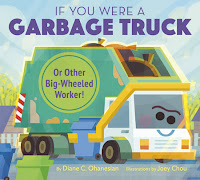
Another one of my writers' group colleagues has a book publishing, this one today. If You Were a Garbage Truck or Other Big-Wheeled Worker! by Diane Ohanesian with illustrations by Joey Chou is a rhyming story that puts "preschoolers in the driver's seat as their favorite vehicles reveal the ups and downs of being a busy truck." It sounds as if it might be described as the inner lives of trucks.

Diane is the author of several other picture books. Two years ago, she did an impressive presentation for her lovely book, Snuggle Down Deep, that I was able to cover here. To help mark the publication of If You Were a Garbage Truck, as well as observe Original Content's twentieth anniversary, I'm rerunning it below.


Saturday, January 19, 2019 An Author Does Story Hour At A New Bookstore

Human children and animal babies all go to sleep. That's the entry point that makes Snuggle Down Deep by Diane Ohanesian with illustrations by Emily Bornoff work. Each section involves both some light factual material with the "snuggle down deep" repetition. The book combines nature, poetry, and...sleeping. It's a lovely book with an ecological thread.

The Event


Cookies A Work Of Art
This morning Diane Ohanesian did what could be called a master class in how to do an author story hour in a bookstore. She had an audience of close to a dozen kids from around two-years-old to maybe six or seven. Yes, she brought cookies, which made a much nicer impression than I would have expected.

Making The Story Interactive
What was really impressive, though, was the way she got control of her group with the first words she spoke. In a whisper, she asked her audience to do something and they did it.  She kept control with a terrific board kids could interact with as she was reading. She finished up with a simple art project that went over extremely well, probably because of the great box of supplies she brought with her. She had brand new packages of paper!
Treasure!

Watching Diane illustrated why new writers should take advantage of opportunities to see writers experienced with speaking and dealing with the public.


The Venue


Diane read at the new River Bend Bookshop in Glastonbury, Connecticut. It's a nook and cranny independent bookstore, the kind where browsers can get a sense of the intellect curating the offerings. I "have a bookstore" in Stowe, Vermont I go into once a year and walk around until something jumps off the shelf and tells me to take it home. River Bend
Children's Nook
could be that kind of place.

Of course, today I bought Snuggle Down Deep.

River Bend is hosting writers and other literary events


Sunday, February 13, 2022

Is Mary Sue Still A Thing?


Today's blog anniversary post goes back to 2009, when, it appears, I was worried about accidentally writing Mary Sue characters. Basically, Mary Sue characters are characters created as a sort of fantasy stand-in for the author. They grew out of fanfiction and often appear in situations where some kind of established male character exists. The Mary Sue character becomes his romantic interest because of her many, many fine qualities. 

It's been a while since I've seen references to her, so she may not be as common these days. Nonetheless, I'm reprinting this Mary Sue post as a warning.

Unless, of course, you like Mary Sues. Then, of course, do what you'd like.

In addition to the whole Mary Sue issue, I think this post is interesting in terms of childlit blogging history. 

  • First off, both the blogs mentioned in the first sentence are gone now, though Kelly Herold and I are Facebook friends these days. (The same with Kelly Fineman in the second paragraph.) A lot of childlit blogs are gone from back in the day. I do stay in touch with some of those bloggers, though.
  • Second, go to the original post and look at the "engagement" in the comments. Back in the '00s, childlit bloggers often interacted in comments. It wasn't unusual to see a salon-like atmosphere. That's been gone for a long time. A big part of that is probably due to people moving on to "quicker" types of social media like Facebook and Twitter. Another part, I believe, is that the Internet became overwhelmed with litblogs, at which point readers had to give up reading them, because reading blogs would be all they would ever do. I know I don't read any regularly, now. I read a blog post when its writer catches my attention...on Facebook or Twitter. 

Friday, May 22, 2009 How Do I Avoid Writing Mary Sue?

Kelly Herold of Big A, little a has a new blog called Crossover where she will be blogging about "crossover books"--books that end up with two audiences, adult and YA or adult and even younger. She got the ball rolling with a discussion of America's most recent crossover, Twilight.

The blog comment that really got my mind spinning was Kelly Fineman's regarding Bella being a Mary Sue, who has moved from being a proxy for the author (Mary Sues were originally defined as characters based on authors' idealization of themselves. See the second Urban Dictionary definition) to being a proxy for readers. I think she has a good point.

The other character I've come across recently who seems like a Mary Sue to me is Mary Russell in A Monstrous Regiment of Women. I've heard that the Mary Russell series is also read by both adults and teens.

Mary Russell is a more traditional Mary Sue than Bella Swan in that she has so many superior qualities--intelligence, sophistication, a college degree, money. Anything she puts her hand to she's successful with. Plus she appears as the love interest for a character who already exists (Sherlock Holmes), which is how Mary Sues got their start in fanfiction. Bella, on the other hand, is pretty bland and inept, though she is loved by all. Her love interest is a type that has existed before (a vampire), though Edward, himself, is new to her series.

What both characters have in common is a sexual tension with a male character who is also idealized, one who watches over them while also serving as a threat. In Twilight Edward, who might go mad with lust at any point and kill Bella, controls her by treating her like a child. In A Monstrous Regiment of Women Sherlock Holmes "saves" Mary with physical violence--injecting her with drugs at one point and hitting her at another.

Now, I don't think many professional writers sit down and plan to write Mary Sue characters. (Though maybe we should, since they appear to be very popular.) However, it happens. For example, I've read that some critics believe Harriet Vane in the 1930's Lord Peter Wimsey novels is a Mary Sue for Dorothy Sayers, the books' author.

So my thought now is, if writers use their own experience in their writing (and this one sure does), how do we avoid writing Mary Sues? Do they always appear as a love interest? If I stay away from romance, will Mary Sue characters stay away from me? If I don't write about anyone over the age of thirteen will I be safe? What if I use male main characters? Will that work?