Showing posts with label Short stories. Show all posts

Thursday, September 25, 2025

The Heritage Month Project: "Night at the Fiestas: Stories" by Kirstin Valdez Quade

Last week I discussed Junot Diaz's The Brief Wonderous Life of Oscar Wao as part of my Hispanic Heritage Month observance. I feel I should point out that I am aware that seven years ago he was the focus of claims regarding inappropriate behavior toward several women writers. As a result of that issue at that time, writer and critic Monica Castillo tweeted "Because I need/want to deal with this Junot Diaz news in another way, can we signal boost some Latina authors out there?" And that led PBS to run the article Sexual misconduct claims against Junot Diaz have sparked support for Latina writers. Here’s who you should be reading now

That is how I came to find Night at the Fiestas: Stories by Kirstin Valdez Quade, a book of very fine short stories. They are all set in the southwest, many around Santa Fe, with Hispanic families/culture often part of that setting. This raises a question for a lifelong New Englander: Am I being exposed to a world I know nothing about? Or do I know so little I can't recognize whether or not I'm being exposed to a world I know nothing about?

But I obsess.

I will admit that though I found these stories highly readable, I often wasn't clear about the endings. Now this is an issue for me when reading short stories, anyway. Endings are a factor for me when writing short stories, too. Could my lack of ending knowledge be keeping me from finding publication homes for more of my short stories?

I continue to obsess.

Let's Talk About Some of These Stories

When I looked over these stories a second time in preparation for writing this post, I noticed a couple  things that I wasn't aware of during the first read.

  • Religion plays a part in a number of them. In Nemecia, the main character has an opportunity to lead the procession at the annual Corpus Christi festival, an opportunity her creepy cousin Nemecia snatches from her. In The Five Wounds a pretty poor excuse for a father is playing Christ in a local Passion Play. In Family Reunion, an atheist child wants to convert to the Mormon faith. In Ordinary Sins, a young, single woman pregnant with twins works at a local Catholic church office.
  • Family trauma turns up in many of them. In Nemecia, Nemecia is living with the main character's family because of something that happened in Nemecia's past, something the narrator only knows about through what creepy Nemecia tells her. In that one, childhood trauma spreads. In The Five Wounds the poor excuse for a father is seeking redemption for forsaking his child, realizing that the child his daughter is carrying is going to suffer pain from that, too. The Guesthouse is your classic family trauma instigated by a death. And in Family Reunion that atheist child I mentioned is the daughter of an alcoholic father and thus recognizes that something is wrong with the Mormon family she has become attached to.
Family trauma isn't something I'm usually a fan of in my reading, but, as I said, I did like these stories.

Other Favorites

  • Mojave Rats. A woman is trapped in trailer park with her children while the furnace is broken. She insists to herself that they aren't like the other people there. They will be leaving. Readers may have their doubts.
  • Night at the Fiestas. This story is clearly set in the fifties or sixties, which I found novel. I also liked it because I found the main character unlikable. Writing workshops/how-tos often insist that main characters must be likable, because readers won't relate to them otherwise. I've never agreed with that, and I found this story particularly memorable because of this main character who wants to escape her world and doesn't mind a little theft to help her do it.
  • Jubilee. The daughter of a Hispanic man wants to hate his Anglo employers, the Lowells, which is an old New England upper class family name, in case I am the only person who noticed.  Do they deserve it? Another main character who's not all that likable. 
  • Canute Commands the Tides. A New England artist moves to Santa Fe, with little understanding of what's there or what she's doing there. Her move has a bad impact on the painting she's working on "Canute Commands the Tides." Should we stay in the culture that made us? I particularly liked this story because the artist moving west is from my part of the world. I can see this woman. Also, I was familiar with the Canute Commands the Tides story, though with a different spin than the narrator of the story gives it. Canute was not a foolish old man. He was making a point to his followers who had been sucking up to him. No, he could not command the tides. If I had all the time in the world, I would read this story again to work out Canute's place in it. Also, there are two women here with adult children, something I should probably think about more. 

Another Interesting Work from Quade


The Five Wounds is Kirstin Valdez Quade's first novel and picks up on the characters and world she introduced in her short story The Five Wounds. I love when this kind of thing happens.


Thursday, July 03, 2025

What Passes for Professional Self-improvement Here

My Personal Short Story Study

Over the last few months, I've been "studying" short story writing by going over notes from workshops I've taken. I'm done with that. Now I've started going through material I've collected and saved on the subject, including an article listing the best short stories to teach yourself how to write. 

So far, these seem like the best short stories to encourage you to give up writing altogether. Or maybe even reading.

Pinterest

Then today I read Pinterest Is My Best-Kept Author Marketing Secret by Melissa Bourbon at Jane Friedman. Bourbon says that followers don't matter at Pinterest, because it's a search engine. You can use it to direct people to your writing.

Well, I'm on Pinterest, and though I don't have much to sell, I thought maybe I could use it to encourage people to read my humor, essays, and short stories. Maybe I could use Pinterest to get my name out for that kind of writing now that I'm not writing children's books.

Well, I took a look at my Pinterest boards, which I haven't touched in 3 years. As you can see from the menu to the left, I don't even link to it here. I think I forgot about it. I sure hope followers truly don't matter there, because I only have 14. And the page seems kind of a mess of both my writing, my design work for characters in books that never found publishers, and things I'm just interested in. (Learning French!) 

I did a little searching to see what other writers are doing on Pinterest, and it seems the same. Though they seem to have more boards. And are there all that many writers there? Really? 

So maybe I'll do a little work on Pinterest, but it will be low priority.

Lower than the short story study.


Thursday, June 19, 2025

A Lit Journal Acceptance and a Story Behind the Story

My new short story, What We Do, has been published in Stonecoast Review Literary Journal. It's going to appear in its print journal, as well, which is wonderful, because print still has some...allure...shall we say? I have been published by a few literary journals in the past, but not many so this is satisfying to say the least. Literary journals are where short stories are published these days, so if you want to write them, it's good to break into that market.

This post from back in 2010 helps explain why I've made so little progress moving into short story writing. Other factors:
  • Lack of practice. The eight children's books published prior to 2008 took a lot of time. I've also written a number of unpublished novels since then. Unpublished, but still time consuming.
  • Lack of training. I'm trying to address that now with workshops and self-study.
  • Lack of focus. By which I mean I'm also interested in writing humor and essays. And within essays I'm interested in writing about eating and maybe nature and travel. (I have a submission in somewhere that I'm claiming fits their nature theme.) I recognize that I'm spreading myself pretty thin in terms of developing a level of knowledge of all those forms.


Back to "What We Do"


This story began decades ago. My interest was in the women as a group, as protectors and defenders. I submitted a much earlier third-person version with no main character, to a women's magazine that doesn't exist anymore. I took an on-line flash fiction class during the first year of the pandemic where I was able to get feedback on this particular story from the instructor. At that point, I had shortened it a great deal and created a first-person narrator--the predator. The story began with a description of the setting, and the instructor made the very valid point that if the story was about the women, I shouldn't be giving up the valuable introduction to the beach.

The most interesting part of her feedback was that she didn't see the strength of the women at all. She accepted the women as being mundane, stereotypical moms being dissed by the author and didn't recognize that they were operating on two levels. 

I needed to address both those points.

I revised and then submitted the story five more times before submitting to Stonecoast.

Why I Think This Story Was Finally Published

  1. Stonecoast Review made a call for stories dealing with the theme of "power." I find writing on someone else's themes difficult and rarely do it. However, in this case, I felt I already had a story dealing with power. I pitched What We Do as a story about people who are traditionally viewed as powerless but are not.
  2. Traditionally, short stories are supposed to show change in some way. By the time I submitted this story to Stonecoast, I had revised once again and given it a main character who has little respect for the women around her in the opening, recognizes what they are doing, and changes her attitude, which is made clear when she entrusts something valuable to one of them.
  3. It also had a new title--What We Do instead of On the Beach, which is what I'd been using for the most recent drafts and submissions. Titles in flash are particularly important. They need to be doing some of the lifting and What We Do does, if for no other reason than that it shows action, which On the Beach does not. On the Beach also puts too much focus on the setting, instead of the women.
You can see what I mean about lack of training holding me back with my short fiction writing. This was a long learning curve for me that I hope will have an impact on my future writing.

Oh, And I Attended a Launch Event for This Issue 


Stonecoast Review held a launch event for this new issue to which I was invited. It was held over Zoom. You know how I sincerely love Zoom. 

I didn't volunteer to read, since I hadn't been to one of these events before and wanted to test the waters. I'm glad I didn't, because at that event I wasn't in children's publishing world or on-line publishing world. I was in academic/literary world with people who had had work nominated for writing awards, who had or were editors of literary journals I'd heard of, who had MFAs and were up for Ph.D.s and who are teachers. I definitely have professional writing accomplishments, but they aren't the same kind of accomplishments these people had. Mine aren't better, they aren't worse, they're just different. 

This was a very different kind of pool for me, and I'm glad to have had an opportunity to wade in it.


Saturday, February 08, 2025

The Weekend Writer: Story and Short Stories


Two articles turned up recently on Medium regarding story, both of which started out good but then drifted off. They reminded me, though, that I think defining story is significant. And, it turns out, difficult.

In years past when I was trying to do it, I found confusing info. For instance, some people use plot and  story interchangeably. Plot is an element of story, so it cannot also be story.

My favorite definition of story comes from L. Rust Hills in his book Writing in General and the Short Story in Particular. He says that in a story, something happens to somebody and the somebody is changed as a result. I like to think of it as "something happens to somebody and so what."   

Relating to short stories, which I am more interested in writing than I used to be, Edgar Allan Poe had some significant things to say. They are summarized in How to Write a Short Story According to Edgar Allan Poe at Dark Media. One incident, Gail. One central event.

Hmm. With that in mind, maybe one of my short stories is really a tiny novel. 


Wednesday, March 06, 2024

There's Still Good Stuff On The Radio

Keeping it Brief: A Celebration of Short Stories on Connecticut Public Radio's Colin McEnroe Show aired yesterday afternoon but is available on-line now. I loved that it was broken into individual interviews instead of an hour-long panel or free-for-all discussion. I'm not ashamed to admit that I don't have a 60-minute attention span.

Some high points for Gail:

With Rebecca Makkai, Colin (here in Connecticut he's known as Colin) talked about why people may choose not to read short stories and why they should. Here are a couple of my own thoughts on why short stories may not go over with some readers.

  • It takes as much energy for readers to invest in characters and acclimate to a world for a short story as it does for a book. And then the short story is over. You get more for your effort if you're reading a book. To be truthful, I got this theory from my cousin.
  • Epiphanies--characters experiencing some kind of realization that changes them somehow--are a big deal in short stories. This particular reader finds that epiphanies are often so interior to the character that I don't understand them, which undermines my enjoyment of the story. 

With Amy Bloom the talk veered more to technique. She said how a short story begins is important. You only have about two paragraphs to hook the reader. 1. This seems hugely helpful. 2. I should have kown this.

The last section of the program was a discussion of a New Yorker short story, How I Became A Vet by Rivka Galchen. This was fascinating for me, because, though I have had a digital subscription to The New Yorker since last year, I never read the short stories. I don't even read that much of the humor. I like wading through years of articles. To get the whole Keeping it Brief experience, I dropped everything this afternoon and read How I Became A Vet. It's an absolutely lovely story, though I found the ending a bit epiphany-ish and didn't understand it. I think it has broken me into reading New Yorker short stories, though.

So I had an excellent radio experience that was work-related enough that I don't feel very guilty about not really working.

Thursday, April 06, 2023

Well, That's Done

 At 5:30 PM last Sunday afternoon, I finished a draft of a book I've been working on for four years. 143 Canterbury Road. Elevator pitch: A disgraced college student moves into a rental house, unaware that a crime committed there years ago will impact all the present-day inhabitants.

I would just like to point out that it took Julia Child eight years to write Mastering the Art of French Cooking, and she had two co-authors. And one of those co-authors started the book ten years earlier. Not that I just finished writing a cookbook.

Nor can I say that I worked on 143 Canterbury Road exclusively for four years. I started writing and publishing short humor and essays on the Medium platform during that period. I spent a lot of time last summer editing The Mother Suite, which was published at Literary Mama in December. I've made some feeble attempts to be supportive of other authors here at Original Content during that time. I've taken advantage of the great opportunities to attend Zoom workshops these last three years. Someone in the family had a baby during that time. Quite a significant number of family members had Covid during that time, which didn't really require a lot from me but was distracting. 

Still, I've been working on this freaking thing for four years, and it feels it.

Another Significant Change

Earlier this year, I said that I was going to focus on adult writing in 2023, which is what 143 Canterbury Road is. So there's a change.

Another change that should be more significant: Unless something big happens careerwise, 143 Canterbury Road will be my last novel. I will tinker with and continue to submit the five unsold book-length manuscripts I've written since before 2008, but otherwise, I'll be committing to the kinds of work I've had some limited success with during that time and try to expand on that line of work. 

But Not That Significant A Change

Writing novels is grueling--staying in the world of your story and keeping track of all the different threads that hold that world together is hugely demanding. It's not worth the effort for books that don't sell. Writing short-form work--and studying it and reading it and researching markets for it and spending time marketing published work on social media--will be as time consuming, but it will be a different type of work. 

And because it's different that's exciting.

But, first, I have to finish some clean-up work on 143. Then on to new things.

Wednesday, May 13, 2020

A New Publication For Me--And Another Writing Analogy.

Today's Coronavirus Walk
I have done snowshoeing/book writing analogies here. I have done a taekwondo/writing analogy. I have done a biking/time management analogy. Now I am going to do a walking/writing analogy.

Sloooow


Given that my husband and I have been biking somewhere around 20 years, you'd think we'd be a whole lot faster than we are. Given how long I've been walking, in one form or another, you'd think I'd be faster than I am.

I accept that we are, and, particularly, I am, slow. You just cannot have as many people pass you as I've had pass me and not accept reality. It doesn't matter whether I am on a bike or on foot, it doesn't matter how old or young the people behind me are, I am going to be passed.

Today's Overlook
But, you know, you're out there on the trail to be out there on the trail. So I have accepted that I am never going to win any awards for my speed. I just want to be out on the trail.

Biking And Walking Are Not The Only Things I Do Slowly


I have also had to accept that I am a slow writer. I'm even slower with getting published. A case in point? My adult short story, When I Have Fears That We May Cease To Be. was published yesterday at The Blue Nib Literary Magazine website.

I wrote this short story a while ago. A long while ago. I won't mention any dates, but I've been submitting--and revising--this story so long that there are copies of it in my filing cabinet that are clearly typed on a typewriter, not a word processor.

We're Not Just Talking Perseverance Here


I could say that this is an inspirational story about perseverance, that I kept the faith and kept submitting and that is why this short story was published. But I think there's something else going on when writing is published after a long period of time has passed. And what is going on is...time.

It's very possible that a piece of fiction needs to wait for publication until a pair of eyes falls upon it that gets it, that understands what the writer is doing. My first novel, for instance, was accepted for publication by an editor who was about fifteen years younger than I was. I was submitting work while she was, literally, still growing up. I had to wait for the right time for us to connect.

It's also possible that a piece of fiction doesn't fit in with the time it was written. It fits in with another time that's still coming up. I have no examples of that. I don't know if that's what happened with When I Have Fears That We May Cease To Be. But it's a big part of the reason that I keep submitting completed and rejected work. The time may not have been right for it when it was written, but it could be right now. Or next month. Or next year.

You Just Want To Be Out On The Trail


Today's Lunch View
Writers can't let the whole it-hasn't-been-published thing become a big issue for them. Writing is like walking or biking. You just have to want to write the way you want to be out on the trail.


Sunday, May 03, 2020

#ShortStorySunday: "A Mindreader’s Guide to Surviving Your First Year at the All-Girls Superhero Academy"

A couple of weeks ago, I read about something on Twitter called #shortstorysunday, a hashtag people use to share short stories they've read. I thought Yes! I can use this to read a short story on Sundays! That would be great! I would love to do that! 

Though all those thoughts definitely were followed my exclamation marks in my mind, and I was really excited about this whole thing, by the next weekend, I'd forgotten about it.

But I remembered today and read A Mindreader's Guide to Surviving Your First Year at the All-Girls Superhero Academy by Jenn Reese who wrote A Game of Fox and Squirrels, which released last month. This short story appeared at Uncanny.

Back fifteen years ago, when I was trying to define "story" for myself, I read Writing in General and the Short Story in Particular by Rust Hill. He said that a story is about something happening to somebody. It's the only definition of story I've ever found. If something doesn't happen, there's no story.

In a short story, it can be easier to understand in simple terms what the story is, because the story is short. And in A Mindreader's Guide to Surviving Your First Year at the All-Girls Superhero Academy, you can see that. It's not a slam-bam flashy event, but something very specifically happens.

I liked this story, and I think it has a lot of YA appeal.

I'll be reading more of Jenn Reese's stories on Sundays. Unless, of course, I forget.


Wednesday, July 24, 2019

Reading Short Form Work To Support This Year's Goals

I am reading an essay or short story a day this year in support of my first goal for the year, "Work on short-form writing, essays and short stories." You can follow my reading on Twitter. Additionally, I've been able to knock off a couple of short story and essay collections. I'm thinking of this as research, the adult essay/short story equivalent of mentor texts

American Housewife: Stories


I thought a book of short stories called American Housewife would be more...housewifie. Hellen Ellis's short stories are edgie and often unique in subject matter. But I'd say they are more women's stories then housewife stories, more about women's experience than housewives' experiences. Yes, I feel I'm nitpicking, too. I'm sure that if the collection had been called something else, I would have felt differently.

How did this book work as research? The end of the book includes a list of publications where these stories were originally published that I'll be able to check out. Otherwise, I don't know that I experienced any kind of writing revelation reading them.

We Are Never Meeting in Real Life: Essays


Samantha Irby's essays in We Are Never Meeting in Real Life were eye-poppers. These are definitely personal essays in which Irby comes across as funny, self-deprecating, and approachable, just to get started. She is very memorable as a writer, and if I can grab singleton Irby essays to read, I will.

How did this book work as research? Well, my understanding of personal essays is that they involve taking some element from writers' lives and using them to relate to something universal. I don't know if Irby is doing that here, but that may be because her life is so different from mine that I just assume that many of these experiences aren't universal because I haven't lived them. The lesson here, I guess, is that if you're writing something that some of your readers can't relate to, you better be damn good and funny.

Sunday, March 24, 2019

Naomi Kritzer, Short Ficton

You will remember that reading is part of my goals and objectives this year. I'm sure I mentioned it here. Several times. An objective for the essay and short story goal involves reading a short story or essay every day. I've been hitting that one out of the park. I missed only one day when an elder was in the emergency room. And I wasn't one of the people who stayed there all afternoon. And evening. I definitely shirked that day.

My plan was to read randomly, which I pretty much have, though I did find myself doing an author study early on.

I discovered Naomi Kritzer on Facebook, believe it or not, when she very appropriately posted a link to one of her short stories in someone's comments. I loved it and took off.

Favorite Kritzer Stories


So Much Cooking was what got me started. This is an apocalyptic story written in the form of a food blog. So much to like.

Field Biology of the Wee Fairies. A fairy story for people like me who don't like them.


Waiting Out the End of the World in Patty's Place Cafe. An end of the world story? Or something else? 

Paradox. A time travel story that doesn't take itself too seriously. And it has a Travelers vibe.

Bits. This is the story everyone who has ever seen a story about human/alien romance has been waiting for.

What I like about Kritzer's writing is that she does scifi and fantasy stories and sets them in our real world. Or, in some cases, our nearly real world. That's my favorite kind of science fiction and fantasy. Which explains why I so rarely like fantasy. I don't find a lot of it set where I want it set.

YA Coming


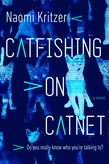
This fall, Naomi Kritzer's YA novel, Catfishing on CatNet will be published by Tor/Forge. You can check out an excerpt at Den of Geek.

So Kritzer writes this neat short fiction AND she has a childlit connection. She's perfection for Original Content.


Sunday, July 10, 2016

A Podcast And Baking Binge. You've Missed This, Haven't You?


Wow. It's been a while since I've done a weekend baking binge. Just this past Friday I was talking with a family member who made me aware of people we know who like a TV in their kitchens. We're
only talking two people, but, still, it reminded me of my kitchen work. I would never bother with a TV in a kitchen, because what I want when I'm working is sound, not something to look at. Music or some kind of talkie thing, a way to suck up info.

But as I said the last time I cooked and wrote, the podcasts I'd been so fond of for so long are getting old for me. I'm getting close to doing an abrupt turn to music. Hmm. I heard a Rhiannon Giddens' concert Friday night. Maybe something like that.


But not quite yet.

Not a big binge. Seriously, I'm a little embarrassed.
Saturday I switched from marketing and littalk podcasts to short story podcasts from Slice Magazine. These were stories from one of its issues, read by their authors. I'm always trying to check out the work in literary journals, and this was a good opportunity to do that while baking biscuits, rolls, shortbread, and pear crisp.

And listening to short stories gave podcasts a little new life.

We All Come From Somewhere by Kristian Mecom  Listening to this illustrated the problem with listening to podcasts--someone came into the kitchen at an important moment, and I don't know how the main character got to the place she ended up. Or if she ended up there at all. Maybe something metaphorical was going on.

Regret by Erin Sommers On the one hand, I'm thinking, This character would risk her good life for that guy? On the other hand, I'm thinking, Okay! This character would risk her good life for that guy!

For the time being, I'm going to try to limit myself to podcasts of published work, both fiction and essays. If I can find them. But I'm sure music is in my future.

Also, I've baked a lot of biscuits, shortbread, rolls, and pear crisp these last six months. I need to do something else.

I need something different to listen to and something different to bake.

Weekend Cooking Meme hosted by Beth Fish Reads.

Editing Note: While trying to edit a tiny error the day after publishing, I deleted an entire paragraph and had to rewrite it. So if anyone is into rereading, you may see some minor differences. Trials of blogging.

Saturday, May 07, 2016

The Weekend Writer: Think About Creating A Writing "Portfolio" Before Submitting

Why You May Want A Writing Portfolio Before You Start Submitting


So last weekend, I'm in Kathleen Rushall's NESCBWI Conference workshop on query letters, and she suggests that writers not query too soon. With picture books, for instance, she says writers should wait until they have three manuscripts before submitting one of them. Agents are interested in working with writers on long-term careers. Writers who have  several pieces of work, at least in progress, show that they're thinking about a long-term career rather than the thrill of seeing their names on one book. For that reason, agents may ask "What else ya got?" In which case, you probably want to have something.

Am I About To Drift Away From The Writing Portfolio Issue?


I was mulling on Kathleen's words this past week when I happened to read Submit Like A Man: How Women Writers Can Become More Successful. The author, Kelli Russell Agodon, a former literary journal editor, contends that when men receive a rejection from a lit magazine with a "We want to see more of your work" note, they get more work in to that editor. When women receive that same response, they take much longer to get back to editors, sometimes not resubmitting at all.

Her theory is that women become anxious, worry that the editors were just being nice, worry that they will appear needy if they rush. Men, she says, are more confident. Women's lack of confidence  slows them in their attempts to get published


No I Am Not Drifting Away From The Writing Portfolio Issue


I am one of those women writers who have received positive feedback with a rejection from literary magazines and didn't respond to it. In my case, lack of confidence wasn't what held me back.

What held me back was that I didn't have another appropriate piece of work to submit. I do have a stash of short stories and essays, but they are varied in genre and subject. I once had an editor indicate he would be interested in more work. But he edited a science fiction magazine and I had only one scifi short story, the one he'd just rejected. I truly didn't have anything else to send him, and I'm not the kind of writer who becomes inspired under pressure. I accept that I'm never going to just sit down and knock off a publishable story in a week or two, on demand.

Well, maybe there is some lack of confidence operating there.

But my point is, if I had a portfolio of material--a couple of science fiction pieces, more than one memoir essay, a few articles about writing at least outlined--instead of the random short stories and essays I have now, I could respond to a "What else ya got?" editorial request in a timely manner. Just as a writer who has some picture book work lined up could respond to an agent asking the same thing.

As it turns out, this month I am working on short form writing. I'm going to take a look at what I have on hand and think about whether or not I have ideas for, shall we say, companion pieces?

Even if no one asks for more work, if I've found an appropriate market to which I can submit Piece A1, I can later submit its companion,  Piece A2 there. What I'm doing now is starting researching all over again for Piece C3.

Hmm. Maybe that's still another reason to maintain a writing portfolio.

Thursday, March 24, 2016

Yes, I Would Like To Have The Habits Of A Successful Short Story Writer

I recently subscribed to Writer's Digest, and if my first copy is any indication, I will have soooo much to write about here over the next year.

I'll begin with Literary Journal Submissions: Habits of Highly Successful Short Story Writers by Erika Dreifus for two reasons.
  1. I've been following Erika's Practicing Writing blog off and on for years. I don't get there as often as I'd like. On Mondays she posts market info for writers.
  2. I'm getting ready to submit short stories to journals. How perfect is it that the first issue of Writer's Digest arrived with this article at this time?
Among the things Erika writes about:

"Read Magazines and Journals" 


"...and understand each one's mission." She's correct. This is hugely important. You don't want to spin your wheels sending manuscripts to publications that clearly don't deal in your kind of work. It's also very difficult because it's so time consuming. Many literary journals are the size of books. Lots to read. Eleven years ago, I subscribed to Hunger Mountain. I still have two issues on one of my To Read shelves. And there are so many journals to check out. I just ordered the most recent issue of Carve.

"Submit Widely and Often"


Also hard. Again, it's a time thing. You have to do the reading to find your markets, decide which of your stories should be submitted where, deal with cover letters or the equivalent for those on-line submissions managers, and then keep track of what you've done in order to avoid being rejected by the same place two times. Or more.

Why is it so hard to find time to do these things? Because of the writing writers are supposed to be doing. If you write book-length work in addition to short stories, you can find yourself deep into a long writing project that has to be marketed in a totally different way from the short stories. Pulling your head out of that to read magazines and journals and submit widely and often...Woe.

"Believe In--And Act On--'Encouraging' Rejections


I have a story that fits here.

Years ago, I submitted a story to a tiny journal in Maine. It was, of course, rejected. But the editor sent a short note. It was a typed note. It clearly came from a little portable typewriter. I could tell because I had one when I was in college. The note said something like "There really are too many characters here for a short story."

Okay, that's not exactly encouraging. But I believed what that editor said and acted upon it. His response changed how I write short stories.

Also, Carve sent me a nice rejection once, though I can't remember for what. I was working on something else by the time I got it, something I couldn't pull my head out of.

That rejection, and the magazine's terrific website, encouraged me to buy its most recent issue, at least. 

Check out Literary Journal Submissions: Habits of Highly Successful Short Story Writers by Erika Dreifus in the new issue of Writer's Digest


Sunday, December 13, 2015

The Weekend Writer: Publications For Shorter Work--Is Exposure Like Money, But Different?

The Price of Writing by Jennifer Niesslein in Creative Nonfiction is an interesting piece and informative for us. Her essay deals with different types of publications for short writing. Niesslein describes them as existing in three different realms. Whether or not the publications can pay contributors, or even staff, is a factor in determining its realm.

Payment Or Exposure?


A lot has been written over the last couple of years about publications wanting writers to work for nothing. Niesslein refers to one such case involving The Atlantic. Just two months ago, Wil Wheaton wrote about being approached by The Huffington Post, which wanted to republish a piece of his work for no compensation. I've also heard stories about self-publishing writers asking illustrators to work for nothing, on the theory that publishing with them will give the illustrators exposure that will be wonderful for their careers.

The exposure is like money, but different argument, has not gone over well with that portion of the publishing world that creates work and supports itself by doing so. But Niesslein's article gives a different spin to this issue. Some journals that are very "poor" in terms of finances have given their unpaid authors their start in publishing. She gives Brevity, which publishes flash nonfiction and that I thought was quite well known, as an example of a publication in that category. It's been around for eighteen years.

So where should an author submit? In particular, where should new, Weekend Writers submit? Go right for the money and the high-end paying publications? Or hope exposure is like money, and, like Niesslein, look for publications that publish work they like?

Everything In Life Is Situational


This is another one of those things in life that is situational. As Wheaton said about his experience with HuffPost, "I’m very lucky to not need exposure or “reach” or anything like that, at least not right now and not this way...If I’d offered this to Huffington Post for nothing, because I hoped they’d publish it, that would be an entirely different thing, because it was my choice." And as Niesslein said, some people are in a life situation in which they can work for nothing, gaining some connections within the publishing world by doing so.

Do we need to write to pay the rent and feed the kids? Or can we write to support our careers with writing credits? Answering those questions will help us determine our situations and what kinds of publications we can submit our work to.

no editor is getting paid, and writers are paid nothing or almost nothing. - See more at: https://www.creativenonfiction.org/online-reading/price-writing#author-biography
When we talk about “the publishing industry,” we’re really talking about three different realms, both in terms of business and writing. - See more at: https://www.creativenonfiction.org/online-reading/price-writing#author-biography


Monday, November 09, 2015

Remember That Photo Problem With The Short Story?

Four months ago, I wrote here about another author's photo being used in the author bio connected to a short story I'd written. I let that issue sit for quite some time before I finally contacted the publication, Alimentum, to bring the error to the editors' attention. Someone got back to me in just two days to say they would take care of it.

And they did.

Sunday, October 18, 2015

The Weekend Writer: Why You Should Consider Writing Short Stories

How often do you hear people talk about wanting to write books? How often do you hear people talk about wanting to write short stories?  Suzannah Windsor Freeman explains why writers should be thinking about working in that shorter form in How to Get Your Short Stories Published in Lit Mags at Writer Unboxed.  The big point to consider: published short stories help to establish you as a writer.

A Few Added Thoughts About Writing Short Stories


  • Don't think of short stories as short novels. They are a specific form of writing. Do yourself a favor and do some research.

  • Don't expect short stories to be easier to write than novels. They are faster to write because they're shorter, but not easier.

  • Don't 't expect short stories to be easy to sell.


Renewed Interest In Short Stories?


Now that I've covered the Debbie Downer stuff, here's something a little more promising: Short stories are supposed to be experiencing a resurgence. In the eighties and nineties we were seeing fewer of them being published in mainstream, nonliterary magazines, which meant fewer markets. That's probably still the case. However, there are enormous numbers of on-line publications now, some of them quite well-regarded, that are easily accessible to readers. Some of them even pay writers for their work. (Not all on-line publications do.) Additionally, I've read that readership for short stories is growing, possibly because readers feel pressed for time. Short stories are what they have time for.

Thursday, July 02, 2015

How Do We Feel About Another Author's Photo Showing Up On Our Work?

 An Author Photo Mix-up


Several years ago (just a little over four, to be exact), I read Why Is Someone Else In My Book's Author Photo? by Caroline Leavitt at Salon. In it, Leavitt writes about finding out that the Chinese edition of her book, Girls in Trouble, carried another author's photograph. She found it "discomfiting" and said of herself, "I mourn."

Now, I have learned only a handful of things in my lifetime, but one of them is that I just can't predict how I will respond to any experience. Would I feel that "an author’s photo is the reader-writer connection...It’s a public acknowledgment that a real person — me! — spent four years agonizing and obsessing over the story"? Would I mourn?

My Own Author Photo Issue


Rosemary and Olive Oil, my short story that was published at Alimentum, does, indeed, include someone else's photograph with the author info. Oddly enough, she looks a little bit like Caroline Leavitt.

How upset am I about this?  I probably noticed it three or four months or so ago. I just got around last night to writing an e-mail to the Alimentum editor to see if the picture can be replaced with one of mine. I'm not going to send it for a few days so my OC readers can enjoy checking out the story and the mystery photo. So, no, it doesn't seem to be bothering me that much, and I'm happy to get a blog post out of the situation.

Why Am I Not In Despair Over This Misplaced Author Photo?


Rosemary and Olive Oil was my first published short story for adults, so it was a very big deal for me. To date, it is still my only published short story for adults, so it is still a very big deal for me.  I had to rework it a number of times. I've submitted many short stories over and over again, but Rosemary and Olive Oil went to the third publication I submitted it to. I put this down not to the splendor of the story but to having stumbled upon the perfect place for it. Alimentum is a journal of the literature of food, and Rosemary and Olive Oil is, indeed, a short story about food. Finding the perfect home for a piece of writing is difficult and, sometimes, as in this case, kind of magical.

I think this is running off my back for two reasons:
  1. It didn't happen at the time of publication. My recollection is that Alimentum had just shifted from a print to on-line format when Rosemary and Olive was published. I don't believe it was using author photos with the bios at that point. I most certainly would have felt differently if this had happened with my shiny new story.
  2. I'm a bit of an in-this-moment kind of writer. I tend to be involved with what I'm working on now and not that intent on what I did in the past. When speaking with reporters while promoting new books, I can recall them asking if I was excited about the publication we were discussing. I'd have to say, "Ah, I've pretty much moved on to the next book." Rosemary and Olive Oil was published more than two years ago. Yeah, this author photo thing is interesting and I'm going to address it, but I'm far more concerned with the nine chapters I'm revising of my work-in-progress so I can go on to Chapter Ten and, some day, an ending.
I'll be sending that e-mail to Alimentum's editor in a few days, and I'll let you know what happens. If I think of it. If I'm not tied up with something else.


Monday, March 02, 2015

Well, This Is A Time Mess Up

Last Friday in my weekly goals and objectives post, I wrote about planning to submit a manuscript to a journal that is only open for submissions for part of each month. It opens on the 1st and closes when it reaches 200 submissions. That's the number of submissions the staff feels it can deal with in a month.

As it turned out, yesterday was the 1st. So I planned to submit yesterday or today. I was on the road most of yesterday, worked on completing the revision of a chapter today, and when I went to submit the manuscript in question, maybe ten minutes ago, the journal was already closed to submissions. It reached it's 200 mark in less than 48 hours.

Clearly I should have rearranged my time and tried submitting this morning. Or last night after getting back from a day trip. Or yesterday morning before I got on the road at 8:30.

I did not schedule my time correctly. And, you know, I did have a feeling I wouldn't have more than a couple of days to do this.

Saturday, August 16, 2014

The Weekend Writer: Interested In Writing For Magazines?

Writing a novel is the gold ring of publishing. But realistically speaking, you might want to start out by writing something more manageable, something for magazines. How do you get started writing for magazines?  According to The Renegade Writer, you start writing for magazines by reading them.

Friday, September 13, 2013

Dahl And Hitchcock

Today, September 13th, is Roald Dahl Day. Instead of speculating on just what a person has to do around here to get her own day, I'm going to insist, once again, that you just have to read his adult short stories.

You can start with Lamb to the Slaughter, published in Harper's in 1953. Don't have time to look for it? Well, in 1958, it was adapted for television for Alfred Hitchcock Presents.Yeah, Alfred Hitchcock. That's the kind of  story we're talking about.