Tuesday, March 17, 2020

Time Management Tuesday: Staying On Task When You're So Busy Social Distancing

I'm hearing two responses from my writer friends to the social distancing we're going to be doing over the next few weeks. One is that they're going to look at this time at home as an opportunity to get some writing done. Maybe a lot. The other is that recent events have left them unable to concentrate enough to take advantage of this, shall we say, found time.

Here are three things we can do to help us soldier on.

Go Retro And Check In With The News Just Once Or Twice A Day. A Few Times, Tops


We'll begin with a little history lesson: When we had only newspapers, TV, radio, and magazines for the distribution of news, people took this information in at specific times. They might read the paper in the morning or the evening. TV news came in the morning, at noon, and in the evening. Radio news came at the top of the hour. News magazines came out weekly. It wasn't possible to spend hour after hour reading and watching news. News sites weren't struggling to fill 24 hours of air time with content back then and thus searching for opinions and analysis from every person who ever worked in any field even remotely connected with, say, infectious disease, or who had been somewhere near a grocery store in the last twenty-four hours. They weren't printing tweets...any tweets, from anybody.

Yes, arguably we knew less, but, arguably, how much do we need to know? In the case of the present pandemic, we've been hearing about it for weeks, if not a couple of months. We've had a lot of time to prepare. Some of us have been social isolating since last week. We've been advised to continue doing so for another fifteen days. Can we expect something to change so dramatically so fast that we need to be checking in with the news all day long?

Choose some times during the day that will be your news times. Check in then. Use the rest of your time for something else.

Get Some Distance From Social Media And Its Misinformation


People are scared now and often angry. They can't get together with their friends to discuss what's happening...except they can. On Facebook. They can get together with their followers on Twitter and I'm sure on other platforms, as well. They can get emotional support for problems in their lives caused by the coronavirus. They can feel better when people they know share their experiences. Cousins can share a laugh over how hard an eighty-something aunt is taking having to stay home. (Yeah, that was Annette, Mary, and me.)

But for many writers, the bulk of our Facebook friends are just that...Facebook friends. They are people we have connected with in order to create a professional network. They are not people we have ever met in person or are geographically near so we ever will. Spending hour after hour picking up and absorbing their fear may not be the healthiest thing we can be doing now, and it certainly isn't the most time and energy efficient.

On top of that, according to Peter Adams of the News Literacy Project
in an interview on NPR last Saturday, some of those stories our Facebook friends and Twitter followers are sharing are what he calls "misinformation." He even talks about a "misinformation ecosystem." "This pandemic has brought out a really clear picture of the kinds of things that tend to circulate in the misinformation ecosystem, generally...," he says. He goes on to add:

"A lot of what we're seeing is actually, you know, what you would call a kind of cheap fake or a low-tech fake, just copied and pasted claims online going viral across platforms...we're seeing just a lot of text-based claims with - this person is in a position of authority, you know? My sister-in-law works with a man who's married to someone at the CDC who says, right? So this sort of second and thirdhand totally anonymous information just gets copied and pasted over and over and over again across these platforms."  

Yes. I have definitely been seeing a lot of that, and it's often alarmist. I wonder if some of this stuff isn't entering the area of urban legend.

So when you're choosing a time to catch up on the news, choose a time to catch up on social media, too. And start skimming your Facebook wall and Twitter stream instead of reading every word, assuming you ever did. Avoid any messages that say things like "You have to read this!" with a link to a story on the coronavirus or the economy or the new world order or anything else that will start you down some kind of reading binge that will suck up your whole morning. Maybe your whole day. Your week. The next month.

Use Done Lists To Get Back On Task Or Help You Stay There


A lot of writers aren't working full-tilt right now, and that's okay. But if you want to ease into work, a done list may be more helpful than a to do list. To do lists often just don't get done at all, but a done list is, well, done. It's a big support psychologically and can be a motivator because it can direct you with what you might want to do next.

My done list for yesterday included yesterday's blog post, some work on the first paragraph of a humor piece, collecting humor pieces from humor blog sites, and reading half of them. Since we had had some sickness in our extended family before everything went south last week with the coronavirus, I felt pretty good about work yesterday. And my direction today, and the next few days, is to stick with small tasks until one becomes interesting enough to keep me working on it.

More interesting than those stories about the nurse from Seattle who said XYZ or another Costco with empty shelves.

A Break From Regularly Scheduled Time Management Tuesdays


I am going to take a break from doing weekly Time Management Tuesdays for a while, because many writers don't need it at the moment. As I said above, they're not working at capacity, anyway, so how they manage their writing time isn't an issue. If there's one thing I don't believe in with time management, it's harassing ourselves and others about it. Making ourselves or others feel bad is guaranteed to cause failures of impulse control.

Additionally, many people are offering all kinds of advice on how to get along during the pandemic. The world doesn't need any more advice. I am striking a blow for no advice.

I have many little irons in the fire I can write about that might actually be entertaining or useful. I'll focus on those for a while.

I'll probably be back with time management at some point, because you all know how obsessive I am. "She's never going to let that go," you're thinking, and I'm sure you're right.

Monday, March 16, 2020

A Break From Angst To Celebrate La Francophonie Day

Friday, March 20 is International Francophonie Day, a celebration of French language and culture. I've also seen references to Francophonie Week and Francophonie Month. While the United States is not a Francophone country, Francophonie Week/Day is celebrated here by some French organizations.

While many Francophonie Day events have been postponed or cancelled, pas ici! Over the course of the week, I'll be featuring children's writing in French from French speaking countries or children's books set in French speaking countries.

Les Livres Canadian


I'm beginning with Great French Books for Kids, a review by Kelly Di Domenico of six books, which appeared in a Montreal paper, so I'm going to make the assumption that the books are from Quebec publishers. The article is from 2008 and publishing being what it is, I don't know how many of the books are are still available.

A book from the list that particularly struck me and that does appear to be available only used is La Classe de Neige by Alain M. Bergeron. The story is about a boy who has broken his leg skiing, and he describes how he ended up in a cast. This caught my attention, because I don't see a lot of skiing books in American childlit. And, yes, readers, you are welcome to hit me with ski stories in the comments.

Here you can see Bergeron doing a talk in French about La Classe de Neige. He starts out saying, "Hello, everyone" and that he's going to give a talk on La Classe de Neige. Then it sounds as if he's saying hello to a long list of kids. Then I was lost. I missed my Netflix sous-titres.

Les Autres


A more recent book list from Canada is 8 Books Your French Immersion Student Won't Be Able To Put Down by Laura Mullin.  She has collected child recommendations of French books, including some French translations of American titles, which I won't mention because that's not what I'm here to do this week.

In this group, the book I particularly like is Les P'tits Diablos by Olivier Dutto. This appears to be a lengthy series from France, though I can't find a nice, tidy website describing everything. I liked the ten-year-old girl's take on the book in the article. "It's about a brother and sister who don't get along, but when they put their minds together, they can sneak up on anybody."

The series is also animated. Again, ou est mes sous-titres? J'ai besoin mes sous-titres! This episode starts out with "It's not fair! It's not fair!" The sister greets the boy. The boy says he's sick today. And then they start talking over my head.

I can tell you, however, that the cover of the book to your left says, "Sister for sale. Cheap."

More French-related books or writers/illustrators coming this week.


Sunday, March 15, 2020

Coronavirus Cancellations In Childlit

Over the coming month (or more) I will be covering book launches within the children's literature world and other childlit-related events that are cancelled due to the coronavirus outbreak in this country. You can help out these authors by spreading the word about their new books, following them on social media, recommending their books to your libraries, and, of course, purchasing them when you can.

I'm collecting this information on a catch-as-catch-can basis. Many more authors and illustrators will be affected who you won't see here.

A Whale Of A Mistake


A few days ago, Ioana Hobai announced on Twitter that all her events for A Whale of a Mistake have been cancelled.

A Whale of a Mistake, illustrated by the author and published by Page Street Kids, is about a girl dealing with a big mistake.

Ioanna Hobai has published two other picture books since 2018, one as an illustrator and one as an author and illustrator. She studied art in her native Bucharest.

The Fabled Life Of Aesop


Ian Lendler also announced on Twitter last week that he's had to cancel events for the launch of The Fabled Life of Aesop: The Extraordinary Journey and Collected Tales of the World's Greatest Storyteller.

The Fabled Life of Aesop, illustrated by Pamela Zagarenski (two-time Caldecott Honor winner, by the way) and published by Houghton Mifflin Harcourt, is both a picture book biography of Aesop and an anthology of his work.

Lendler is the author of a number of children's books, as well as adult nonfiction. Interesting mini-fact: He grew up in Wallingford, Connecticut, which isn't that far from me. Not that close, either. Close enough that I may have driven through. Never knew him, though. Not that interesting a mini-fact.

The  Derby Daredevils Book 1


On Wednesday, Kit Rosewater announced that the launch for The Derby Daredevils Book 1 at Book People in Austin, Texas has been cancelled.

The Derby Daredevils, illustrated by Sophie Escabasse and published by Amulet/Abrams, is about two girls trying to pull together a 5-girl roller derby team in one week.

Daredevils is Rosewater's debut book.

Hudson Children's Book Festival


The Hudson Children's Book Festival, scheduled for May 2 in Hudson, New York, has been cancelled. This year's Newbery winner, Jerry Craft, was to have been the featured author. The author/illustrator list included many NESCBWI colleagues. The Book Festival's 2021 date has already been set--May 1.


Saturday, March 14, 2020

Hey, It's Still Women's History Month

The Secret History of Wonder Woman by Jill Lepore is a fantastic Women's History Month read, even if, like myself, you were not a Wonder Woman fan until Gal Gadot started carrying her shield. (I read most of my DC comics at a friend's house whose older brother purchased them. He must not have been a WW fan.) Wonder Woman is the most popular female superhero character and the third most popular superhero character overall, coming in only behind Superman and Batman.

The Secret History of Wonder Woman isn't really about Wonder Woman, though. It appears to be about William Moulton Marston, Wonder Woman's creator. He's one fascinating guy, even though, according to Lepore, he was not nearly as successful as he appears on paper. Instead, he went from one academic job to another, usually in a downward spiral. He went from one project to another, Wonder Woman being one of them. Then there was his unconventional lifestyle. He lived with his wife,  Elizabeth Holloway Marston, a highly-educated woman who wanted both a career and a family. Even in the early part of the twentieth century, how women could do this was an issue under discussion. Elizabeth Holloway Marston managed this by accepting her husband's lover, Olive Byrne, into their home to raise her children with Marston...as well as Byrne and Marston's children...while she worked.

Yeah, that is fascinating.

But what is also fascinating is the way Lepore pulls together the little aspects of Marston's life that turn up in the Wonder Woman story. He was in on the creation of the lie detector, for instance. Wonder Woman carries a lariat that forces people to tell the truth. There are photos of his companion, Olive Byrne, wearing bracelets similar to the ones Wonder Woman wears.

But what is the most fascinating is the way Marston was a sort of magnet for all sorts of pre-WWII feminism. His wife was an early working woman, for instance. His girlfriend was Margaret Sanger's niece.

All these Marton factors, both from his personal life and the feminism he supported, turn up in Wonder Woman in the mid-twentieth century.

Lepore says, "The suffrage campaign, from 1848 to 1920, is often thought of as the "first wave" of the women's movement, and women's liberation, in the 1960s and 1970s, as the "second wave." In between, this thinking goes, the waters were still. But there was plenty of feminist agitation in the 1940s in the pages of Wonder Woman."

I don't know what I was expecting when I bought this book. But I was delighted to be exposed to so much early- to mid-twentieth century women's history.


Thursday, March 12, 2020

Coronavirus Cancellations In Childlit


Over the coming month (or more) I will be covering book launches within the children's literature world and other childlit-related events that are cancelled due to the coronavirus outbreak in this country. You can help out these authors by spreading the word about their new books, following them on social media, recommending their books to your libraries, and, of course, purchasing them when you can.


KidLitCon

The thirteenth annual KidLitCon, which was to have been held on March 26 and 27 in Ann Arbor, Michigan, announced on Twitter yesterday that it has been cancelled. The Ann Arbor District Library, where it was to have been held, has cancelled all its programs and events indefinitely.

KidLitCon is described as a Cybils Award Event, and is connected to the same childlit blogging community. My recollection is that it was originally specifically about blogging and bloggers, though now it is an "...annual gathering of people who care about, and/or blog (or Tweet or Instagram or Facebook or make Videos) about children’s and young adult books..." It involves a wider group these days.

Check out the bloggers and authors who were scheduled to attend.

You're Invited To A Moth Ball


You're Invited to a Moth Ball by Loree Griffin Burns was supposed to launch at the National Science Teaching Association conference in Boston in April. The conference has been cancelled.
Burns said yesterday on Facebook that other spring launch events are up in the air.

You're Invited to a Moth Ball, illustrated by Ellen Harasimowicz and published by Charlesbridge, describes how child readers can observe night time insects at their own homes.

Loree Griffin Burns is the author of numerous nonfiction books for children, some of which have been named ALA Notable Books, Boston Globe-Horn Book Honor Books, and have won IRA Children's Book and Green Earth Book awards.

Numbers in Motion


The book launch for Numbers in Motion: Sophie Kowalevski, Mathematician by Laurie Wallmark, at The Book Garden in Frenchtown, New Jersey on March 15 (this Sunday), has been cancelled.

Numbers in Motion, illustrated by Yevgenia Nayberg and published by Creston Books, deals with Sophie Kowalevski, a nineteenth century Russian mathematician, who was the first woman to receive a doctorate in mathematics that required original research and to hold a university chair in mathematics. (Hmm. A women's history month title, perhaps?)

Laurie Wallmark is the author of three other picture book biographies on women in technology, one of which was named Outstanding Science Trade Book and Cook Prize Honor Book.

Laurie was also scheduled to appear at the National Science Teaching Association conference next month. 

I have at least two more cancellations to cover, and I suspect I'll be hearing about more.

Tuesday, March 10, 2020

Time Management Tuesday: Those Sad To-Do Lists

Recently I read...ah...skimmed...an article on the misery of reaching the end of the day and realizing you've done little on your to-do list. The article didn't have a lot of new assistance to offer, so I didn't keep the link. But I've been thinking about it a lot the last couple of days, after having a lot of family things going on last week and then spending most of this morning shopping on-line for a 93-year-old relative.

A to-do list should be a tool that helps, it shouldn't set us up to be discouraged and unhappy. Feeling bad about ourselves is when we're most likely to experience failures of impulse control and willpower. A bad to-do list is almost guaranteed to lead to that kind of failure.

Steps To Making A Useful To-Do List, One That Isn't Bad


1. Shorten the daily to-do list. A lot of time management folks agree that a daily to-do list shouldn't be lengthy. You have to be realistic about what you can accomplish. If you've had some bad experiences with not finishing a long daily to-do list, try to recall how many things you did manage to get done those days. Make your next to-do list only that long. Or be realistic about the types of things on your to-do list. If you have a big project on your list for tomorrow, try not to put many other things on it. If tomorrow looks like a day when you're only doing short, easy tasks, you can beef it up a bit.

If you make a short to-do list and finish everything on it early, you can always start another task. There are no laws governing these things. Writers, at least, don't have anyone monitoring what we do.

2. Make the to-do list for a week, not a day. If you've worked on a task from your weekly to-do list but haven't finished it, make a hash mark next to it. Visually, you can see that you've done something toward that task, even if you haven't been able to cross it out. This avoids the daily crash and burn scenario, because you feel you haven't done enough. And you're almost certain to make some kind of progress and finish a few things over the week.

3. Build your to-do list around goals. If you have created goals with objectives for a particular period--the year, the summer, Lent, the month--you have things to work toward that are particularly important to you. Make your to-do lists around some of those. Even if you do only a few things from your to-do list, they are important things. An example: Besides this blog post, I've done only one work-related task today. It was a submission that I started working on yesterday, and submitting is a goal for me this year. I'm not suffering too much about how this day went.

Check out more thoughts on to-do lists here at Original Content.


Tuesday, March 03, 2020

Time Management Tuesday: Stay Calm And Carry On With Those Goals And Objectives

Yesterday is probably going to be the only full day of work I'm going to have until next Tuesday. A full week. We have no crisis here, no high temps, body aches, or runny noses, just the usual whack-a-mole family this-and-that. How did I manage that day, and how do I plan to manage whatever bits of time I'll find coming up over the next seven days?

I'm a broken record on this, folks.

Situational Time Management


This an acceptance thing. It's alright that we can't write every day because of family, income-producing work, tending to the apocalypse, and other types of obligations. Writing this week is different than writing last week or the week before, and it's going to be different than writing next week or next month. Don't panic!

The Unit System


Recognizing that it's not necessary to work in eight-hour shifts is a huge help. The knowledge that creative work, and, for that matter, many other kinds of work, can be done in small units or segments of time, when you're not washing your hands or wiping down the kitchen counters with disinfecting wipes, is encouraging. You can do something with 45 minutes or even 20 minutes. Again, do not panic, people!

Goals And Objectives


Knowing what you want to work on ahead of time may be the best technique for using time when you don't have a lot of it because you're going out to the store every other day to buy toilet paper, soap, and every kind of over-the-counter viral treatment you can think of. Determine your goals for a period--a year or the summer or a two-week quarantine period--and then decide what objectives/tasks you need to do to meet those goals. Then when you only have a day or a couple of hours or thirty minutes, you can work on a task you really want done.

Personally, yesterday I worked on Goal 4 of my 2020 goals, a YA thriller, because I want to bring some material from that project to my writers' group next Monday night, assuming we are still gathering in public places here. And, if we're not, I've revised part of a scene. How great is that? Hey, nothing to panic about here!

Saturday, February 29, 2020

Am I Still Sticking To Goals, February Editon?

My major accomplishment this month was avoiding getting one family member's never ending cold and a couple of other family members' norovirus. This involved moving to the other end of the house to save myself--twice--where I still am because while my husband did not become a norozombie,  he's now on antibiotics for something else. I have spent a big chunk of this past month moving my things around the house, taking the elder visits, cleaning, and then, this past week, washing my hands,  doing laundry, washing my hands, going to the grocery store, and washing my hands. I now have the skin of an old crone. A still healthy old crone.

When I had time to huddle on the bed with my laptop in what I fear is going to become my permanent room, I focused on the following 2020 Goals:

Goal 1: Submitting Work. I made four submissions, two as part of PBPitch, and two to literary journals. I have a couple of agents lined up to submit one project to, and other agents in mind for two others. I registered for the New England Society of Children's Book Writers and Illustrators Spring Conference, which will entitle me to submit to agents connected with that. (There's at least a 50/50 chance I won't be going because of a family event coming up around that time this spring.)

Goal 2: Work on Short-form Writing. I've begun roughing out one new piece. If the last weekend of the month had gone differently, I would have tried to finish it. I made a big effort to focus on reading short stories this month.

Goal 3. Work on the 365 Story Project. The best I can say I've done for this is starting a blog post on children's lit and flash fiction and finding a flash fiction workshop at the NESCBWI Conference that I hope to get into. (Sign up for workshops is tomorrow. Two o'clock.)

Goal 4. Work on YA Thriller. I finished up most of what I had planned for my ultralearning project on historical methodology which was specifically for this book. I have been working on an outline, something I don't think I've ever done this extensively, and brought a few pages of the actual manuscript to my writers' group. And I've just started reading another YA mystery. Oh, and I just finished reading a popular history, which is part of my get my head into history thing for the historical methodology project.

Goal 5. Community Building/General Marketing/Branding. I provided support to Connecticut writers with the CCLC and did two #BlackHistoryMonth blog posts. Went to writers' group this month. Registered for the NESCBWI Conference. Promoted The Bending Genres Anthology in which my creative nonfiction appears on both Facebook and Twitter. 

Goal 6. Stay On Top of Upcoming Known Events. I'm clearly not doing a great job on this, since I signed up for that conference when I know something in the family might be happening then. But I am keeping track of my work time with these monthly goal assessment posts. And I'm about to go look at my bullet journal to see what I've got in it for the month of March. And to set it up for next week, which I never got to for last week.

Last month I was a little discouraged at the goal check-in, because I hadn't done anything big. "Are these little things I'm doing the ground work for something big later in the year?" I wondered. "Or am I just messing around?" This month I am ecstatic that I've done as many little things as I have.

You have to look at the big picture, what else is going on. Given what has been going on, I'm feeling good right now. So I'm going to go put away the groceries I've been buying over the last three days and the laundry I've been washing and try to get some cooking done and maybe get started on a couple more blog posts.


Friday, February 28, 2020

Coming Back To Life

I'm sure you all recall that last fall Gyldendal Undervisning renewed our agreement to use some material from Saving the Planet & Stuff in one of its textbooks for teaching English. Last week they notified me that they've decided to increase the first-print run of the edition. More books!

And then just a couple of days ago I learned that my flash creative nonfiction, Heroes, has been included in The Bending Genres Anthology 2018-2019. The piece was published at Bending Genres in 2018.

Writing can be a discouraging slog. But one of the neat things that can happen in publishing is that sometimes something you've published in the past suddenly gets a little new life, as was the case for me this past week.

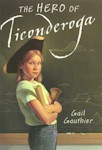
I can remember back in the day suddenly hearing from my editor that foreign publishers wanted to do editions of my booksMy Life Among the Aliens was published in Japan. Japan! (And Italy and Germany, which also did editions of two of my other books.) And then there was that time I was notified four times that states had included A Year With Butch And Spike on their student readers' choice award lists. When Happy Kid! went on to one of its two award lists, it resulted in a second printing for the book, because those lists generate sales and the book was right at the point where it needed a new printing to meet demand. Another year I got an e-mail from my editor to let me know that The Hero of Ticonderoga was being talked about at that year's ALA conference. And the next thing I knew (seriously, it was within a day or two) I found out that the ALA was naming it a Notable Book for that year.

Now, yes, I am using my recent news as an opportunity to relive past glories. But I have a point apart from that. The point is: I was through with those books. I may have still been promoting them at school visits or where and when I could, but the writing, the editing, the publishing was all done. I wasn't working on those books any more. And, yet, things continued to happen for them. 

That these kinds of things happen is one of the many things I didn't know about writing and publishing when I was getting started. Yes, it was one of the better things.


Wednesday, February 26, 2020

March Connecticut Children's Literature Calendar

Clearly the independent booksellers in this state think we're having an early spring with clear roads ahead. They've booked plenty of author visits for readers. Note two books are launching (one started last month) and a writing class is starting. And there is an author fest.

Sun., Mar. 1, Janet Lawler, River Bend Bookshop, Glastonbury 10:30 AM

Tues. Mar. 3, Leslie Connor, R.J. Julia Booksellers, Madison 6:00 PM

Wed, Mar. 4 thru April 1, Dawn Metcalf, How To Get Traditionally Published, The Storytellers' Cottage, Simsbury 6:30 PM to 8:30 PM Fee; Can register for individual sessions or the entire set.

Sat., Mar. 7, Jeanne Zulick Ferruolo, Barnes & Noble UConn, Storrs 1:00 PM

Sat., Mar. 7, Briana Webber, Fairfield University Bookstore, Fairfield 10:30 AM

Sun., Mar. 8, Jeanne Zulick Ferruolo, R.J. Julia Booksellers, Madison 2:00 PM

Tues., Mar. 10, Chris Babu, R.J. Julia Booksellers, Madison 6:30 PM

Wed., Mar. 11, Jeanne Zulick Ferruolo, Wesleyan R.J. Julia Booksellers, Middleton 6:30 PM

Thurs., Mar. 12, Leslie Bulion, Durham Public Library, Durham 6:30 PM

Sat., Mar. 21, Leslie Bulion, R.J. Julia Booksellers, Madison 10:30 AM

Sat., Mar. 21, Jeanne Zulick Ferruolo, Barnes & Noble, West Hartford Noon

Sat., Mar. 21, Joyce Lapin, The Storytellers' Cottage, Simsbury 1:00 PM

Sun., Mar. 22, Leslie Bulion, Byrd's Books, Bethel 2:00 PM

Sat., Mar. 28, Katie L. Carroll, Patrick Scalisi, and possibly others,  The Public Library of New London's Local Authors' Fest, New London 11:00 AM to 2:00 PM


Sun., Mar. 29, Leslea Newman, River Bend Bookshop, Glastonbury 10:30 AM