Diana Wynne Jones' Reflections On the Magic of Writing includes a transcript of literary critic Colin Burrow's BBC essay, Fantasies for Children, which you can listen to. Burrow just happens to be Wynne Jones' son.
Burrow says that Jones fused the ordinary and the magical, which may be why I've liked what I've seen of her work. I can only take so much magic. He also says that Fire and Hemlock is her best book. What!? Not Chrestomanci?
Burrow talks about Jones' feelings about her childhood and how they impact her writing. If you read Reflections On the Magic of Writing, you hear a lot about that from her, too.
August 16, 2014: Diana Wynne Jones should be referred to as "Jones," as corrected above, and not as "Wynne Jones."
Showing posts with label Diana Wynne Jones. Show all posts
Showing posts with label Diana Wynne Jones. Show all posts
Monday, August 11, 2014
Monday, August 04, 2014
Diana Wynne Jones, My Spiritual Sister
 Last week during my tai chi class, I trained with a more experienced student. At the end of the class, my instructor informed me that I should tell my classmate, "Thank you, older sister" (in Chinese), not because Susan is older than I am, but because she's more experienced. I will spare you the details of how meaningful I find this in terms of the distinction between taekwondo and tai chi culture. I'm just mentioning it to explain why I was dwelling on the sister issue while reading Reflections on the Magic of Writing by Diana Wynne Jones this past week.
Reflections is a collection of Jones' short nonfiction pieces written for magazines, speeches, and professional groups over several decades. She collected them herself a few months before she died, meaning these articles were ones she felt had particular significance. One of the things I like about this collection is that because it isn't written and edited all in one piece, there is repetition here. The repetition creates recurring themes related to Jones' attitudes about her work.
But I really like about this collection is that so many of Jones' attitudes are ones I share. She talks about creating experiences with her writing. I've thought of writing as creating worlds. She objects to writing that is supposed to instruct. Dear heavens, how I hate that. Over and over again I'm finding things in this book that make me feel that I've found some kind of soulmate.
Oh, and though there are a couple of chapters here on heroes, if Jones even mentions The Hero's Journey, I missed it.
And, finally, the book concludes with an address one of her son's gave at her funeral in which he talks about the tweets they'd seen recently about his mother's books being comfort books for this one or that one. Jones' Chrestomanci novels are my Number One comfort books.
There's just been an amazing amount for me, personally, in this book, making me feel an incredible connection to this woman I will never know.
August 16, 2014: Diana Wynne Jones should be referred to as "Jones," as corrected above, and not as "Wynne Jones."
Friday, July 12, 2013
"Pratchetty" YA Books
Sheila Ruth from Wands and Worlds, Charlotte Taylor from Charlotte's Library, and Tanita Davis from Finding Wonderland all attended the North American Discworld Convention earlier this month. The three of them served on a panel recommending YA fiction for fans of Discworld author Terry Pratchett. Sheila and Tanita both have posts on the event. Charlotte, who was the panel's moderator, has the list of books they recommended at her blog. A number of them are titles or authors I'm familiar with.
For instance, I haven't read The Book of Lost Things by John Connolly recommended by Tanita. But I have read another of his books, The Gates, an adult book with a child main character, definitely an option for YA readers.
I also haven't read the Diana Wynne Jones titles Tanita recommended. Faithful OC readers know I'm a big fan of her Chrestomanci books. They do have a Pratchett-like feeling--a developed world, some recurring characters, definite wit, and sophisticated writing.
Sheila recommends all the Bartimaeus books and both Lonely Werewolf Girl titles. I'm in total agreement.
One of Charlotte's suggestions is the Skulduggery Pleasant series. I happen to be reading the 5th book in the series now, having purchased 5 and 6 for my...yes, YA...niece's birthday. They just came my way a couple of weeks ago. Reading my niece's copy and knowing it's hers because of me makes me feel like one fine aunt.
Now that I think of it, I've given her a Bartimaeus book, too. And at least some of the Chrestomanci books. Oh, my gosh, I've given her at least one Tiffany Aching title! That's Discworld!
I am a stellar aunt.
For instance, I haven't read The Book of Lost Things by John Connolly recommended by Tanita. But I have read another of his books, The Gates, an adult book with a child main character, definitely an option for YA readers.
I also haven't read the Diana Wynne Jones titles Tanita recommended. Faithful OC readers know I'm a big fan of her Chrestomanci books. They do have a Pratchett-like feeling--a developed world, some recurring characters, definite wit, and sophisticated writing.
Sheila recommends all the Bartimaeus books and both Lonely Werewolf Girl titles. I'm in total agreement.
One of Charlotte's suggestions is the Skulduggery Pleasant series. I happen to be reading the 5th book in the series now, having purchased 5 and 6 for my...yes, YA...niece's birthday. They just came my way a couple of weeks ago. Reading my niece's copy and knowing it's hers because of me makes me feel like one fine aunt.
Now that I think of it, I've given her a Bartimaeus book, too. And at least some of the Chrestomanci books. Oh, my gosh, I've given her at least one Tiffany Aching title! That's Discworld!
I am a stellar aunt.
Wednesday, July 10, 2013
Read One Of Their Books

So long as I'm on the subject of writers who aren't going to be able to provide us with any more of their work, I'll mention that Diana Wynne Jones, who died two years ago, has a new book coming out next year. The Islands of Chaldea was nearly finished at the time of Wynne Jones' death. Her sister, Ursula Jones, has completed it.
Oh, how I wish it was a Chrestomanci book. I own the whole series and save it for rereading during troubled times.
Thursday, April 19, 2012
More On The Diana Wynne Jones Celebration
A Virtual Celebration of Diana Wynne Jones in Publishers Weekly has much, much more on the DWY on-line events I wrote about last Friday.
Turns out there is Wynne Jones' publishing news, too. A reissue of Fire and Hemlock, a book I just became interested in last week, came out earlier this month. And there will be a book of Diana Wynne Jones essays this fall. I am fond of essays.
Turns out there is Wynne Jones' publishing news, too. A reissue of Fire and Hemlock, a book I just became interested in last week, came out earlier this month. And there will be a book of Diana Wynne Jones essays this fall. I am fond of essays.
Friday, April 13, 2012
Diana Wynne Jones Celebration
A Diana Wynne Jones blog tour is under way. You can follow it at Celebrate Diana Wynne Jones and see other material relating to her. I have a particular fondness for her Chrestomanci books, so I was interested in the portrait of Chrestomanci posted there. The blog tour begins at Chasing Ray (a blog I just haven't been able to visit much this past year), and I will be trying to keep Wynne Jones' Fire and Hemlock in mind as a possible read after seeing what Colleen had to say about it.
Monday, January 23, 2012
Interesting Aspects Of A Lesser Known Work

Wild Robert, which I stumbled upon at a library a few weeks ago, is one of Diana Wynne Jones books for younger readers. I have to say that I found it rather plodding, myself. It seems like an idea that could have become something much more sophisticated than what it ended up being.
However, there were a couple of aspects to the work that are interesting for someone who has read other of her books and has some superficial knowledge of a later fantasy bestseller.
First off, Wild Robert, which was originally published in 1989, provides another charming, childish, male character similiar to Howl in Howl's Moving Castle, which was published three years earlier, and even to Christopher Chant as he appears in some of the Chrestomanci books, which were published from the 1970s onward.
Secondly, in Charmed Life, originally published in 1977, Wynne Jones has figures in stained glass windows come to life and fight with one another. In Wild Robert, (published in 1989, remember) she has figures in paintings in a castle gallery do the same thing, in a much more elaborate scene.
The whole paintings-come-to-life thing was used regularly in the Harry Potter books, the first of which was published in 1997. Whether Rowling was influenced by Wynne Jones or simply hit upon the idea independently (which definitely happens), it's interesting to see two writers using the same detail in their work.
Monday, March 28, 2011
A Few Words For Diana Wynne Jones
This morning I learned of the death of Diana Wynne Jones. I discovered her Chestomanci books a little over a year ago. They will always hold a special place for me because they were comfort books during a grim time. In fact, they are stacked neatly on a shelf in my living room, spines out so I can always see them. Last month I gave a copy of the first volume to my twelve-year-old niece.
Thank goodness there was a Diana Wynne Jones who wrote those books for me.
Thank goodness there was a Diana Wynne Jones who wrote those books for me.
Saturday, December 11, 2010
The End Of My Own Cybilizing This Year

I happened to have a couple of Cybil nominees in my TBR pile, and I've finally finished them. Which is a good thing because they're due at the library tomorrow.
Binky to the Rescue by Ashley Spires is a very clever and charming graphic novel for younger readers. The basic premise is that Binky, an indoor cat, believes that the outdoors is outer space. Insects that come into the house from outside are aliens. When Binky accidentally goes through a window, he's truly out in the great unknown. He manages to survive the ordeal, but his dear friend, Ted, has been stranded out there. Thus, Binky to the rescue.
A marvelous little book.

Marcus Sedgwick began his review of Enchanted Glass by Diana Wynne Jones with the line "It's always the sign of a truly accomplished writer when their book holds you, despite the fact that not awfully much happens." That's exactly how I felt about Enchanted Glass. I enjoyed reading it, liked slipping into that world, but when I finished it, I thought...Did much happen here?
Enchanted Glass is one of those books in which a character finds out something about himself. In this case, it's not that he can perform magic. Lots of people can perform magic in the world of Enchanted Glass. Young Aidan Cain knows about the magic. Learning who his family is is the surprise here.
In an interesting twist, there is also an adult character who is learning things about himself in this book. Adult Andrew Hope and young Aidan Cain are almost co-protagonists.
Wynne Jones is very good at dealing with powerful adult characters in children's books. They don't take over the story or overwhelm the kids. That's true here, too.
Enchanted Glass's ending reminded me of The Pinhoe Egg's in that both books are wrapped up with what I can only describe as a bizarre twist relating to what some people would call morality. In the case of Enchanted Glass, the ending also seemed to be essentially saying that the action of the book had all been a big mistake.
I had the feeling that this book could be the jumping off point to a series. I'd be happy to see that happen, and if that's the plan, I hope Wynne Jones gets the opportunity to do it.
Wednesday, July 14, 2010
Howl Vs. Howl
You can catch a discussion of the novel Howl's Moving Castle and the movie adaptation at The Spectacle.
Wednesday, February 17, 2010
At Last, The Chrestomanci Post
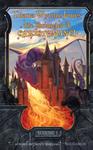
Okay, here it is, that Chrestomanci post I've been talking about.
Chrestomanci is a title held by a character named Christopher Chant who appears in six books and four short stories by Diana Wynne Jones. The universe of the book is made up of multiple worlds in which magic may or may not exist to varying degrees. The person who holds the title Chrestomanci is always an enchanter with nine lives, and his function is to "police" the use of magic. He's a government employee, actually.
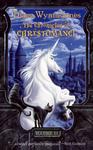
The novels are available these days in three volumes, each containing two books. The short stories, I believe, are out of print. I got a copy from a library and then bought a beautiful paperback from an on-line dealer.
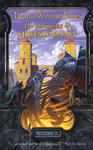
I have to admit, I found some technical glitches with these books:
Some may find this nitpicky, but I noticed from the very first book that Wynne Jones uses a noticable number of "echoes." Echoes occur when an author uses a word two or more times within a couple of sentences, making the second word strikingly noticeable to the reader. Echoes break flow, unlike parallel construction, which sort of forces flow to follow a certain flow. (Echo!) Echoes are usually caught by copy editors, which is why I know about them. Copy editors have caught (most) of the ones I've made in the past.
Chrestomanci is one of those Pimpernel/Wimsey like characters who appear to be far less powerful than they are. In Chrestomanci's case, he is often described as looking vague or appearing to be vague. That is a sign, for the people who know him, that he is on top of his game. The word "vague" is used to describe him so frequently that it becomes an annoying mannerism--like when a character is constantly adjusting her glasses or rolling his eyes. I also sometimes wondered if it really described anything. What the heck does vague mean in this context?
Some people might think that some of the boy main characters--Cat, young Christopher, and the Italian kid whose name I can't remember--seemed a bit alike. And some of the books include explanation scenes at the end, sort of like when the detective explains everything at the end of a mystery novel.
But as I said, those are all technical things. What is interesting and attention-grabbing about these books might be described as their more conceptual aspects.
Chrestomanci is a charismatic, adult character in a children's book. However, in most of his books, he is not the main character. The main characters are always children who are discovering who they really are. In fact, in the only book in which he is the main character, Chrestomanci is a child. What's more, though Chrestomanci appears to fix problems related to magic, he usually cannot do so without the assistance of child characters. He is not a grown-up who simply waves a magic wand and makes everything okay. There is no doubt whatsoever that these are kids' books, in spite of his presence.
Though these books always involve child characters discovering that they have magical abilities, and though there is a recurring adult character, the books are very different. Yes, the world building is the same, but the storylines are different, and the settings are often much different.
Chrestomanci is used differently in different books and stories. In one book, the young Christopher Chant is the main character. In another, the adolescent Christopher Chant is important, but not the first-person narrator. (I believe that was the only book with a first-person narrator.) In other books the adult Chrestomanci is a major player. In some he doesn't appear until more than halfway through the book. In one of the short stories, he doesn't appear at all--he is mentioned twice. As a writer, I love the idea of using the same character in different ways. I love trying out a first-person narrator after having used a third for so many books.
These six books are not a serial, meaning we're not talking one giant story told over six books, which must be read in a particular order or nothing makes sense. Though Wynne Jones is supposed to have suggested an order for reading the books, and they are available now as Volumes I, II, and III, suggesting an order, I actually read the most recently written book first, then Volumes II, I, and one of the books in Volume III. I can't remember at what point I read the short stories. My point (echo!) being, a reader can truly just enter this world and move about in it because the stories are each unique.
Power is not related to beauty in these books. Though Chrestomanci, himself, is an attractive man, his love interest is a plain girl (and then woman) who is a very powerful enchantress. She is very necessary to him. The children they have together are not traditionally physically attractive children. I love this.
As a reader who came late to fantasy and still, as a general rule, doesn't care for what's termed high fantasy, I'd have to say that reading these books was educational. These books aren't just a hodge podge of fantastical gimmicks. Character, plot, and setting, elements that are important to all fiction, really need to be seriously addressed in a fantasy novel. And it seems to me that they are here.
On the other hand, these were my comfort books, and perhaps I just want to think well of them.
Tuesday, December 21, 2004
Hoooowwwwwl!
I have avoided reading anything by Diana Wynne Jones because she writes fantasy, and, as I may have stated before, I really don't care for it. However, I had been reading that an animated version of one of her books was making a big splash in Japan so I decided to give it a try.
I am talking about Howl's Moving Castle.
Now, I found the plot hard to follow. The curse the Wizard Howl was worried about was a mystery to me. However, Howl, himself, was marvelous. The book is so worth reading for that one character. The fire demon was a charmer, too, and the spunky girl narrator was, well, spunky. But Howl--what a creation.
I definitely believe that a good character can redeem a book. Anne Shirley is the powerhouse that drives the rather formulaic Anne of Green Gables. Sherlock Holmes is the only reason to read any of the books involving him. And Howl just plain rocks.
Subscribe to:
Posts (Atom)